

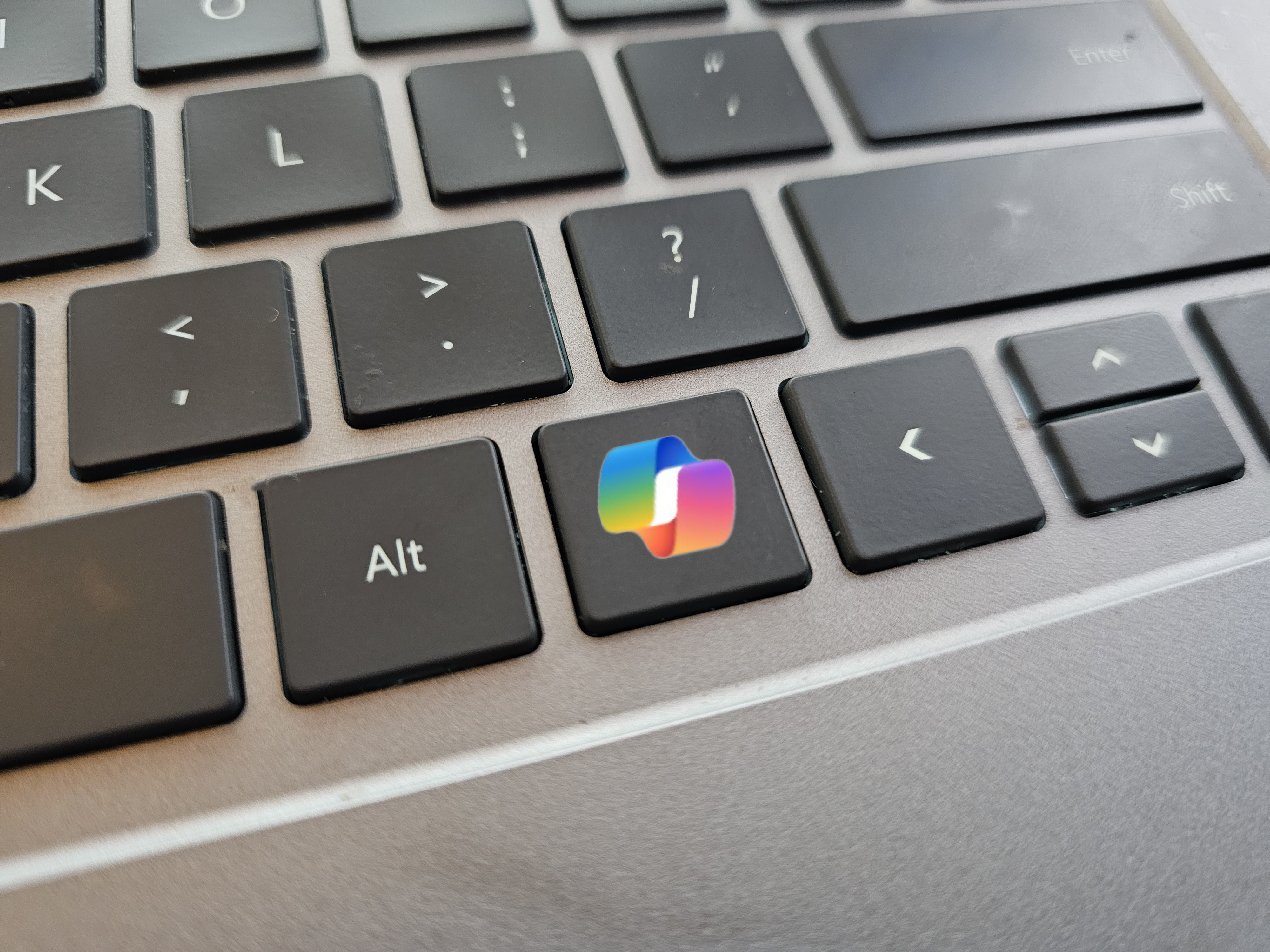


Image: Mark Hachman / IDG
Microsoft and its PC partners are planning to add a “Copilot” key to your PC keyboards, making it easy and intuitive to launch Microsoft’s Copilot AI — and avoid using an AI solution from a competitor.
PC makers appear to be prepping to replace one of the existing buttons in the no-man’s land grouping of keys to the right of the PC spacebar into a key that will launch Copilot on command. (Currently, you can use the Win + C shortcut instead.)
“Over the coming days leading up to and at CES, you will start to see the Copilot key on many of the new Windows 11 PCs from our ecosystem partners, with availability beginning in late February through spring, including on upcoming Surface devices,” Yusuf Mehdi, who now oversees the Windows and Surface businesses after the departure of Panos Panay, wrote in a blog post. Copilot is available in Windows, of course, and it’s now officially available on iOS and Android as well.
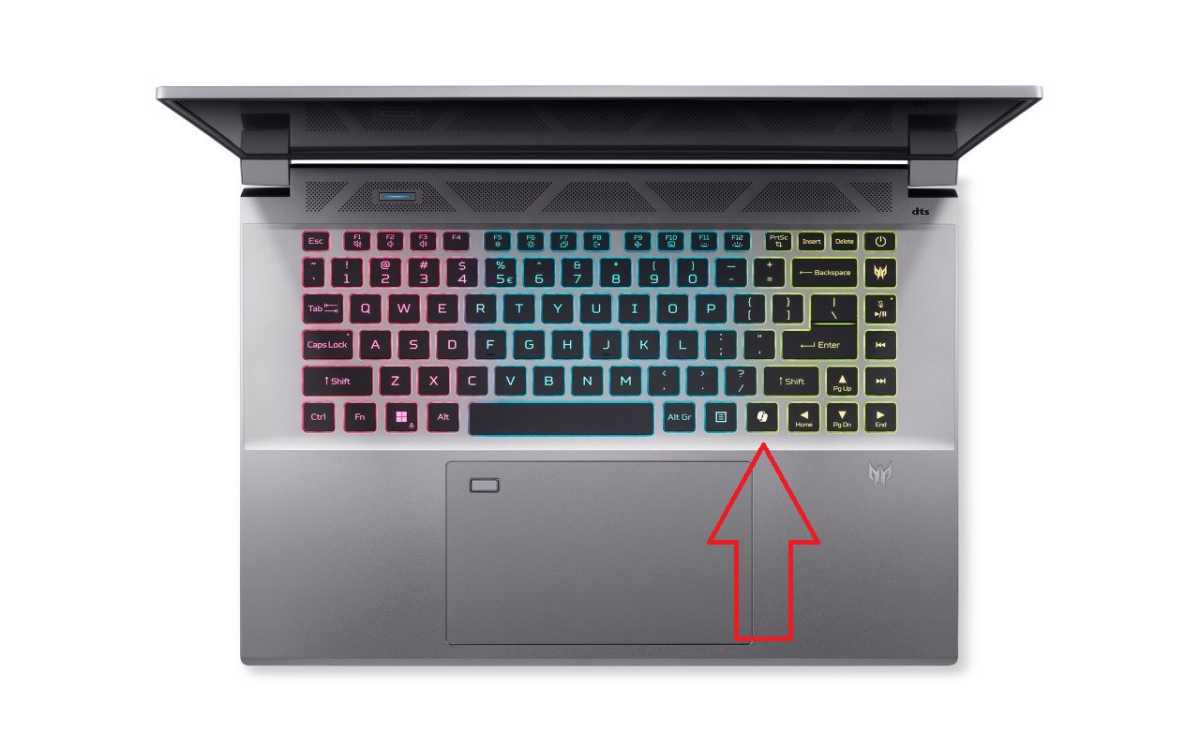
Acer’s Triton Neo 16, with the Copilot key highlighted.
Microsoft heads into 2024 preparing for a Windows revamp, probably known as Windows 12, that will lean heavily on AI. Mehdi echoed that expectation.
“As we embark on this new year, we are filled with optimism and excitement,” Mehdi wrote. “We will continue to build Windows to be the destination for the best AI experiences. This will require an operating system that blurs the lines between local and cloud processing. The year ahead promises to be nothing short of extraordinary!”
According to Mehdi, the introduction of the Copilot key “marks the first significant change to the Windows PC keyboard in nearly three decades.”
That’s not absolutely true. Microsoft itself tried to induce laptop makers to put a Cortana key onto their laptops, and Toshiba did. Unfortunately, the addition of the Cortana key didn’t stick, and Toshiba disappeared (into Sharp), as did Cortana itself. As for the Copilot key? We’ll have to see.
Author: Mark Hachman, Senior Editor

As PCWorld’s senior editor, Mark focuses on Microsoft news and chip technology, among other beats. He has formerly written for PCMag, BYTE, Slashdot, eWEEK, and ReadWrite.