

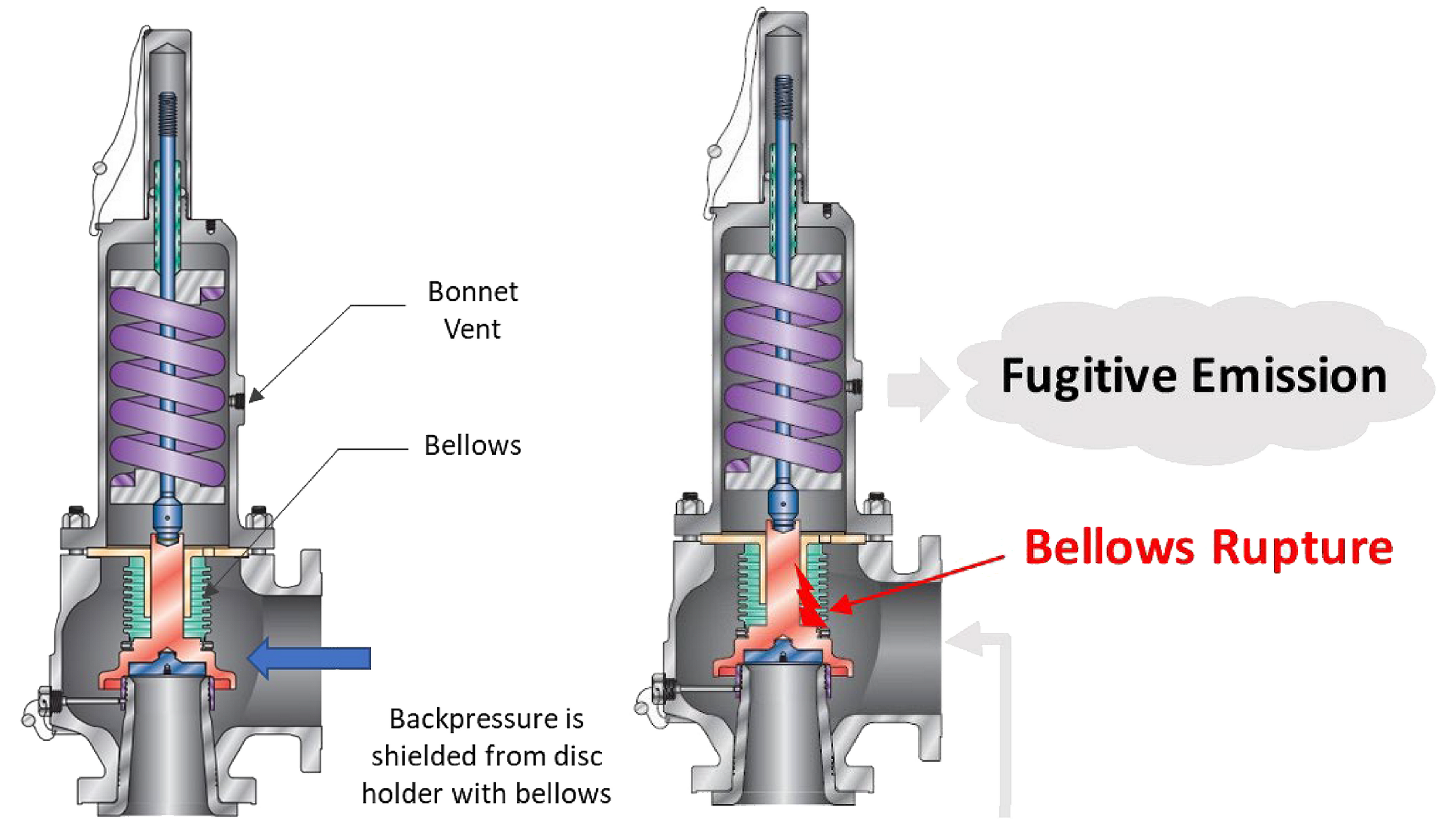

Pressure relief valves (PRVs) are essential for overpressure protection in many industries. They vent excess process media when necessary, preventing catastrophic system failures. However, traditional PRVs can be prone to damage and leakage, particularly in applications with relief valve headers subject to backpressure. That’s where bellows come in, but unfortunately, they can be prone to cracking and rupturing, leading to significant performance impacts and harmful environmental leakage.
In the latest edition of Hydrocarbon Engineering, my article “Instantaneous Bellows Leak Detection” discusses an innovative PRV design that reduces the ill effects of bellows damage and introduces cutting-edge technology that immediately detects leaks.
PRVs operate using a calibrated spring to hold a disc against the valve inlet nozzle until the pressure overcomes it and vents the media. However, any backpressure can affect the PRV’s pressure and performance. To counteract this, many PRVs include a bellows installed above the disc, shielding it from backpressure. Unfortunately, metal bellows are prone to cracking and rupturing, preventing their function and allowing media to leak through the bonnet vent to atmosphere. A study of 30,000 bellows PRVs found a damage rate between 2-6%, subjecting process equipment to overpressure and generating unknown quantities of fugitive emissions.
A new solution to this problem involves a pressure-balancing piston added to the PRV design. By adding a pressure-balancing piston above the bellows, the new design ensures that the PRV can still operate at setpoint, even if the bellows fails.
To address the overlooked issue of damage from failing bellows, new technology introduces a wired or wireless pressure instrument to the valve that measures the pressure below the piston. This innovation allows for immediate detection and response to bellows damage, preventing any adverse effects from going unnoticed.