


Predicting Water-Based Natural Disasters with ‘Digital Twin’ Earth Technology
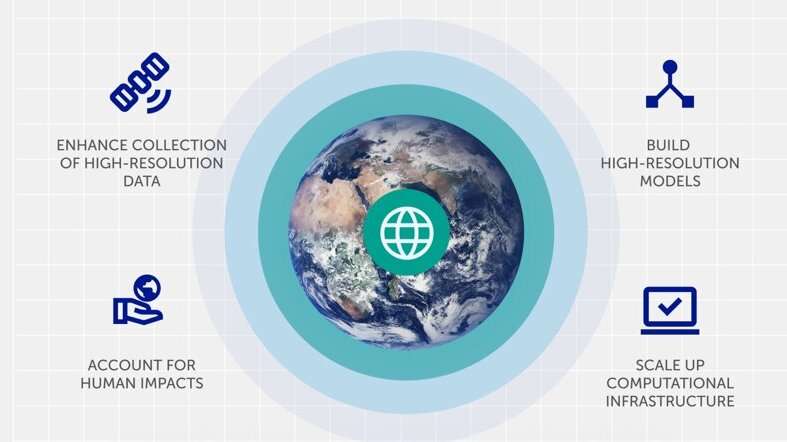
The complexity of the water cycle on Earth due to various factors like human impacts, climate change, and geography makes predicting floods and droughts challenging. To accurately model water on Earth, highly detailed data covering a vast area and sophisticated modeling techniques are essential. Scientists have recently made significant progress by developing extremely detailed models that take into account multiple factors.
Building a Digital Twin for Earth
Dr. Luca Brocca from the National Research Council of Italy, the lead author of a recent article published in Frontiers in Science, emphasized the importance of focusing on specific targets when simulating the Earth at high resolution. By creating digital twin case studies for the terrestrial water cycle in the Mediterranean Basin, the goal is to enable non-experts, such as decision-makers and citizens, to run interactive simulations.
Simulating Risk and Development
Utilizing a digital twin model of the Earth updated with the latest data allows for the simulation of best and worst-case scenarios, risk assessment, and tracking dangerous conditions before they manifest. This information is crucial for sustainable development and safeguarding vulnerable populations.
Harnessing Satellite Data for Modeling
Brocca and his team leveraged vast amounts of satellite data, including measurements of soil moisture, precipitation, evaporation, river discharge, and snow depth. This new data, collected more frequently across space and time, provides the foundation for developing highly detailed models needed for simulations.
Advancing Technology for Risk Management
The integration of high-resolution data into modeling and a cloud-based platform for simulations and visualizations is a significant step forward. The ultimate aim is to create an interactive tool accessible to everyone for mapping risks like floods and landslides while effectively managing water resources.
Expanding the Scope
Starting with modeling the Po River valley, the scientists expanded the digital twin to cover other regions in the Mediterranean basin. Future projects aim to extend the coverage to all of Europe, with potential collaborations worldwide to apply similar principles globally.
Enhancing Climate Change Management
Brocca highlighted the importance of collaborations between satellite missions and the scientific community, alongside investments in computational infrastructures, to effectively address climate change impacts and human influences.
In conclusion, utilizing ‘Digital Twin’ Earth technology offers a promising approach to predict water-based natural disasters and better manage water resources for sustainable development and risk mitigation.