


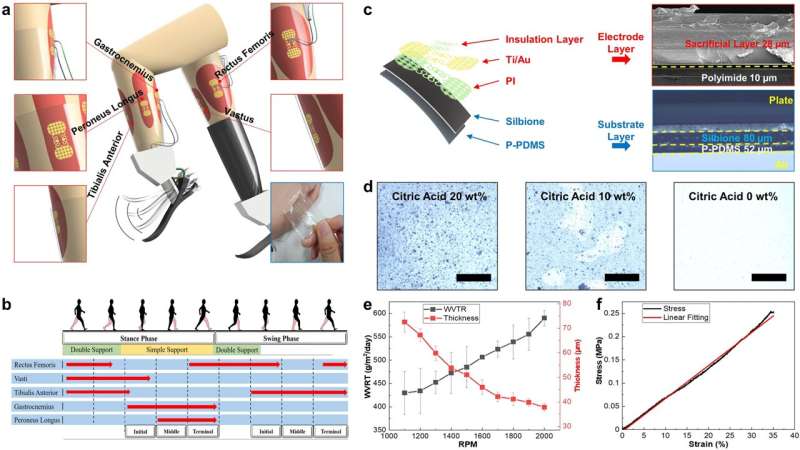
A groundbreaking new development has been made in the field of robotic prosthetic limb control. Professor Sang-hoon Lee and his team have successfully created an imperceptive surface electromyography (sEMG) sensor that will revolutionize the way lower limb amputees control their prosthetic legs. This innovative technology is expected to significantly improve the rehabilitation process and quality of life for amputees.
In recent years, there has been a surge in the number of lower limb amputees due to lifestyle diseases such as diabetes. This new sensor technology is paramount to the development of bionic lower limb technology, replacing lost legs with highly advanced robotic prosthetics.
The key to developing successful robotic prosthetic legs is the ability to accurately capture amputees’ biological signals in real time. The imperceptible sEMG sensor developed by Professor Lee’s team overcomes the obstacles of traditional sensors and provides flexibility, breathability, and adhesion. This is a significant step forward in the field of robotic prosthesis and amputee rehabilitation.