


The Impact of Deforestation and Climate Change on Lizard Populations
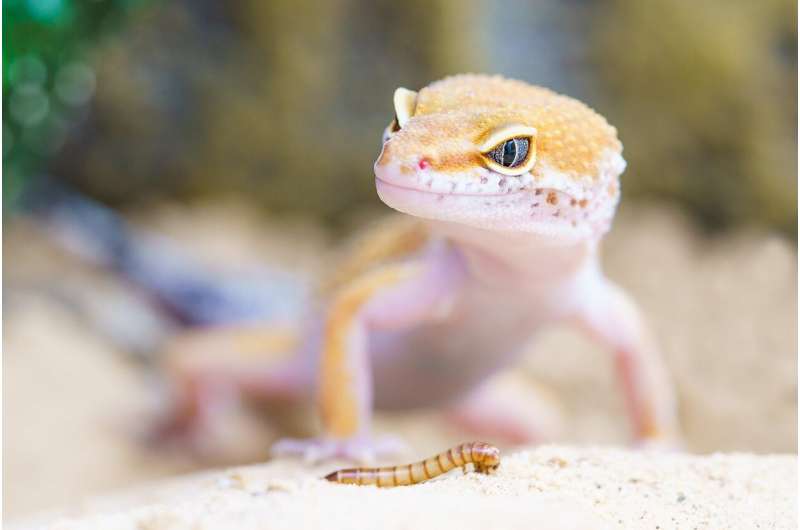
In Colorado, individuals escape the scorching summer heat by retreating to the Rocky Mountains. Similarly, animals also seek refuge when temperatures reach extreme levels, with forests serving as crucial havens for small tree-dwelling creatures such as lizards.
A recent study, published on March 5 in the journal Nature Climate Change, conducted by researchers from the University of Colorado Boulder and Tel Aviv University in Israel, highlighted the potential negative impact of deforestation coupled with climate change on 84% of North America’s lizard population by the end of the century. It is projected that nearly one-fifth of these lizards could experience a decline in their numbers.
Unlike mammals that can regulate their body temperatures through various mechanisms, cold-blooded creatures like lizards have limited thermoregulation strategies. For instance, tree-climbing lizards move along tree trunks to bask in the sun for warmth. When the ground becomes too hot, they seek higher ground or shade.
Dr. Keith Musselman, an assistant professor at CU Boulder’s Department of Geography and Institute of Arctic and Alpine Research, emphasized the significance of microhabitats for lizards in easily accessing different environments for climate and habitat variation. These microhabitats play a crucial role in conservation efforts and decision-making processes regarding natural environments.
Through computer simulations, the researchers demonstrated that global warming might actually benefit lizards inhabiting colder regions or higher latitudes in North America. Warming weather extends their active period, allowing them more time to forage for food or seek mates during daylight hours. However, the benefits of warming temperatures could be significantly undermined by deforestation, which diminishes shaded areas crucial for cooling down.
The simulations conducted by the team for various North American climate regions revealed that deforestation could reduce lizards’ active time by an average of 34% by the end of the century. With the absence of trees, lizards would be forced to seek shelter under rocks or in caves to evade overheating. This impact would be particularly severe for species already situated in warmer regions, where future summer temperatures could render ground activity impossible.
The researchers estimated that deforestation could hasten population declines for approximately 18% of North American lizards. Ofir Levy, a zoologist collaborating with Musselman at Tel Aviv University, underscored the cascading effects of lizard declines on diverse ecological systems.
Despite global commitments to curb deforestation, the clearing of trees continues unabated worldwide. In the period from 2001 to 2022, approximately 459 million hectares, equivalent to 12% of the global tree cover, disappeared.
Omer Zlotnick further emphasized the global ramifications of deforestation, calling for conservation and habitat restoration programs that take climate change into account. By understanding the interconnected impacts of deforestation and climate change on lizard populations, decision-makers can implement strategies to mitigate these effects and preserve biodiversity.