


Sneak into the back of any good restaurant and look around. Ninety-nine percent of the tools and cookware you’ll find in that kitchen will belong to that kitchen—basically everything except for the knives.
When attempting to describe the relationship between a chef and a knife, it’s hard to avoid a mythical analogy. A knife to a chef is like a sword to a knight, or a wand to a wizard; each object is essential to the execution of its owner’s craft and livelihood.
Cheesy comparisons aside, the reason chefs are responsible for their own knives boils down to subjective preferences and comfort. “I want the knife to be an extension of my arm and my hand,” says Fredrik Berselius, executive chef at Aska.
Since there are far too many variables that go into a knife’s design—handle shape, blade shape, weight, balance, material, and so on— determining which knife is the best knife is fundamentally impossible.
However, for anybody looking to find their perfect knife, asking the people who use them on the regular (chefs) and know how to wield them to their full extent is a smart way of going about it. Here are 10 chefs from restaurants and bakeries we love with the blades they use every day.
Wüsthof Chef’s Knife

WÜSTHOF
Classic 6″ Chef’s Knife
Chef Neel Kajale of Adda prefers a short and stocky German-style chef’s knife. “It is the most quintessential knife because it does everything.” German knives are heavier in the hand, with thick blades and sturdy handles. Unlike most Japanese knives, this German knife features a bolster at the base of the blade. This provides additional weight and leverage for tasks requiring a little more muscle, like breaking down a chicken.
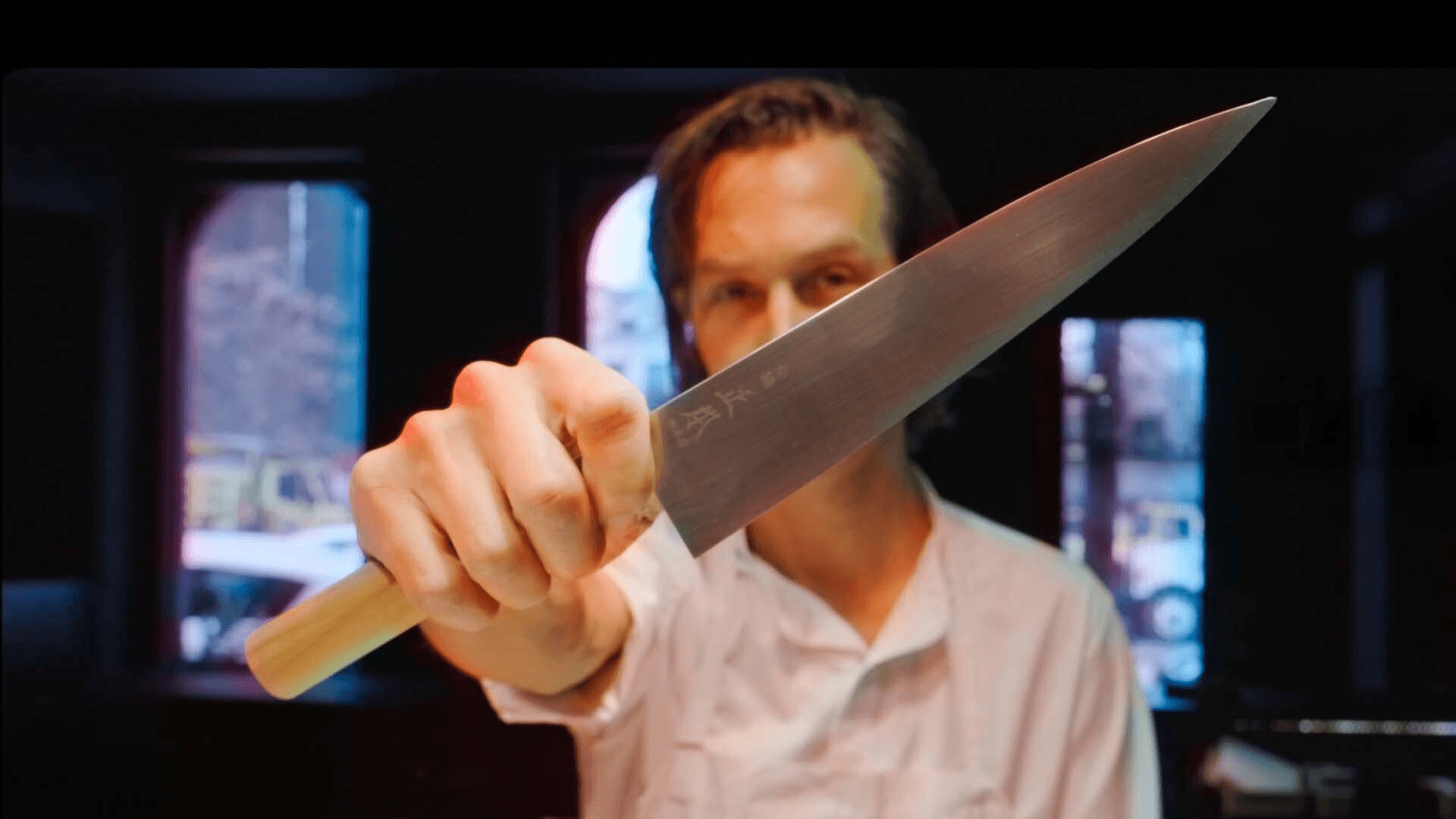
Masanobu Gyuto knife

Lightweight and razor-sharp, gyuto knives are typically longer than their santoku-style cousins. The pointed tip allows for super-precise cuts. “I love the sleekness of it,” says Jackie Carnesi of Kellogg’s Diner. “Maybe it’s weird to say, I just find this to be a very sexy knife.”
Honesuki Knife

Misono
Swedish Carbon Honesuki 145mm
Honesuki knives have a tapered triangular blade with a sharp tip and a sturdy spine. In the kitchen at Musket Room, chef Mary Etta likes a honesuki because she finds it comfortable to wield as someone with smaller hands. “It’s really good for getting in and getting pieces of meat off the bone and getting as much yield as possible,” she says.
Serrated Knife

Mercer
Culinary M23710 Renaissance
Bakers need knives that can slice through crusty bread and delicate pastries without crushing them. The sawtooth edge of a serrated blade does this job well, as it requires less downward pressure to slice. “In every bakery or pastry shop,