


Credit: Pixabay/CC0 Public Domain
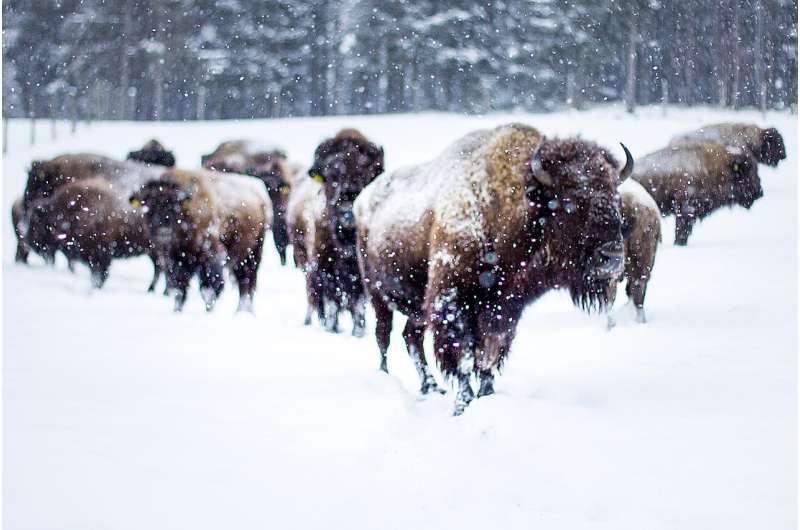
A magnificent herd of 250 bison have been re-introduced at the Rocky Mountain Arsenal National Wildlife Refuge. Their presence here is not only to restore the toxic wasteland to a native short-grass prairie but to also rejuvenate the land to its former glory.
Despite the significant growth and development, the bison are facing a challenge. Water spilling off the rapidly urbanizing areas to the east have carved a gully, creating a barrier that blocks the bison from crossing the creek.
The refuges’ supervisory ranger, biologist Sarah Metzer, is aware of this human-made challenge. “Bison are nimble animals, but they’re going to have a hard time moving across this creek and getting up that other side,” she said.
As a result, the deepening gully has become a serious obstacle for both the recovery of a genetically robust herd of bison and the broader mission of revitalizing this land.
With estimated costs ranging from $40 million to $61 million, federal wildlife biologists managing the refuge have a plan to reconstruct the floodplain. Their hope is to be ready to withstand additional pressures that will come with continued growth around the refuge and a warming climate.
Restoration efforts must be increased. “The bison won’t graze on the land across First Creek because now they have to go all the way around,” Metzer said. “That land is not going to get grazed. All the ecological benefits of having bison here are for naught.”
For more information, you can read the full article here.
Read More rnrn