


super game boy —
Display filters for FPGA cores, custom Game Boy color palettes, and more.
Andrew Cunningham
– Jan 5, 2024 7:43 pm UTC
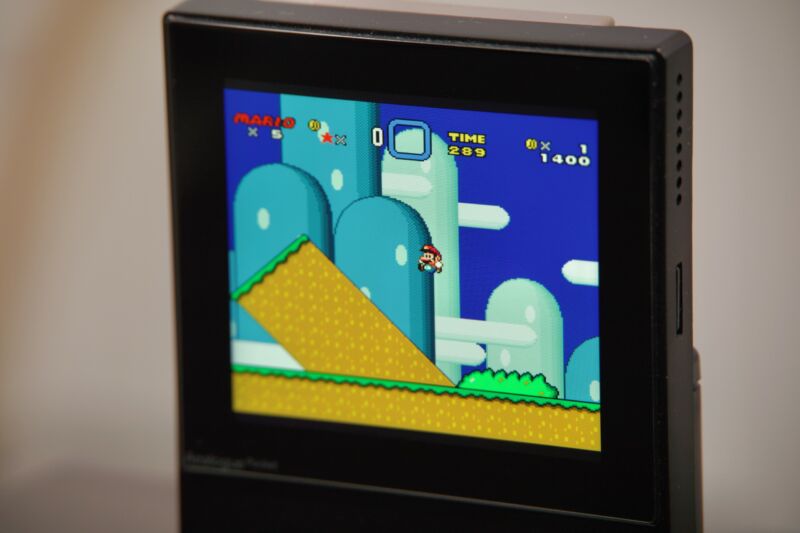
Enlarge / An Analogue Pocket running Super Mario World on an openFPGA core with the scanline filter enabled.
Andrew Cunningham
We absolutely love the Analogue Pocket, the premium portable game console that blends 2020s technology with the classic design of the original Game Boy. Since its release, Analogue has added some exciting new features via firmware updates, especially when it included support for emulating more consoles via its OpenFPGA platform in the summer of 2022. This allows the FPGA chip inside of the pocket to emulate the hardware of other systems, in addition to the portable systems the Pocket supports natively.
But aside from finalizing and releasing that 1.1 firmware, 2023 was mostly quiet for Pocket firmware updates. That changed in December when the company released not one but two major firmware upgrades for the Pocket that slipped under our radar during the holidays. These updates delivered a combination of fixes and long-promised features to the handheld, which Analogue has been re-releasing in different color palettes now that the original versions are more consistently in stock.
The most significant update for OpenFPGA fans is the ability to use display filters with third-party FPGA cores. Part of the appeal of the Pocket is its 1,600×1,440 screen, which is sharp enough to perfectly re-create the huge chunky pixels of the original Game Boy screens. By default, most FPGA cores now get access to a similarly high-quality CRT screen filter named after the Sony Trinitron TV, adding a touch of retro-blurriness to the sharp edges of 8- and 16-bit games. I’ve seen lots of bad, unconvincing scanline filters in retro game re-releases, and this isn’t one of them.
The basic Trinitron filter is available by default for “suitable” cores, which in our testing tends to mean “home consoles that were meant to be connected to a CRT TV.” FPGA cores for portable systems like the Game Boy or Game Boy Advance, which shipped with old but scanline-less LCD screens, don’t have the filter available. Third-party FPGA core developers will need to add support for additional screen filters themselves, something that most developers still haven’t done as of this writing.
-
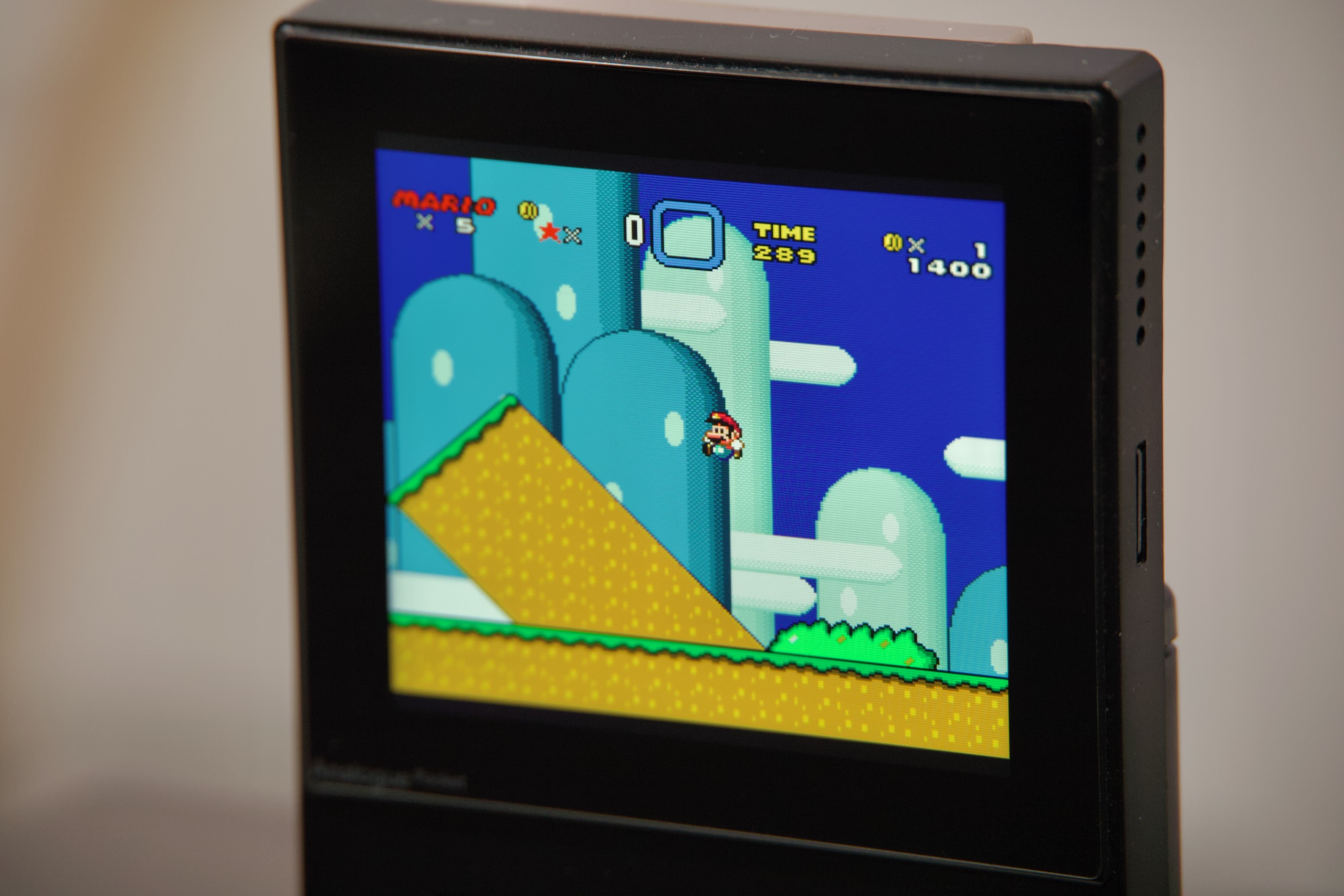
A zoomed-in photo of the screen with no filters enabled. It’s sharp and crisp, and even zoomed in with a good mirrorless camera it’s difficult to make out individual pixels on the Pocket’s screen.
Andrew Cunningham
-
The same scene with the Trinitron CRT filter enabled. Subtle scanlines, visible CRT “pixels,” and just the right amount of blurring makes the picture look more period-accurate.
Andrew Cunningham
-
Zoomed out, scanlines off.
Andrew Cunningham
-
Scanlines on,