

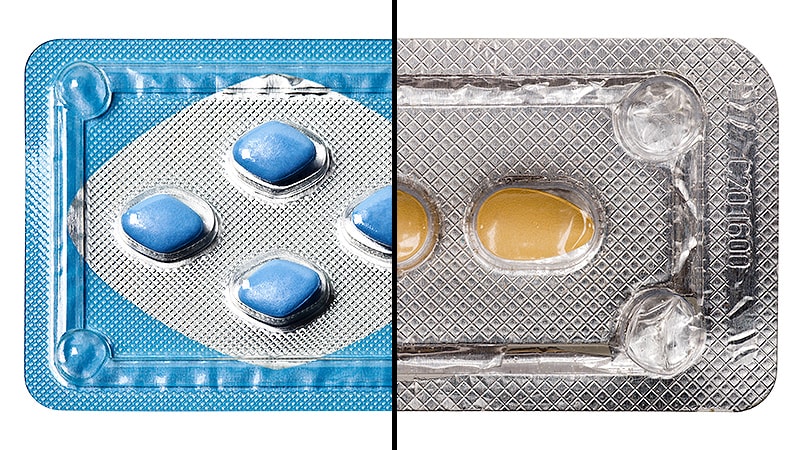

New research supports continued caution in prescribing a phosphodiesterase-5 inhibitor (PDE5i) to treat erectile dysfunction (ED) in men with heart disease using nitrate medications.
Results of a large Swedish population study of men with stable coronary artery disease (CAD) revealed that the combined use of a PDE5i and nitrates was associated with a higher risk for cardiovascular (CV) morbidity and mortality.
“According to current recommendations, PDE5i are contraindicated in patients taking organic nitrates; however, in clinical practice, both are commonly prescribed, and concomitant use has increased,” said first author Ylva Trolle Lagerros, MD, PhD, with Karolinska Institutet, Stockholm, Sweden, in an interview with theheart.org | Medscape Cardiology.
“Based on our results, it is advisable to exercise careful, patient-centered consideration before prescribing PDE5 inhibitors to individuals with stable CAD who are using nitrate medication and weigh the benefits of the medication against the possible increased risk for cardiovascular morbidity and mortality given by this combination,” Lagerros said.
The Journal of the American College of Cardiology (JACC) published the study online on January 15.
The study used data from the Swedish Patient Register and the Prescribed Drug Register to evaluate the association between PDE5i treatment and CV outcomes in men with stable CAD treated with nitrate medication.
Among 55,777 men with a history of previous myocardial infarction (MI) or coronary revascularization who had filled at least two nitrate prescriptions (sublingual, oral, or both), 5710 also had at least two filled prescriptions of a PDE5i.
In multivariate-adjusted analysis, the combined use of PDE5i treatment with nitrates was associated with an increased relative risk for all studied outcomes, including all-cause mortality, CV and non-CV mortality, MI, heart failure, cardiac revascularization, and major adverse cardiovascular events. The study results are detailed in Table 1.
However, the number of events 28 days following a PDE5i prescription fill was “few, with lower incidence rates than in subjects taking nitrates only, indicating a low immediate risk for any event,” the authors noted in their article.
In a JACC editorial, Glenn Levine, MD, with Baylor College of Medicine, Houston, Texas, noted that, “ED and CAD are unfortunate, and all too common, bedfellows. But, as with most relationships, assuming proper precautions and care, they can coexist together for many years, perhaps even a lifetime.”
Levine noted that PDE5is are “reasonably safe” in most patients with stable CAD and only mild angina if not on chronic nitrate therapy. For those on chronic oral nitrate therapy, the use of PDE5is should continue to be regarded as “ill-advised at best and generally contraindicated.” In some patients on oral nitrate therapy who want to use a PDE5i, it may be acceptable in carefully selected cases.