


Politics
/
January 19, 2024
Presidential candidates are trapped by bigotry they claim doesn’t exist.
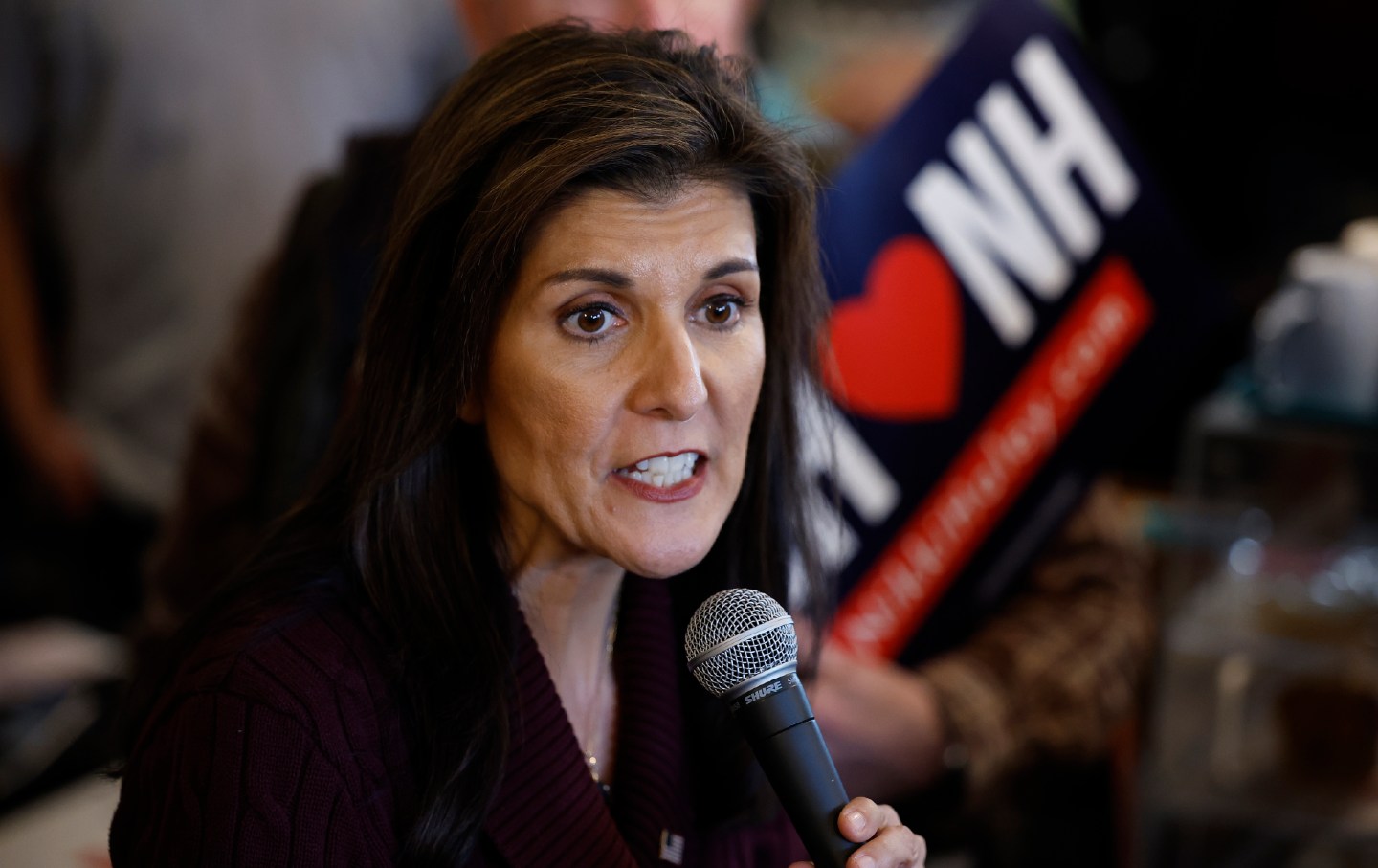 Nikki Haley talks to a group of people while campaigning in New Hampshire. (Chip Somodevilla / Getty Images)
Politics aside, Nikki Haley and Vivek Ramaswamy found themselves shackled in the bonds of racial bigotry as Indian Americans aspiring for the Republican presidential nomination.
Ramaswamy’s exit from the race on Monday wasn’t unexpected following a poor showing at the Iowa primary, securing only 7.7 percent of the vote. He immediately endorsed Donald Trump, which was in line with his campaign that aimed to be a successor to the former president. Haley fared slightly better in Iowa with 19.1 percent, but by then, it was evident that progress favored Trump over her. Despite her reserves about Trump, she’s made a pledge to support him if he becomes the nominee. (source)
While the two candidates are known for their support and differences in opinion on Trump, their attitudes are more a matter of tone than of substance. Both are burdened with the issues of racism and often either ignore them or downplay the significance of addressing it.
Ramaswamy and Haley share comparable anti-anti-racism views. They both believe that structural racism is an outdated and overinflated issue and reject efforts directed at rectifying the historic bigotry.
Ramaswamy, when asked in Iowa if he thought it was necessary to take actions against systemic racism, responded with, “Was there a time and place for correcting for those past injustices? Yeah, it was like in 1870.” He added, “But at a certain point in time, I think that what you would think of as racism in this country—or you can fill in the blank, sexism or any other -ism or form of discrimination—it gets to be small enough, not to be zero, but small enough that the best thing we can do is let it atrophy to irrelevance.
On the other hand, Haley uses a more gentle approach to such issues. While discussing the racial discrimination challenges she faces, she generally tends to downplay the significance of it, often portraying it as irrelevant. She also frequently reflects upon the legacy of historic bigotry and, from her perspective, seems to undermine its criticality.