


- Travel
Experience the historic gateway to the south of Egypt in Aswan, where the city’s Nubian heritage lives on through local dialects and the alluring Philae Temple. Let your sense of adventure guide you as you set sail on the Nile and soak up the sights and sounds of this captivating destination.
Published January 22, 2024
This article was produced by National Geographic Traveller (UK).
Roots tendril out of the grassy banks, piercing the surface of the water, while giant dragonflies skim the heads of water buffaloes cooling off in the 46C heat. Nearby, African sacred ibises stand regally in the shallows and vocal laughingthrushes nestle between the seven-foot reeds. My eyes are locked on the watery scenes — I’m hoping to spot a crocodile nostril or a slinking scale, at least.
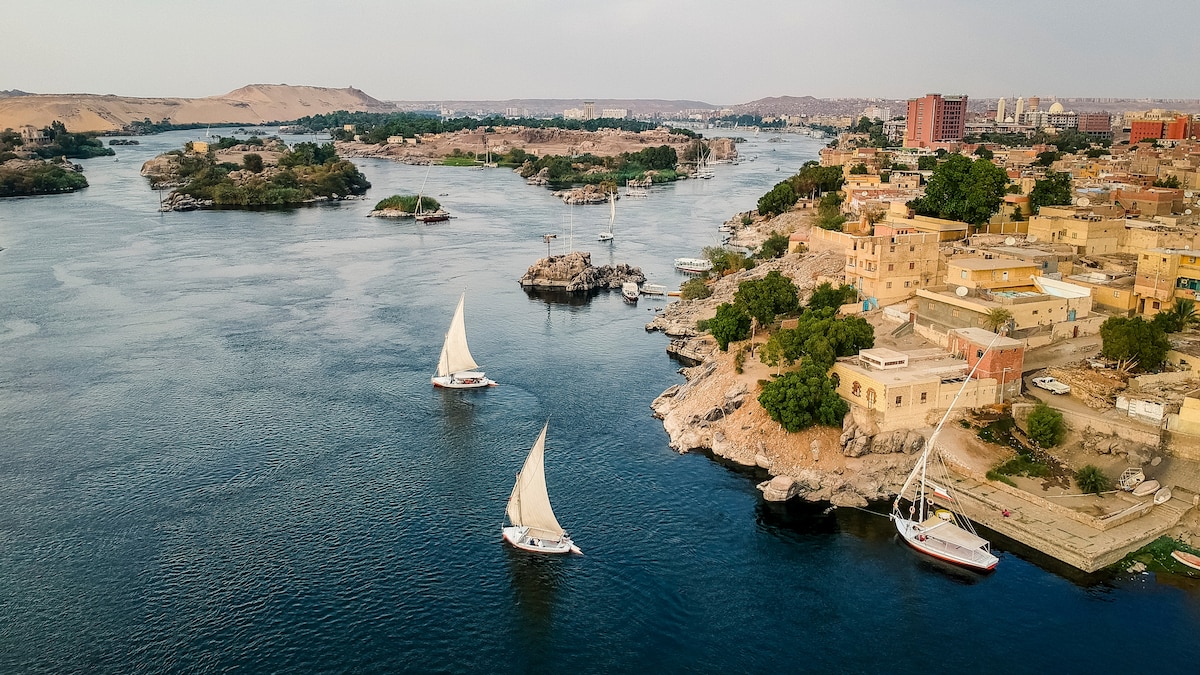
I’m on board the Sanctuary Sun Boat IV, a luxury 1920s-style vessel, travelling along Egypt’s bloodline, the Nile. A calm reprieve from the chaos of Cairo and its population of 22 million, the river feels like a quiet oasis in the middle of the desert. After days of leisurely drifting down the waterway, watching villagers bathe next to braying donkeys and visiting the many temples that occupy the banks, I’m eventually ushered off the boat at Aswan, an industrial town whose port is lined with fishing boats. Home to many Nubian Egyptians, originally from the Kenzi and Faadicha tribes, Aswan has a population of 500,000 — and its own unique dialect.
I listen out for this local tongue, which derives from a mixture of Ancient Egyptian and Swahili, as a group thrash past in horse-drawn carts and minivans. Aswan’s port is a hive of activity: men, women and children shout to each other from their boats, while others sing charming ditties.
At certain times of year, the Nile can reach a depth of up to 30ft and, as it’s home to many endemic species of fish, including Nile tilapia, Nile perch and several types of catfish, it’s little surprise fishing is one of the most lucrative industries for locals. After soaking up the scene before us, we leave the cacophony behind and make our way towards Philae Temple, the next stop on our itinerary.
As we approach the Aswan Low Dam, on whose reservoir the island-based temple complex is based, we’re bombarded by eager faces selling souvenirs.
“Follow me,” says our guide and Egyptologist Mohamed Rehim and we weave between the street sellers. “This way,” he shouts again as we continue past stalls laden with treasures and trinkets. Blue-and-white alabaster ornaments glimmer in the midday sun. Men stand with local cotton draped over their stretched-out arms, while teens lean leisurely against crooked trees, beaded necklaces dangling from their wrists. A small child’s hand flies out to help me board a weathered, wooden motorboat, on which we’ll travel to reach the temple complex. The vessel is decorated with sun-bleached bunting that flitters in the gentle breeze. I perch close to the helm and we set off to the gentle whir of the rusty engine.