


Emerging Insights on the Interactions Between Neanderthals and Modern Humans
A decade ago, the scientific community was stunned by the revelation that Neanderthals and Homo sapiens interbred outside of Africa, challenging previously held beliefs about these ancient human relatives. Despite initial skepticism towards Neanderthals, it was discovered that humans today share up to four percent of their DNA with them. The exact timeline and locations of this interbreeding event remain topics of ongoing debate. Recent research has shed further light on the complex interactions between Neanderthals and modern humans, suggesting a prolonged period of coexistence.
New Genetic Revelations
A recent genetic analysis of bone fragments excavated from a site in central Germany has unveiled significant insights into the movements of early humans. The findings indicate that modern humans reached northern Europe approximately 45,000 years ago, coinciding with the presence of Neanderthals in the region. This overlap suggests that the two groups coexisted for a considerable period before the Neanderthals eventually went extinct. The results of this study, published in prestigious scientific journals, have added valuable information to our understanding of ancient human migrations and their impact on Neanderthal populations.
Long-Standing Presence of Neanderthals
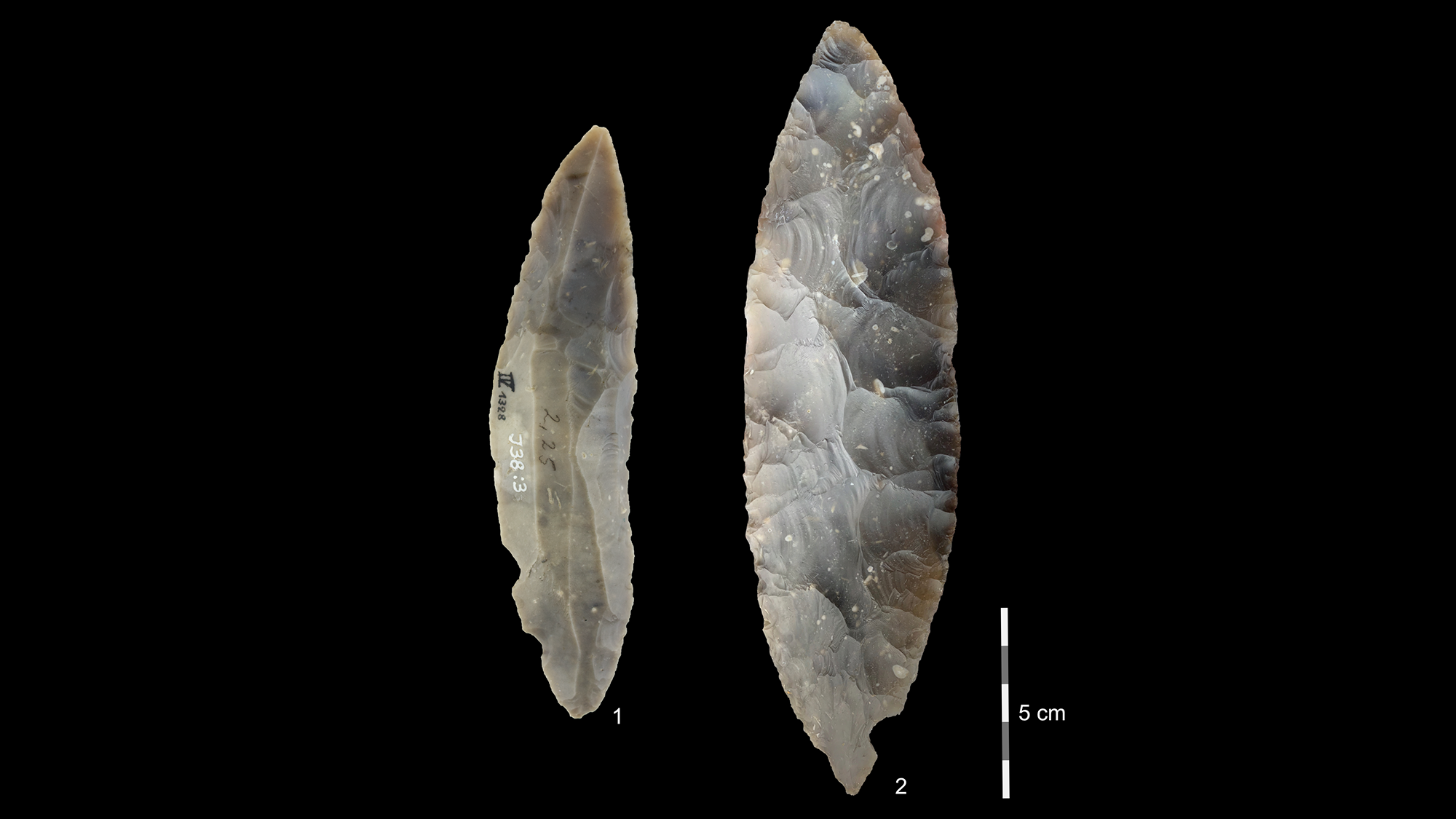
Neanderthals had inhabited northern Europe for over half a million years prior to the arrival of modern humans in the region. A team of researchers from various institutions across the globe conducted a comprehensive analysis of bone fragments and stone tools from an archaeological site near Ranis, Germany. The site, initially explored in the 1930s and re-excavated in recent years, yielded artifacts dating back to the Middle and Upper Paleolithic periods. Notably, the discovery of leaf-shaped stone tool blades at the site provides valuable evidence of early modern human culture in northwestern Europe.
Cultural Significance of Stone Tools
The leaf points uncovered at the Ranis site closely resemble artifacts found at other archaeological sites across Europe, suggesting a shared cultural tradition among ancient human populations. Archaeologists have identified these stone tools as belonging to the Lincombian–Ranisian–Jerzmanowician (LRJ) culture, prevalent during the Paleolithic era. Previous dating efforts had estimated the age of the site to be at least 40,000 years old. However, the absence of definitive skeletal remains left unanswered questions regarding the identity of the toolmakers—whether they were Neanderthals or Homo sapiens.
Unraveling Mysteries with DNA Analysis
Recent advancements in genetic research have enabled scientists to extract ancient DNA from archaeological remains, providing crucial insights into the identities of ancient human populations. By analyzing the DNA extracted from bone fragments at the Ranis site, researchers can now determine whether Neanderthals or Homo sapiens were responsible for crafting the stone tools discovered there. This groundbreaking approach has the potential to unlock further secrets about our ancient ancestors and the complex interactions that shaped human evolution.