


Groundbreaking Progress in Brain Tissue 3D-Printing
In recent years, scientists have been developing brain “organoids,” but have faced challenges due to limitations in their design and functionality. A significant breakthrough in 3D-printing technology has the potential to revolutionize these lab-grown cultures and pave the way for new avenues of research into diseases like Parkinson’s and Alzheimer’s.
Revolutionary 3D-Printing Technique
A recent publication in the journal Cell Stem Cell highlights a novel approach to 3D-printing brain tissue developed by researchers at the University of Wisconsin-Madison. Unlike traditional methods that stack layers of “bio-ink” vertically, this new technique prints horizontally, resembling a domino effect.
Enhanced Functionality
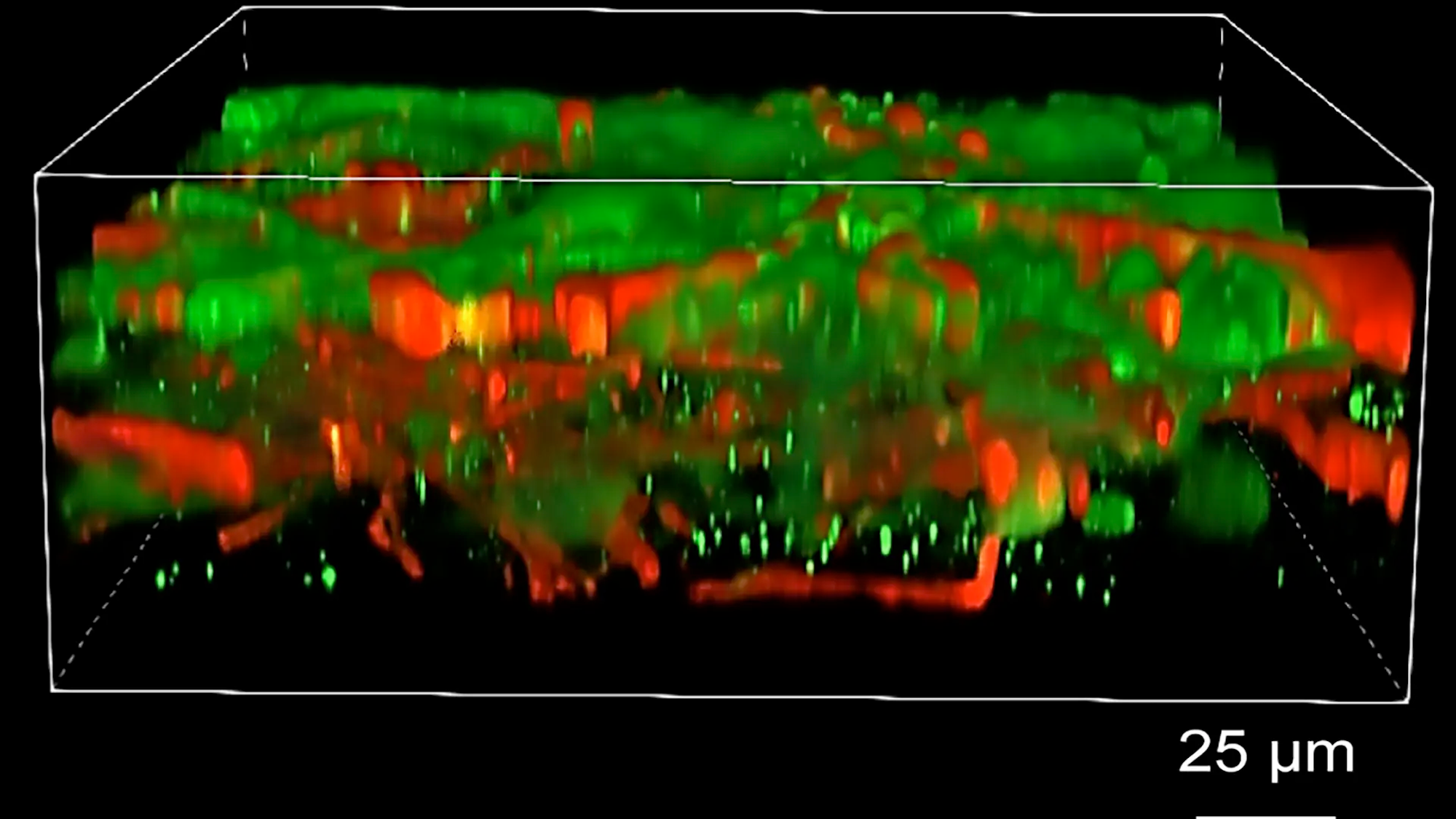
According to New Atlas, the researchers incorporated neurons derived from pluripotent stem cells into a specialized bio-ink gel containing fibrinogen and thrombin. Additional hydrogels helped address previous challenges encountered in 3D-printed tissue experiments, resulting in a resilient yet flexible structure that allows for optimal neuron growth and communication.
Lead researcher Su-Chun Zhang notes that the new tissue supports interconnectivity between cells, similar to human neurons, fostering neurotransmitter production and the development of support cell networks within the printed tissue.
Diverse Applications
The team successfully printed cortical and striatum cultures, showcasing the ability of these tissues to communicate and function together despite their distinct roles. Zhang envisions the potential for this technique to be utilized with various neuron types, opening doors for studying brain functions in diseases like Alzheimer’s and exploring new drug testing methods.
Zhang emphasizes the importance of studying brain tissue as interconnected networks, highlighting how this innovative 3D-printing approach can provide a comprehensive understanding of brain dynamics and facilitate advancements in neurological research.