



Key Points
-
GE Aerospace posted strong first-quarter results, but the stock declined due to macro risks.
-
The Persian Gulf conflict and the closure of the Strait of Hormuz is pressuring flight departures and future service revenue.
-
Management’s guidance assumes oil prices will normalize by year-end; risks remain if conflict persists.
- 10 stocks we like better than GE Aerospace ›
GE Aerospace (NYSE: GE) just reported first-quarter earnings that beat Wall Street estimates. Highlights included an adjusted year-over-year revenue increase of 29% and a whopping 87% increase in orders spread across a 93% increase in commercial engines and services (CES) and a 67% increase in defense and propulsion technologies (DPT). However, the stock declined 4.5% on the day of the earnings release. There’s something else going on here, and that “something” is the risk of a prolonged conflict in the Persian Gulf.
GE Aerospace had an excellent quarter
It wasn’t just a strong first quarter; management also expects an excellent second quarter with services growth in the high teens (a figure above the full-year guidance for mid-teens growth), driven by the fact that “95% of the spare parts for second quarter are in the backlog. All the engines that we need to work on for second quarter are in the shop” according to CFO Rahul Ghai on the earnings call.
Will AI create the world’s first trillionaire? Our team just released a report on the one little-known company, called an “Indispensable Monopoly” providing the critical technology Nvidia and Intel both need. Continue »
In addition, CEO Larry Culp noted that its pipeline of “planned engine removals in the second and third quarters, combined with engines that are currently off wing, exceeds our shop visit guide.” Shop visits are when engines are removed from aircraft and sent for maintenance, repair, and overhaul — the single most important earnings driver for the company.
With a forecast-busting first quarter in print and an excellent outlook for the second and third quarters in place, management was moved to tell investors that it was trending toward the high end of its full-year 2026 guidance of $7.10 to $7.40 in earnings per share, and $8 billion to $8.4 billion in free cash flow.
That’s fine, but why didn’t management raise its full-year guidance?
The conflict in Iran is having an impact
A higher price of crude oil leads to higher jet fuel prices, and a shortage of crude oil at refineries leads to an increase in the spread between crude oil and jet fuel prices. It gets worse. Europe and Asia also source jet fuel that passes through the Strait of Hormuz, with the U.K. particularly exposed.
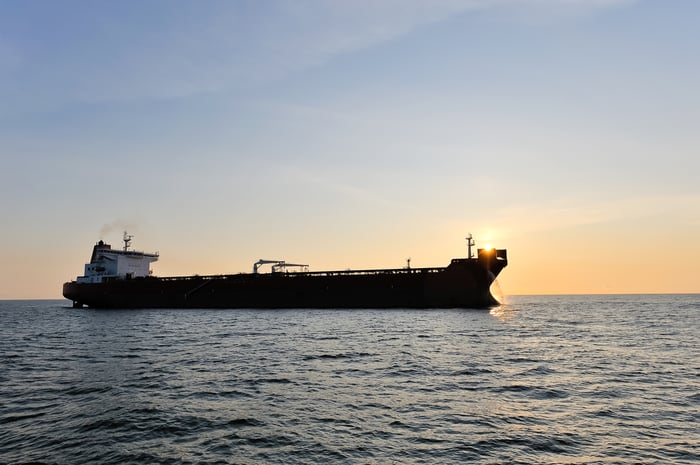
Image source: Getty Images.
These issues led GE Aerospace to lower its forecast for full-year flight departures growth (using engines from GE or its joint venture,