

The Influence of Early Supermassive Black Holes on Star Formation
A New Perspective on the Relationship Between Galaxies and Black Holes
The age-old question of which came first, the galaxy or its supermassive black hole, has puzzled scientists for years. Recent research has shed light on this ancient riddle, suggesting that black holes may have played a crucial role in shaping the evolution of galaxies from the very beginning.
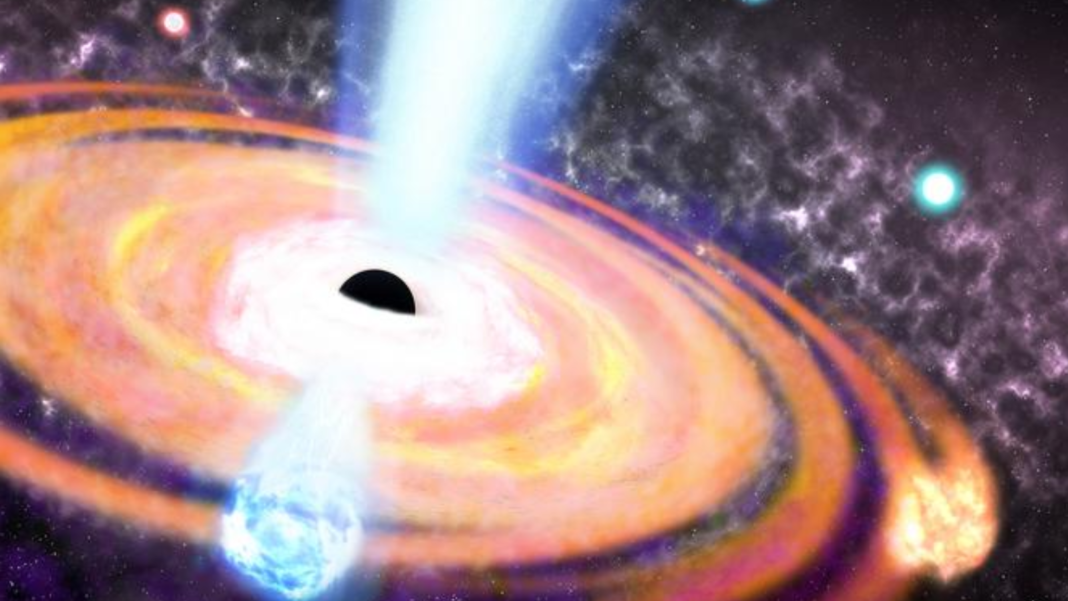
Supermassive black holes that existed in the early stages of the universe are now believed to have accelerated the formation of stars in surrounding galaxies, influencing the development of the cosmos as a whole. A reanalysis of data from the James Webb Space Telescope has revealed that these black holes could have been present within the first 50 million years of the universe’s existence, driving star formation at an unprecedented early age.
This discovery challenges previous assumptions that black holes only formed after the emergence of the first stars and galaxies. The team of researchers, led by Joseph Silk from Johns Hopkins University, suggests that these ancient black holes acted as seeds for early galaxies, amplifying the process of star formation to a degree never before imagined.
The observations from the James Webb Space Telescope have shown that distant galaxies from the early universe are much brighter than expected, indicating a high concentration of stars and supermassive black holes. This unexpected brightness suggests that our current theories of galactic evolution may need to be reevaluated.
According to Silk, the black holes may have played a crucial role in crushing gas clouds and accelerating the rate of star formation in these ancient galaxies. This new interpretation challenges existing theories that black holes formed after the stars that birthed them, suggesting a more complex relationship between black holes and galaxies than previously thought.
Overall, this new research highlights the profound impact that early supermassive black holes may have had on the evolution of the universe, shedding new light on the mysteries of cosmic formation and challenging our understanding of how galaxies come into existence.