


Uncovering Hidden Secrets in Renaissance Astronomy Texts
A recently donated astronomy book to the Rochester Institute of Technology (RIT) in New York State has piqued the interest of scholars due to its potential palimpsest nature, suggesting that it may hold an undiscovered treatise. This book, along with another donation, has shed light on the practices of reusing expensive vellum parchment in the Renaissance era. Astronomy experts believe that beneath the text of the donated book, originally a 15th-century version of Johannes de Sacrobosco’s work, lies an older, hidden text. RIT students in the imaging science program are set to embark on deciphering these erased words, as per university officials.
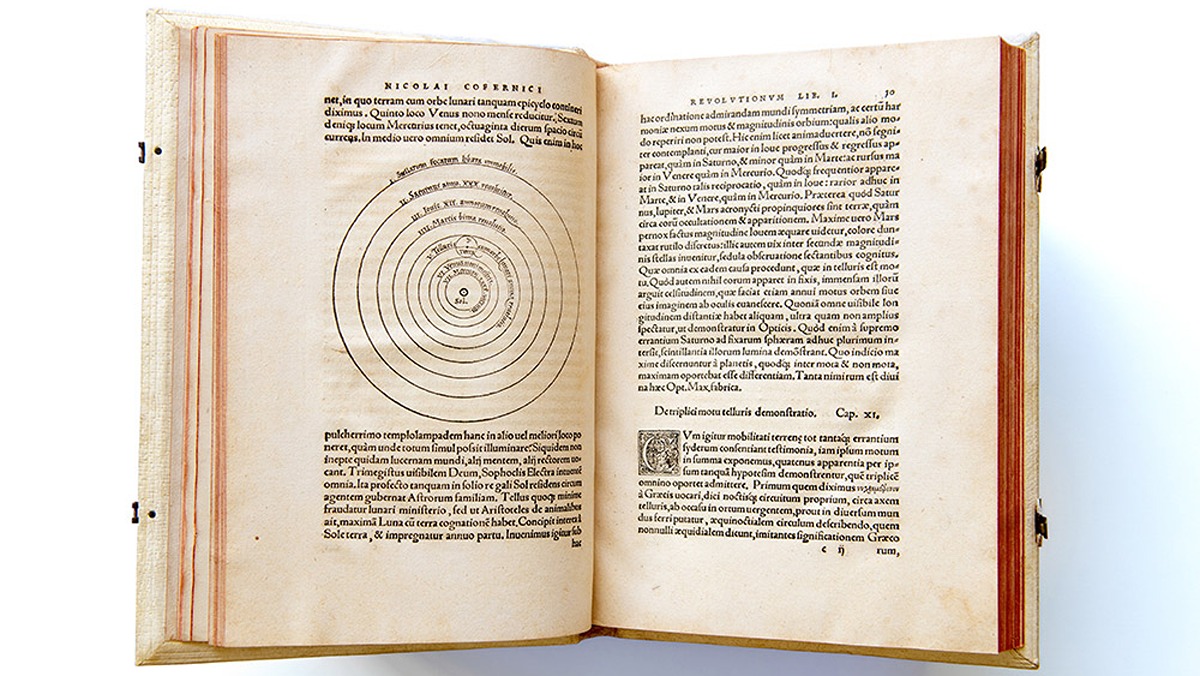
The second donated book, a groundbreaking work by Nicolaus Copernicus from 1543, revolutionized the field of astronomy. By providing mathematical proofs and sky observations, Copernicus challenged the prevailing belief that the Earth was the center of the universe, instead proposing that it was the sun. This concept was ahead of its time, predating the invention of the telescope in the 17th century. While Copernicus’ theory of the sun being the center of the universe was eventually disproved, his contributions to astronomical science were invaluable.
Donor Irene Conley, reflecting on the decision to donate these texts, expressed a desire for them to be actively studied and utilized for research purposes at RIT, rather than being sold to private collectors. The books’ arrival at RIT sparked excitement among students unwrapping them, signaling a new chapter of advanced work and research in the field of astronomy.
The juxtaposition of the two donated books underscores the rapid evolution of astronomical concepts during the Renaissance period. While Sacrobosco’s work placed Earth at the center of the universe in accordance with Ptolemy’s model, Copernicus challenged this view by proposing the sun as the central celestial body. Despite facing societal backlash, including opposition from the Catholic Church, Copernicus drew upon a longstanding line of thinking that traced back to ancient Greek astronomers like Plato and Eudoxus.
Ancient astronomers had already observed the unique orbital patterns of Mercury and Venus in relation to the sun, planting seeds of thought that would eventually lead to Copernicus’ revolutionary ideas. From Aristarchus of Samos’ heliocentric model to Martianus Capella’s Earth-centered universe theory, the rich history of astronomical inquiry paved the way for Copernicus to make his mark on scientific thought.
In conclusion, the donation of these Renaissance astronomy texts to RIT serves as a testament to the enduring legacy of early astronomical pioneers and the relentless pursuit of knowledge in the cosmos. Through the careful study and analysis of these historical works, students and researchers can continue to unravel the mysteries of our universe and honor the groundbreaking discoveries of figures like Copernicus and Sacrobosco.
To read more about this fascinating discovery, click here.