


Detecting Landslides and Tsunami Hazards Remotely
An innovative method has been developed by the University of Alaska Fairbanks (UAF) to swiftly identify large landslides and assess whether they pose a tsunami risk. This groundbreaking technique can detect impending landslides within minutes, offering critical insights to prevent disasters. The team’s research, highlighted in a recent study published in The Seismic Record, showcases the potential of remote detection in landslide monitoring.
Alaska’s High-Risk Zones
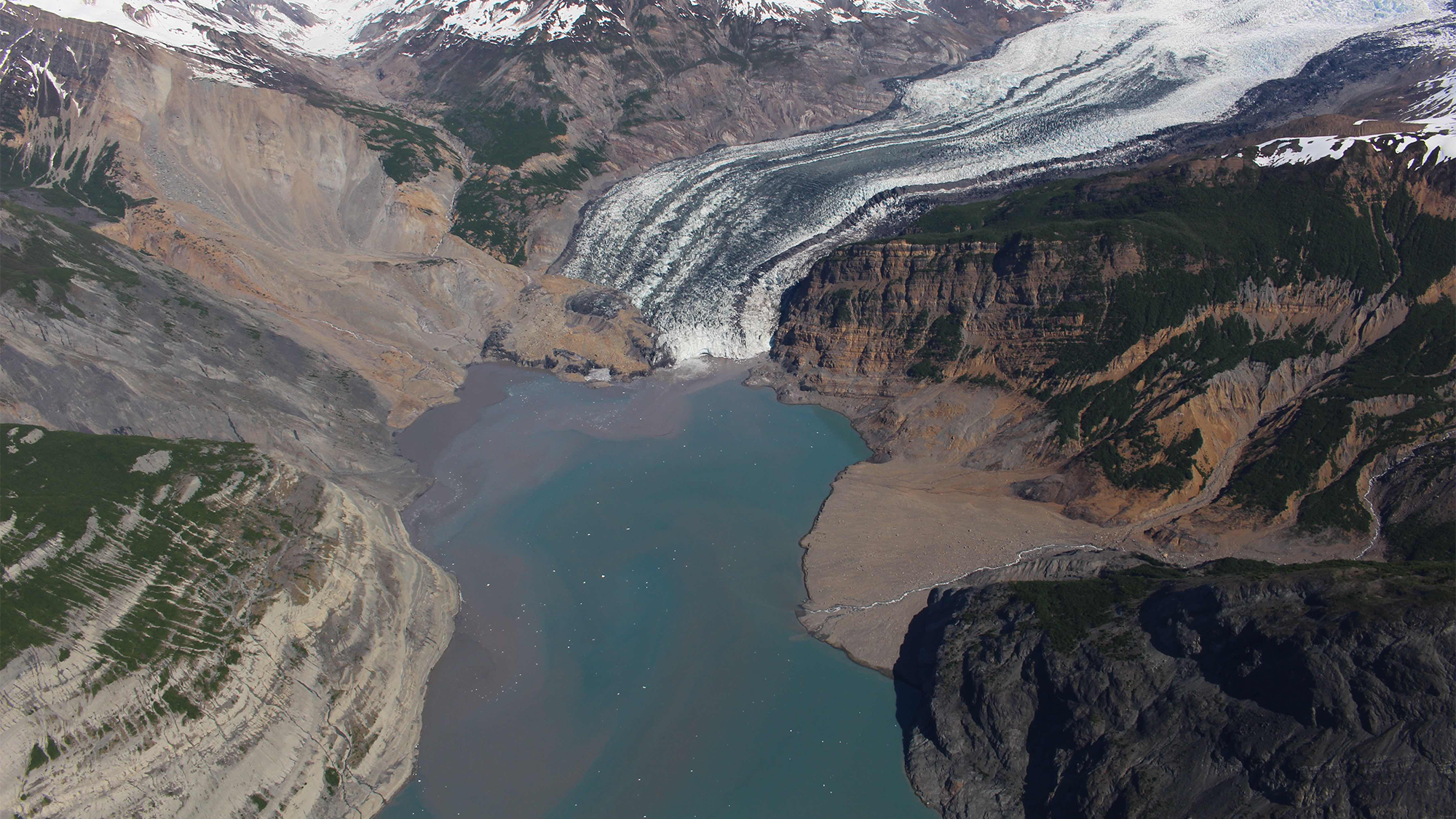
The case study points to a significant 2015 landslide in Taan Fjord, Alaska, where massive rock displacement triggered a tsunami, causing severe damage. Concerned by this event, the researchers established a real-time detection system around the vulnerable Barry Arm area in Prince William Sound. Utilizing seismic station data already in place, this prototype system aims to provide early warnings of potential landslides and tsunamis.
Glacial Retreat and Increased Hazard
The alarming retreat of Barry Glacier has left a precarious situation in Barry Arm, as the unsupported fjord wall continues to deteriorate. With the wall slumping approximately 650 feet over recent years, the risk of catastrophic landslides and ensuing tsunamis looms large. Climate-induced glacier retreat has amplified the instability, posing a grave danger to coastal communities in southern Alaska.
Seismic Monitoring for Early Detection
Researchers monitor seismic activity to identify signs of impending landslides, particularly focusing on the distinct long-period waves generated by these events. Unlike earthquakes that produce short-duration waves, landslides manifest with more prolonged seismic signals, allowing for timely intervention and evacuation measures. By analyzing seismic data, experts can swiftly differentiate landslide-induced waves from other sources of seismic energy.
The Future of Landslide Detection
Moving forward, the study underscores the urgency of implementing advanced detection methods to mitigate the impact of landslide-triggered tsunamis. With communities at risk in the Barry Arm region, the need for proactive monitoring and swift action is paramount. By harnessing cutting-edge technology and seismic analysis, researchers aim to safeguard vulnerable areas from the devastating consequences of landslides and associated tsunamis.