

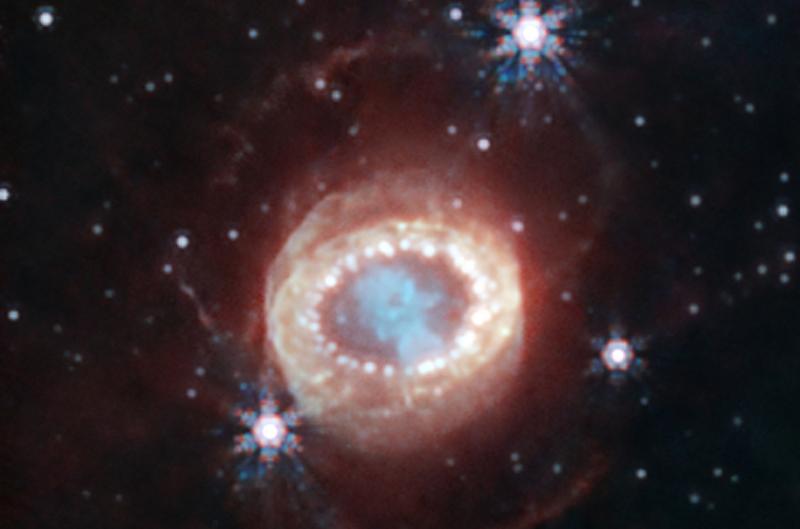

The Recent Discovery of Fluorescing Gas Around a Neutron Star
A sensational finding by NASA’s James Webb Space Telescope has revealed a striking phenomenon – fluorescing gas surrounding a neutron star, ignited by remnants of a supernova. The neutron star in question has defied astronomical odds and survived the cataclysmic supernova event of 1987. This discovery sheds new light on the aftermath of stellar explosions and offers unique insights into the behavior of these enigmatic celestial objects.
The Neutron Star Resilience: An Extraordinary Tale of Survival
In the wake of the 1987 supernova, many believed that the neutron star at the core of the explosion would have perished. However, against all expectations, this neutron star not only endured the supernova but also thrived in its aftermath. The JWST’s detection of fluorescing gas surrounding the neutron star provides compelling evidence of its resilience and adaptability in the face of extreme cosmic events.
Implications for Stellar Evolution and Supernova Dynamics
The presence of fluorescing gas around the surviving neutron star offers researchers a unique opportunity to study the evolution of stellar remnants following a supernova. By analyzing the composition and behavior of this gas, scientists can gain valuable insights into the processes that govern the transformation of stars into neutron stars and the subsequent interactions with their surroundings. This discovery opens up new avenues for research on the dynamics of supernovae and their impact on the surrounding interstellar medium.
Unveiling the Mysteries of Cosmic Phenomena
The discovery of fluorescing gas around the surviving neutron star underscores the importance of continued exploration and observation of cosmic phenomena. Through the use of advanced telescopes and observational techniques, scientists can uncover hidden secrets of the universe and expand our understanding of the forces that drive the evolution of stars and galaxies. This newfound knowledge has the potential to revolutionize our current theories of stellar evolution and contribute to a deeper appreciation of the vast and complex cosmos that surrounds us.
In conclusion, the recent discovery of fluorescing gas around a surviving neutron star represents a landmark achievement in the field of astronomy. By uncovering this remarkable cosmic phenomenon, researchers have opened up new avenues for exploration and deepened our understanding of the intricate processes that shape the universe. As we continue to push the boundaries of scientific discovery, we can look forward to further revelations that will revolutionize our understanding of the cosmos and our place within it.