

The New Dilemma of Stopping Obesity Drugs: What Happens Next?
As millions of Americans have successfully shed pounds and improved their health with popular obesity medications like Wegovy, a new concern arises: What happens once they discontinue the treatment?
There is a valid fear among many individuals that they will gain back the weight they worked so hard to lose and fall back into unhealthy habits. Clinical trials have shown that patients who halt the medications tend to regain most of the weight they had previously shed.
However, some are taking a different approach by experimenting with methods to gradually taper off the drugs while still maintaining their weight loss. This includes spacing out doses, taking the medication intermittently, or only restarting treatment as needed.
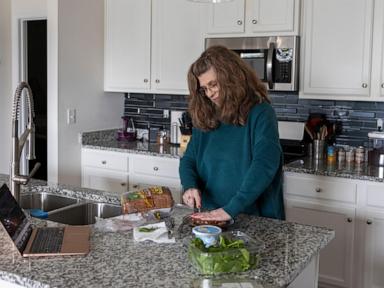
Donna Cooper, a 62-year-old from Front Royal, Virginia, who lost nearly 40 pounds in nine months with Wegovy, views the medication as a helpful tool rather than a permanent solution. She believes that at some point, it is necessary to discontinue the drug and not rely on it indefinitely.
Recent data from the health technology company IQVIA reveals that over 3 million prescriptions for these new obesity medications are being dispensed monthly in the U.S. These drugs include semaglutide (found in Ozempic and Wegovy) and tirzepatide (found in Mounjaro and Zepbound).
Despite the popularity of these drugs, adherence rates are low. A study published in the journal Obesity reported that only 40% of patients who received a prescription for Wegovy in recent years continued taking it a year later.
Medical professionals emphasize that obesity is a chronic condition that requires ongoing management, much like heart disease or high blood pressure. The injectable drugs work by replicating hormones in the gut and brain to regulate appetite and satiety. They were specifically designed and tested for continuous use, according to experts.
Dr. Andres Acosta, an obesity researcher at the Mayo Clinic, warns against using these medications intermittently, as they are not approved for such use and do not yield the same results. However, despite this guidance, some patients who have achieved their health goals with the drugs are seeking ways to reduce their dosage or discontinue the treatment altogether.
Dr. Amy Rothberg, an endocrinologist at the University of Michigan, notes that many patients are interested in stepping down from the medication or completely stopping it. She highlights that the reasons for pausing the drugs can vary, from experiencing undesirable side effects like nausea and constipation to simply not wanting to take the medication indefinitely.
For instance, one of Dr. Katherine Saunders’ patients, a 53-year-old man from New York, lost 70 pounds with Mounjaro last year. He expressed a desire to take a break from the medication to observe how his body responds. Dr. Saunders acknowledges the individualized nature of this decision-making process.
In conclusion, the decision to discontinue obesity drugs like Wegovy is a complex and individualized one. While medical professionals recommend continuous usage to maintain weight loss, some patients are exploring alternative approaches to manage their weight and health effectively.