

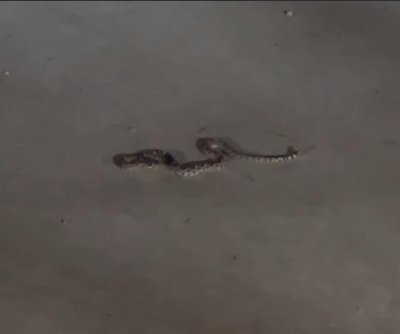

An Encounter with a Venomous Rattlesnake on Texas A&M University-San Antonio Campus
On March 8, an event unfolded on the campus of Texas A&M University-San Antonio that called for swift action from a campus police officer. The officer, Daniel Stoddard, was alerted to the presence of a venomous rattlesnake that had been spotted slithering between two buildings on a main walkway.
Upon receiving the report, Officer Stoddard promptly made his way to the scene, located between the Science and Technology Building and the Auditorium. With a calm and composed demeanor, he carefully relocated the snake from the walkway to a safer spot among some nearby bushes.
Professor Charles Watson, a knowledgeable figure in the field of biology at Texas A&M, was able to positively identify the serpent as a Western Diamondback Rattlesnake. In an interview with the student newspaper The Mesquite, Watson shed light on the situation by explaining that the ongoing campus construction may be disrupting wildlife habitats, causing animals like the rattlesnake to venture into more populated areas of the campus.
While acknowledging the potential danger posed by the venomous snake, Professor Watson emphasized that rattlesnakes are typically non-aggressive and will only bite in self-defense when they feel threatened. He offered practical advice to the campus community, advising individuals to stick to well-lit pathways and remain vigilant about their surroundings to avoid unintended encounters with such wildlife.
This incident is not the first wildlife sighting to occur at the Texas A&M campus in San Antonio. Previous encounters have included encounters with scorpions, feral hogs, donkeys, and coyotes, highlighting the diverse range of wildlife that can be found in the area. It serves as a reminder of the importance of coexisting harmoniously with nature, especially in rapidly developing urban environments.
In conclusion, the recent rattlesnake incident at Texas A&M University-San Antonio serves as a poignant reminder of the need for vigilance and awareness when navigating campus grounds. By heeding the advice of experts like Professor Watson and staying attuned to our surroundings, we can ensure the safety and well-being of both humans and wildlife in shared spaces.