


Uncovering the Truth Behind the 2014 ‘Interstellar Meteor’
In January 8, 2014, a striking fireball streaked across the sky north of Papua New Guinea, leaving experts and researchers intrigued. Divers later retrieved materials from the ocean floor near the suspected crash site, sparking speculation of extraterrestrial origins. However, a seismic station on Manus Island recorded ground vibrations during the same event, which led to a more down-to-earth explanation.
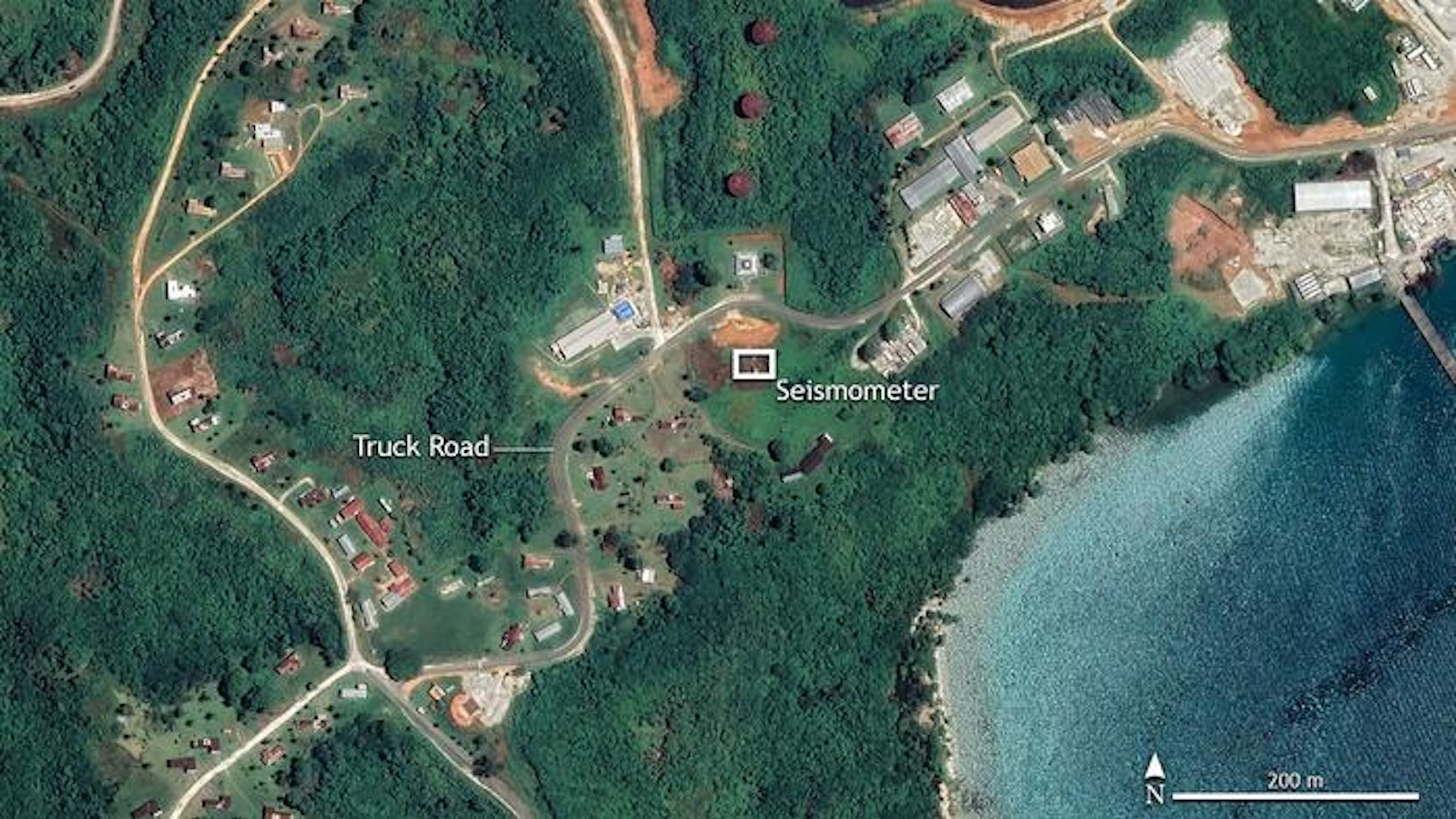
Johns Hopkins planetary seismologist Benjamin Fernando dismissed the notion of extraterrestrial involvement, stating that the signals resembled those of a passing truck rather than a meteor. Fernando and his team will present their findings at the upcoming Lunar and Planetary Science Conference in Houston, Texas on March 12.
The researchers analyzed the seismic data meticulously, considering the directional changes in the signals that aligned with a nearby road. By comparing this information with data from monitoring facilities in Australia and Palau, originally designed to track nuclear test waves, they pinpointed a more accurate location for the atmospheric event, debunking previous assumptions made during the 2023 recovery mission.
In their paper titled “Probably Not Aliens: Seismic Data Analysis from the 2014 ‘Interstellar Meteor,’” Fernando’s team discredited the alien theory and emphasized the unlikelihood of the retrieved materials being from an interstellar source. With NASA estimating that Earth is bombarded with around 50 tons of meteoritic material daily, the researchers concluded that while some fragments may indeed be meteorites, the likelihood of extraterrestrial involvement is slim.
Looking ahead, the researchers remain open to new discoveries and unidentified aerial phenomena (UAP) sightings, as the government encourages the public to report any unexplained events. As the search for extraterrestrial life continues, the focus remains on analyzing data and uncovering the truth behind cosmic phenomena.