


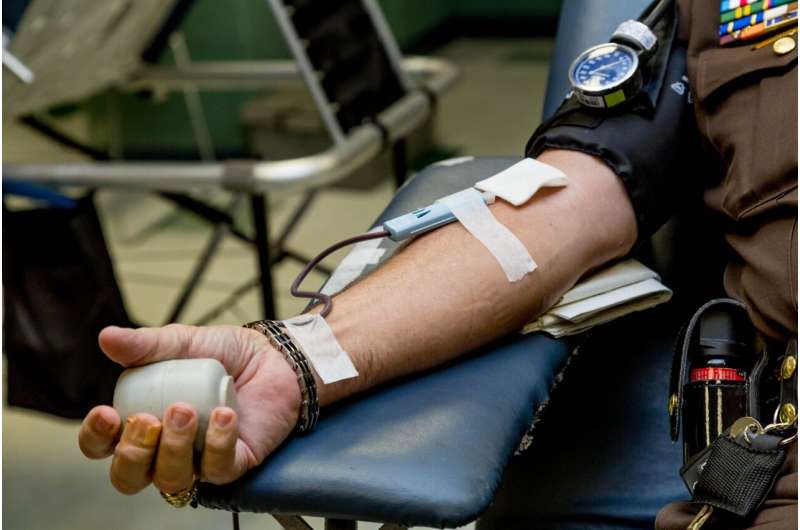
Credit: Unsplash/CC0 Public Domain
Addressing Critical Blood Shortages
With blood centers and hospitals grappling with dangerously low blood supplies, many individuals diagnosed with heart disease may consider contributing through blood donation.
Experts affirm that, in most cases, individuals with heart disease can safely donate blood.
The Importance of Blood Donation
It is crucial to acknowledge that someone in the U.S. requires blood approximately every two seconds for various reasons, such as surgery, cancer treatments, childbirth, anemia, severe injury, or blood disorders.
Surprisingly, many potential blood donors, including individuals with a history of medical conditions like heart disease, express a strong willingness to donate blood. Dr. Alcinda Flowers, medical director of Versiti, a blood center based in Milwaukee, notes that individuals who have experienced the need for blood firsthand during hospitalizations are particularly motivated to donate blood due to their ability to empathize with others.
Blood Donation Statistics
While more than 11 million units of whole blood are donated in the U.S. annually, only around 3% of eligible individuals actually donate blood, according to the American Red Cross. The organization recently highlighted an emergency blood supply shortage after experiencing a 20-year low in donor numbers, likely exacerbated by winter weather conditions and a surge in COVID-19 cases.
The Food and Drug Administration (FDA) is responsible for regulating the safety of blood products, primarily to safeguard blood recipients. Consequently, donation requirements may vary across blood centers.
Eligibility for Blood Donation
Blood centers typically evaluate all prospective donors through a thorough questionnaire to determine their eligibility to donate blood. Individuals with cold or flu symptoms must wait until they have been symptom-free for 48 hours before donating blood, with different criteria applicable to conditions like COVID-19.
Notably, individuals with heart disease are generally considered eligible for blood donation. Moreover, most individuals with hypertension can donate blood if their blood pressure levels are within a certain range at the time of donation.
Considerations for Individuals with Heart Conditions
For individuals who have experienced a heart attack, recent angina episode, bypass surgery, angioplasty, or a change in heart medication, the Red Cross recommends a waiting period of six months or longer before donating blood.
Individuals taking blood thinners or other anticoagulant medications should disclose all medications during health screenings to avoid harm to themselves and potential blood recipients, as advised by Dr. Flowers.
It is advisable for individuals with heart conditions to consult their healthcare providers before donating blood to ensure safety, according to Dr. Flowers.
Hemoglobin Levels and Blood Donation
Dr. Tochi Okwuosa, a cardiologist at Rush University Medical Center in Chicago, suggests that individuals with low hemoglobin levels should refrain from donating blood. The Red Cross mandates a minimum hemoglobin level of 12.5 grams per deciliter for female donors.