

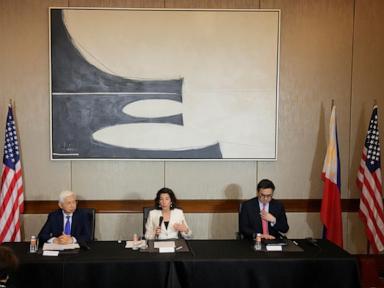

In the ongoing effort to prevent China from acquiring advanced computer chips and manufacturing equipment for military purposes, the United States is consistently evaluating the need to expand export controls. According to U.S. Commerce Secretary Gina Raimondo, these measures are crucial to impeding China’s potential military advancements utilizing technologies such as hypersonic missiles and artificial intelligence.
The U.S. implemented initial export controls in 2022 with the specific aim of curbing the use of chips in military applications. However, the restrictions were expanded by the U.S. Commerce Department last year, leading to objections from China’s Commerce Ministry. China argued that these constraints violated international trade regulations and posed a threat to the stability of industrial supply chains.
Asserting its rights and interests, China vowed to take all necessary actions to protect itself and urged the U.S. to lift the export controls promptly. When questioned about the possibility of further extending chip export controls to China, Raimondo emphasized that such decisions are under constant review.
Raimondo highlighted the fast-paced nature of technological advancements, stressing the importance of adapting export control policies to reflect this dynamic landscape. She reiterated the necessity of safeguarding sophisticated technologies, including semiconductor and artificial intelligence technologies, from falling into the hands of the Chinese military.
While affirming the commitment to maintaining economic ties with China, Raimondo underscored the imperative of restricting China’s access to advanced technology for military purposes. The U.S. will continue to supply semiconductors worth billions of dollars to China, but with a clear stance on preventing military exploitation of cutting-edge technology.
During her visit to Manila with a delegation of executives from 22 American companies, Raimondo announced plans for significant investments in the Philippines amounting to approximately $1 billion. These investments aim to facilitate the development of high-tech skills among Filipinos, offering them access to lucrative job opportunities.
Emphasizing the enduring alliance between the U.S. and the Philippines, Raimondo stressed the mutual commitment to prosperity and security. Following a meeting with President Ferdinand Marcos Jr., Raimondo echoed his sentiment regarding the indispensable nature of the close bond between the two countries.
Pledging to enhance bilateral cooperation, Marcos urged U.S. businesses to participate in the Philippines’ extensive infrastructure projects valued at $148 billion. This collaborative approach seeks to bolster economic growth and strengthen the enduring partnership between the United States and the Philippines.