

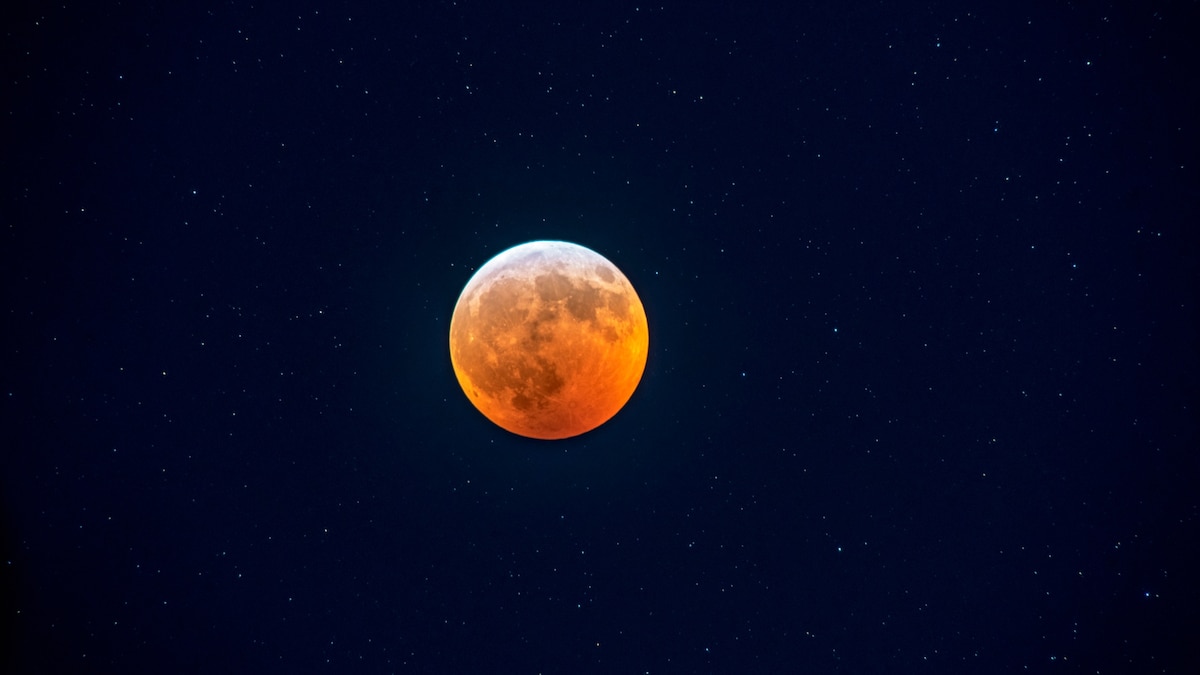

The Different Types of Lunar Eclipses
In the realm of celestial events, lunar eclipses are a captivating phenomenon that occur approximately twice a year. These captivating events take place when the sun, Earth, and moon align in such a way that the moon falls within the shadow cast by our planet. There are three main types of lunar eclipses: total eclipses, partial eclipses, and penumbral eclipses.
Penumbral Lunar Eclipse in March and Partial Lunar Eclipse in September
This year, stargazers can look forward to witnessing two lunar eclipses – a penumbral lunar eclipse on March 25 and a partial lunar eclipse on September 17. The first eclipse will be subtle, as the moon will only drift into Earth’s faint outer shadow, known as the penumbra.
While penumbral eclipses are often challenging to observe with the naked eye, the upcoming spring eclipse should be visible. This is due to the fact that Earth’s shadow will cover up to 95 percent of the moon’s surface, with only 60 percent needed for the eclipse to be seen without the aid of a telescope.
The eclipse in September promises to be more dramatic, as a segment of the moon will pass into the darker inner part of Earth’s shadow, known as the umbra. Observers may witness what appears to be a circular section carved out of the side of the moon.
Historical Fascination and Astronomical Insights
Throughout recorded history, lunar eclipses have both delighted and terrified humanity. Astronomers have honed their skills in tracking celestial movements to accurately forecast lunar eclipses years or even centuries in advance. By predicting when these events will occur, scientists can ensure that observers have the opportunity to witness these captivating celestial displays.
Understanding Penumbral and Partial Lunar Eclipses
Contrary to popular belief, lunar eclipses do not occur every month, even though we observe one full moon every month. This occurrence is due to the slight tilt in the moon’s orbit around Earth, which means the moon only passes through the planet’s shadow at specific times.
Interestingly, lunar eclipses follow a long-term pattern known as the Saros cycle. Eclipses that are separated by one Saros cycle share similar characteristics over time, although each eclipse can be observed at different times and from various locations on Earth.
Furthermore, not every lunar eclipse results in the moon being completely enveloped by Earth’s shadow. During a partial lunar eclipse, only a portion of the moon passes through the umbra, while the rest remains illuminated by the sun. Similarly, during a penumbral eclipse, the moon passes through the brighter outer part of Earth’s shadow, resulting in minimal visible effects from our planet.
Total Lunar Eclipses or Blood Moons
Periodically, skywatchers are treated to the stunning sight of a total lunar eclipse, also known as a blood moon. During this phenomenon, the moon takes on a deep red hue as it moves into Earth’s shadow. This transformation occurs when the sun, moon, and Earth align perfectly, allowing the moon to be completely engulfed in Earth’s shadow.
The awe-inspiring beauty and scientific insights offered by lunar eclipses continue to captivate audiences around the world. Whether observing a subtle penumbral eclipse or a dramatic total eclipse, these celestial events serve as a reminder of the intricate dance of celestial bodies in our solar system.