

Home Green Marine INTERCARGO pushes for urgent CII reforms at MEPC 82
September 17, 2024,
by
Sara Kosmajac
Ahead of the Marine Environment Protection Committee’s (MEPC 82) session, the International Association of Dry Cargo Shipowners (INTERCARGO) has submitted a series of proposals to the International Maritime Organization (IMO), calling for revisions of the Carbon Intensity Indicator (CII).
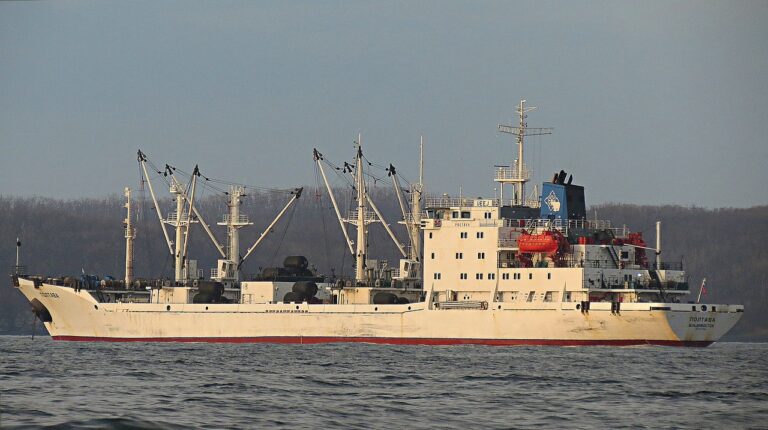 Illustration: Dry cargo ship (via Pixabay)
INTERCARGO has previously collaborated with a number of classification societies with a particular emphasis on assessing the impact of short journeys, port waiting times and the ship loading condition—that is, laden/ballast voyages—on the attained CII of bulk carriers.
Following a policy statement that the association submitted to the IMO earlier this summer together with other organizations such as Bimco, INTERTANKO and the International Chamber of Shipping (ICS), INTERCARGO has now submitted new proposals based on ‘extensive studies’ to IMO, highlighting what it believes to be the key issues within the current CII.
-

Posted: 2 months ago
-
Posted: about 1 year ago
Dimitris Monioudis, Vice-Chair of INTERCARGO’s Technical Committee, revealed that the studies—which were done in collaboration with classification societies DNV, ABS and Bureau Veritas (BV)—draw data from over 5,600 bulk carriers and are grounded on the examination of the IMO Data Collection System from 2022.
The first matter that INTERCARGO noted pertains to the impact of vessel idle time. As per the association, the studies showed a ‘clear correlation’ between increased idle time and poored CII ratings, especially for vessels of smaller sizes.
Idle time—defined as any time when the main engine is not running, such as when the ship is in port, waiting or drifting at anchorage—is often beyond the vessel’s control, yet as INTERCARGO has pointed out, there lies an issue of ‘pervese incentives’ within the CII framework.
Namely, as informed, the current CII may ‘inadvertently’ encourage ships to run their main engines without any need, for instance when waiting at anchorage. As a result, this could up overall emissions but show improved CII.
“The current CII framework, while well-intentioned, may be leading us down a path which contradicts our ultimate goal of reducing overall emissions,” said INTERCARGO Chairman, Dimitris Fafalios.
“This is clearly not the outcome we’re aiming for so it is crucial that we refine this system to ensure it truly incentivises energy efficiency and emissions reduction across our industry.”
In an absence of ‘consistent’ effiicency indicators, INTERCARGO reported that vessels with inferior performance ratings (E rating) often have lower CO2 emissions compared to those rated major superior (A) or minor inferior (D), hinting that the CII does not accurately represent a ship’s ‘true’ efficiency.
Moreover, in terms of vessel size, studies also reflect some disparities. As disclosed, smaller bulk carriers—particularly Handysite and Supramax/Ultramax—ended up with a higher percentage of D and E ratings compared to larger vessels.