

By Lenny Tinker, US DOE SETO’s Photovoltaics Program Manager
Latest
Features, Editors’ Blog, Interviews
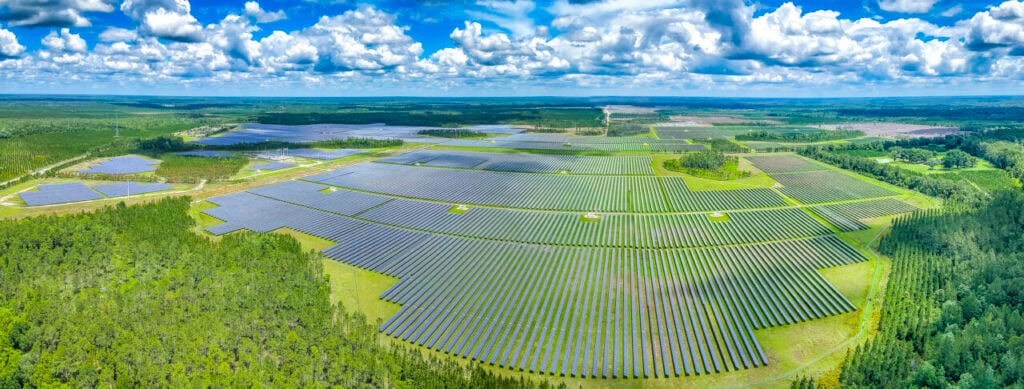 Beyond finding the location of a fault, machine learning can also help identify if ageing, weather, or something else caused the failure of a PV system. Image: Chris Gellentien.
As solar deployment increases around the country, monitoring solar plant performance at a large scale can be quite challenging and interpreting it can be like determining why a string of Christmas lights is out. Sometimes the reason is obvious—the whole string of lights is out, like an inverter malfunctioning in a solar plant. But often, a single light bulb is out, and you cannot figure out why. For solar system operators, understanding whether a setting is causing a performance issue or whether it’s a faulty module, string of modules, or a tracker to blame, can mean wasted time and lost energy production. That is where artificial intelligence (AI) can help.
PV systems need to last for several decades in harsh and changing outdoor conditions. The US Department of Energy (DOE) Solar Energy Technologies Office (SETO) is leading research efforts to understand what causes photovoltaic (PV) systems to fail, how to improve durability, and how to ensure systems last a long time—all key components of reducing the cost of solar energy. One promising application for AI being examined in several DOE projects is analyzing and optimizing the performance of solar systems by reducing human error and identifying common system failures.
This article requires Premium SubscriptionBasic (FREE) Subscription
Unlock unlimited access for 12 whole months of distinctive global analysis
Photovoltaics International is now included.
- Regular insight and analysis of the industry’s biggest developments
- In-depth interviews with the industry’s leading figures
- Unlimited digital access to the PV Tech Power journal catalogue
- Unlimited digital access to the Photovoltaics International journal catalogue
- Access to more than 1,000 technical papers
- Discounts on Solar Media’s portfolio of events, in-person and virtual
Or continue reading this article for free
For example, SETO awarded $1.5 million to the University of Maryland, College Park to develop a new approach to assess the reliability of power electronic components in PV inverters. The project team uses machine learning to sort through and interpret 10 years of performance data, making it easier to predict and avoid inverter failures. Without AI, analyzing such a large data set would be prone to errors and challenging at best, or more likely impossible. For instance, a human might sense a change in performance but not be able to correlate such a change with a meaningful problem due to the data’s complexity and size.
Machine learning techniques can help determine when and where to send field technicians for maintenance, ensuring their solar projects run efficiently and maximize electricity generation. By indicating potential problems early, plant managers can minimize downtime and extend the lifetime of PV systems.