

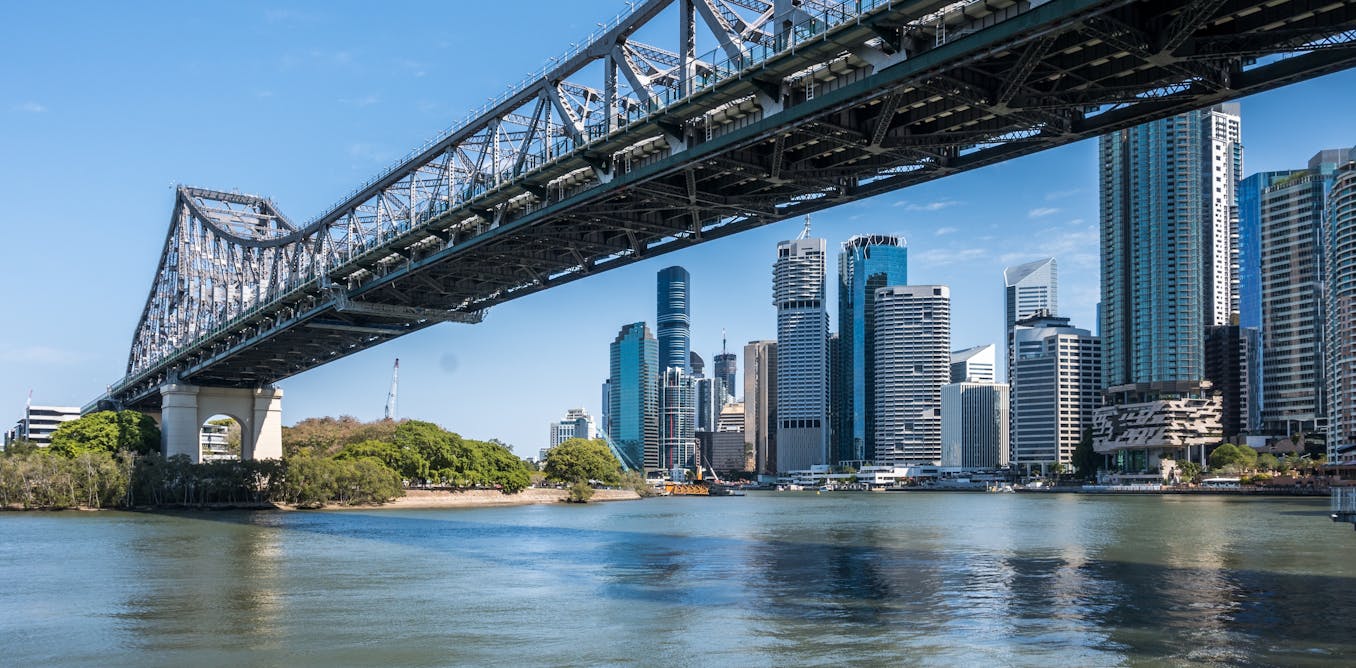

The Story Bridge, with its sweeping steel trusses and art deco towers, is a striking sight above the Brisbane River in Queensland. In 2025, it was named the state’s best landmark. But more than an icon, it serves as one of the vital arteries of the state capital, carrying more than 100,000 vehicles daily.
But a recent report revealed serious structural issues in the 85-year-old bridge. These included the deterioration of concrete, corrosion and overloading on pedestrian footpaths.
The findings prompted an urgent closure of the footpath for safety reasons. They also highlighted the urgency of Brisbane City Council’s planned bridge restoration project.
But this example – and far more tragic ones from around the world in recent years – have also sparked a broader conversation about the safety of ageing bridges and other urban infrastructure. A simple, proactive step known as structural health monitoring can help.
A number of collapses
In January 2022, the Fern Hollow Bridge in Pittsburgh, Pennsylvania, in the United States collapsed and injured several people. This collapse was caused by extensive corrosion and the fracturing of a vital steel component. It stemmed from poor maintenance and failure to act on repeated inspection recommendations. These problems were compounded by inadequate inspections and oversight.
Three years earlier, Taiwan’s Nanfang’ao Bridge collapsed. Exposure to damp, salty sea air had severely weakened its suspension cables. Six people beneath the bridge died.
In August 2018, Italy’s Morandi Bridge fell, killing 43 people. The collapse was due to corrosion in pre-stressed concrete and steel tendons. These factors were worsened by inspection and maintenance challenges.
In August 2007, a bridge in the US city of Minneapolis collapsed, killing 13 people and injuring 145. This collapse was primarily due to previously unnoticed problems with the design of the bridge. But it also demonstrated how ageing infrastructure, coupled with increasing loads and ineffective routine visual inspections, can exacerbate inherent weaknesses.
A technology-driven solution
Structural health monitoring is a technology-driven approach to assessing the condition of infrastructure. It can provide near real-time information and enable timely decision-making. This is crucial when it comes to managing ageing structures.
The approach doesn’t rely solely on occasional periodic inspections. Instead it uses sensors, data loggers and analytics platforms to continuously monitor stress, vibration, displacement, temperature and corrosion on critical components.
This approach can significantly improve our understanding of bridge performance compared to traditional assessment models. In one case, it updated a bridge’s estimated fatigue life – the remaining life of the structure before fatigue-induced failure is predicted to occur– from just five years to more than 52 years. This ultimately avoided unnecessary and costly restoration.
Good structural health-monitoring systems can last several decades. They can be integrated with artificial intelligence techniques and bridge information modelling to develop digital twin-based monitoring platforms.
The cost of structural health monitoring systems varies by bridge size and the extent of monitoring required.