

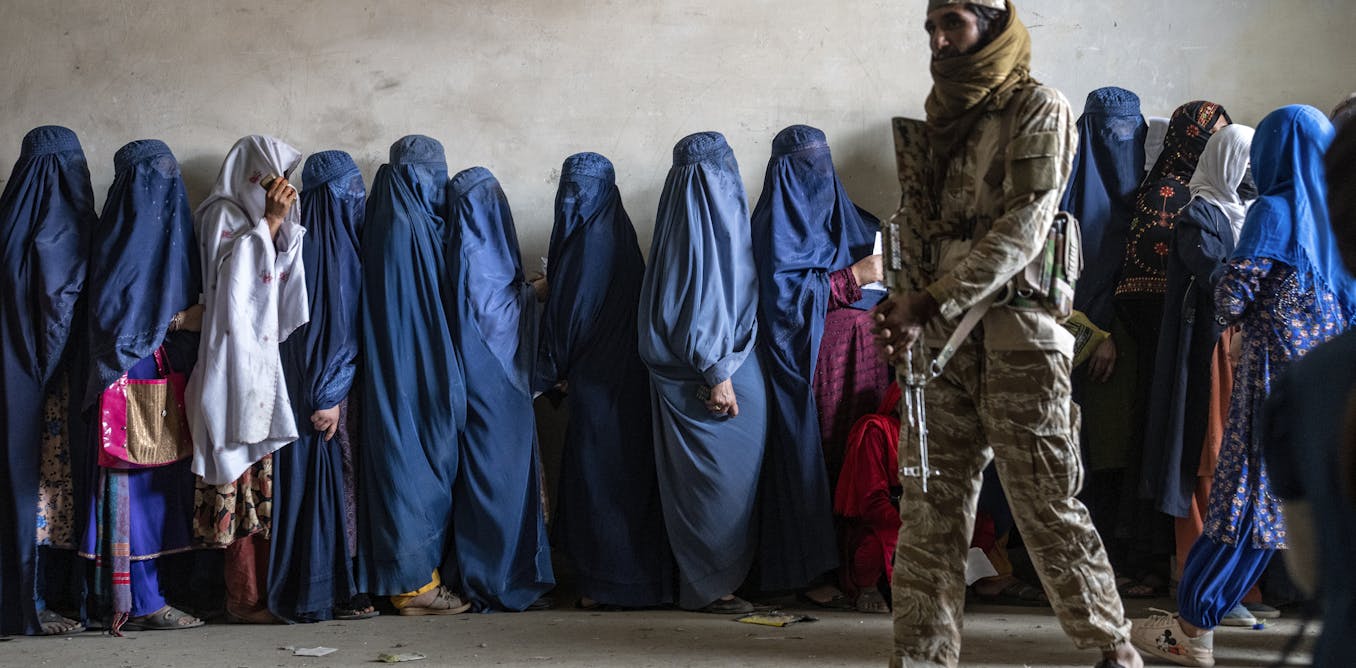

Earlier this month, the International Criminal Court (ICC) issued arrest warrants against the Taliban leadership in Afghanistan.
The court’s Pre-Trial Chamber II cited reasonable grounds for believing supreme leader Haibatullah Akhundzada and chief justice Abdul Hakim Haqqani were guilty of “ordering, inducing or soliciting the crime against humanity of persecution on gender grounds.”
The warrants – the first ever on charges of gender persecution – are being hailed as an “important vindication and acknowledgement of the rights of Afghan women and girls”.
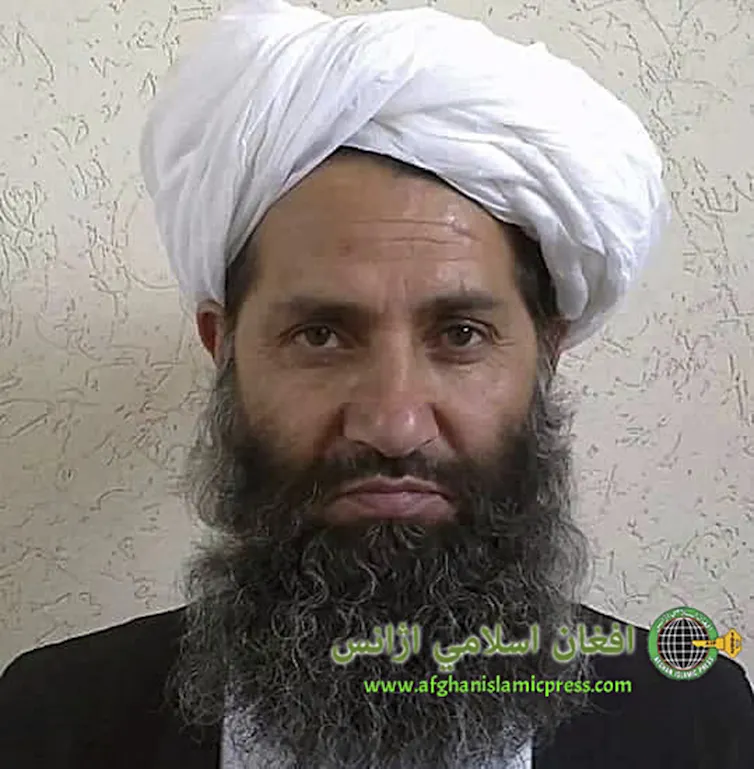
Taliban supreme leader Haibatullah Akhundzada is accused of crimes against humanity, especially against women and girls.
Afghan Islamic Press/AAP
But will they improve the plight of women and girls in Afghanistan, given the Taliban does not recognise the court or its jurisdiction?
The signs are not good with the Taliban denying the allegations and condemning the warrants as a “clear act of hostility [and an] insult to the beliefs of Muslims around the world”.
Erased from public life
Strict rules and prohibitions have been imposed on the Afghan people since the Taliban returned to power in August 2021.
Women and girls have been singled out for even worse treatment by reason of their gender.
According the warrants, the Taliban has
severely deprived, through decrees and edicts, girls and women of the rights to education, privacy and family life and the freedoms of movement, expression, thought, conscience and religion.
Women are banned from public places and girls from attending school once they turn 12.
Zahra Nader is the editor-in-chief of newsroom Zan Times which investigates human rights violations in Afghanistan. She says Afghan women and girls are being silenced, restricted and stripped of their basic human rights.
It is this discriminatory system of control of woman and girls in Afghanistan that is at the core of the court’s prosecution.
The warrants also accuse the Taliban of persecuting
other persons who don’t conform with the Taliban’s ideological expectations of gender, gender identity or expression; and on political grounds against persons perceived as ‘allies of girls and women.
This is the first time an international tribunal or court has confirmed crimes against humanity involving LGBTQIA+ victims. This marks an important milestone in the protection of sexual minorities under international law.
Crimes against humanity
International law clearly spells put the offences which constitute crimes against humanity.
The aim is to protect civilians from serious and widespread attacks on their fundamental rights. Different definitions of crimes against humanity have been included in the statutes of a handful of international tribunals and courts.
The definition under the Rome Statute of the International Criminal Court is the most comprehensive. It includes severe deprivation of personal liberty, murder, enslavement, rape, torture, forced deportation or apartheid.
Specifically, the Taliban leaders are accused under Article 7(1)(h) of the Rome Statute,