

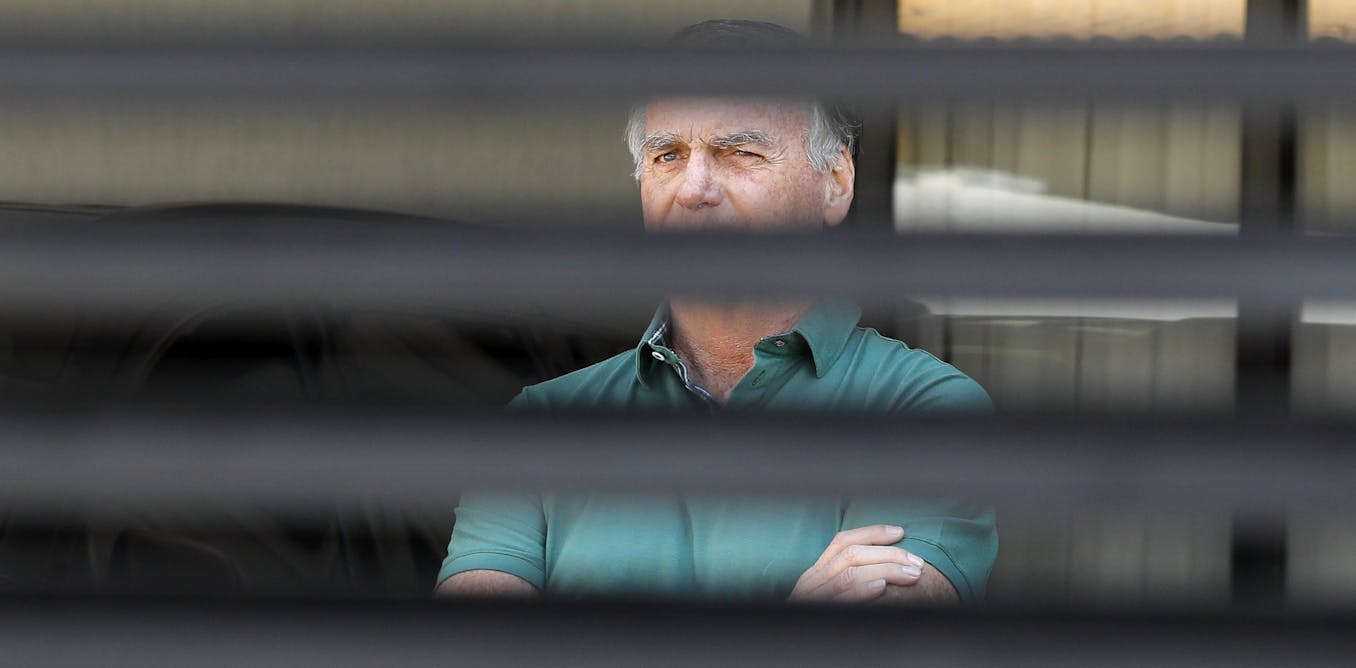

Jair Bolsonaro’s conviction on Sept. 11, 2025, puts the former Brazilian president in a rogues’ gallery of failed coup plotters to be held to account for their attempted power grab.
Brazil’s Supreme Court found Bolsonaro guilty of being part of an armed criminal organization and other counts relating to a coup plot to overturn the ex-president’s 2022 election defeat to Luiz Inácio Lula da Silva. Prosecutors had earlier argued that Bolsonaro and others discussed a scheme to assassinate Lula and incited a riot on Jan. 8, 2023, in hopes that Brazil’s military would intervene and return Bolsonaro to power.
Four of the five justices on the panel voted to convict. Justice Cármen Lúcia, who was among the majority, said that the right-winger acted “with the purpose of eroding democracy and institutions.” Sentenced to 27 years and three months behind bars, Bolsonaro is expected to appeal the verdict.
As political scientists who have documented the fate of hundreds of coup leaders in the book “Historical Dictionary of Modern Coups D’état,” we have collected a dataset of every coup attempt since the end of World War II. Bolsonaro is now one of thousands of coup plotters who have been brought to justice.
Not all coup plotters are held accountable for their actions. And even for those, like Bolsonaro, who are – it doesn’t necessarily mark the end of their political ambitions.
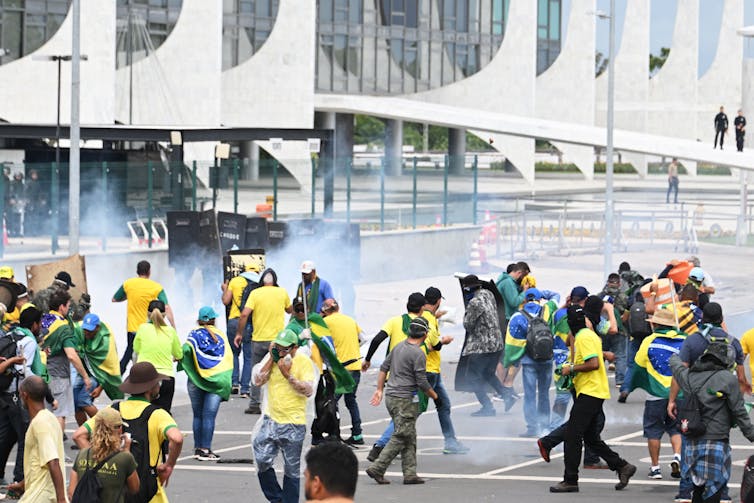
Supporters of former President Jair Bolsonaro clash with police outside the Planalto Palace in Brasilia on Jan. 8, 2023.
Evaristo Sa/AFP via Getty Images
Coup and punishments
Plotting a coup is risky business. Some of those who attempt to seize or usurp power unconstitutionally are killed during their takeover bid, particularly when security forces loyal to the incumbent leader foil the attack. Christian Malanga, an exiled former army captain who led a violent attempt to seize power in the Democratic Republic of Congo, is one such example. He was killed in the ensuing shootout in May 2024.
But most leaders of failed coups survive.
And although they typically face punishment, the severity of consequences varies greatly; it often depends on whether the attempt is a self-coup, which is a power grab by an incumbent leader, or an attempt to oust a sitting government.
The most common fate of failed self-coup leaders in democracies is impeachment and removal from office, as occurred to Indonesia’s Abdurrahman Wahid in July 2001, Ecuador’s Lucio Gutiérrez in April 2005, Peru’s Pedro Castillo in December 2022, and South Korea’s Yoon Suk Yeol in April 2025.
Some coup plotters and their co-conspirators are charged in a court and, if convicted, sent to prison. Malanga’s American co-conspirators were ultimately sentenced to life in prison in April 2025.
A similar fate has now befallen Bolsonaro. His conviction means that unless successful on appeal, Bolsonaro could end his days in confinement.
Still, it could have been worse – failed coupmakers are often punished outside of independent courts,