

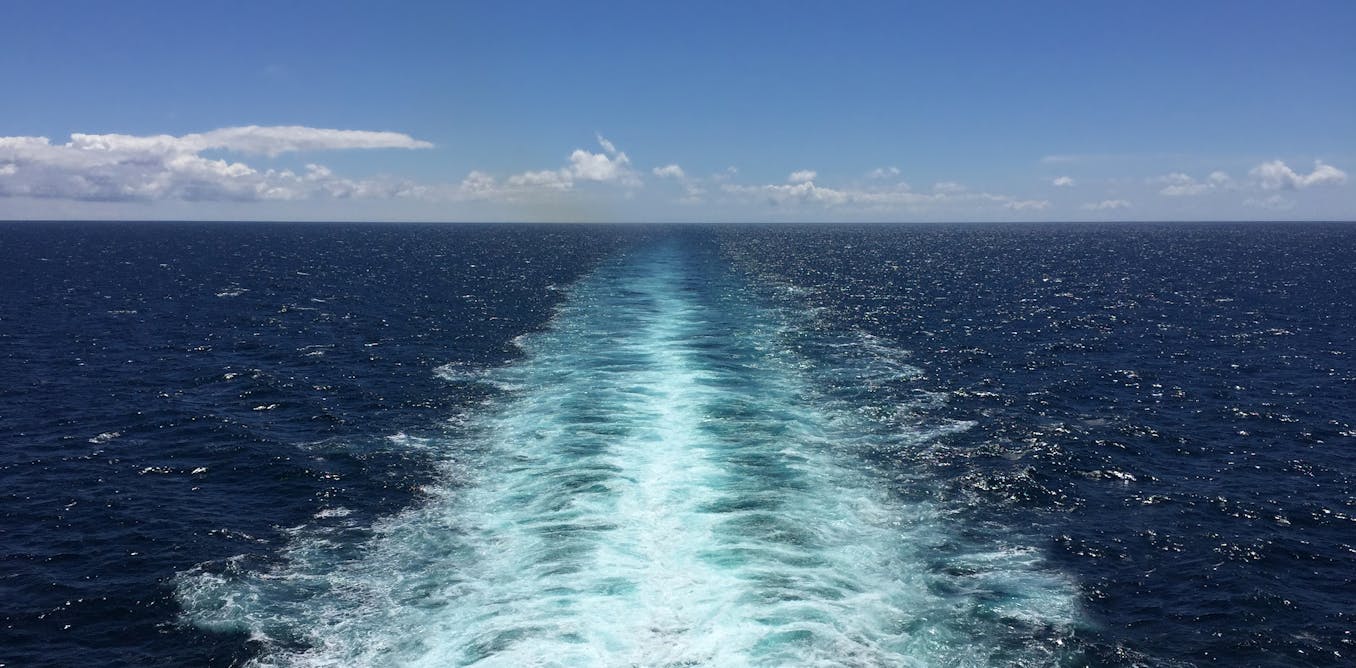

Two-thirds of the world’s oceans lie beyond national borders, an unregulated expanse under growing pressure from mining, fishing and climate change. Now, a new UN treaty promises to change that – but could also trigger fresh conflicts over who controls the high seas.
The high seas treaty, formally known as the BBNJ Agreement, has finally crossed the threshold to become international law after Morocco became the 60th country to ratify it. This triggers its entry into force in January 2026, opening a new era of ocean governance.
At the heart of the treaty is a plan to create protected areas on the high seas, similar to national parks on land. The goal is to protect 30% of the world’s oceans by 2030, a target agreed under the UN’s global biodiversity framework.
Only countries that sign and ratify the treaty will be bound by its rules (with some exceptions). Those that stay outside the agreement, like China or the US, won’t have to follow the treaty – but will lose a say in shaping the multilateral system of ocean governance. The could act unilaterally, but other states would be able to challenge them under the UN convention on the law of the sea.
The new treaty also lays down very detailed processes, thresholds, and other requirements for environmental impact assessments for activities that could harm the high seas. Countries can expect more regulations for activities – especially offshore activities – in their waters if they could cause damage beyond their maritime borders.
The high seas are a huge source of genetic resources. That means any plant, animal or microbe that could lead to new medicines, crops or industrial materials.
The treaty sets out rules for sharing both the materials and the potentially-lucrative scientific information they generate, so that poorer countries can also benefit from discoveries made in these waters. Detailed rules on access and benefit-sharing will be further developed by the countries that have signed the treaty.
However, the treaty will not apply to fishing already covered by international regulations, or to fish or other marine life caught through such activities on the high seas. Effectively, commercial fishing falls outside the scope of this treaty.
Mining pitted against conservation
But conservation isn’t the only activity on the high seas. Mining companies are keen to extract minerals such as nickel, cobalt or copper from below the deep seabed – often in the same areas where fragile ecosystems and valuable genetic resources can be found.
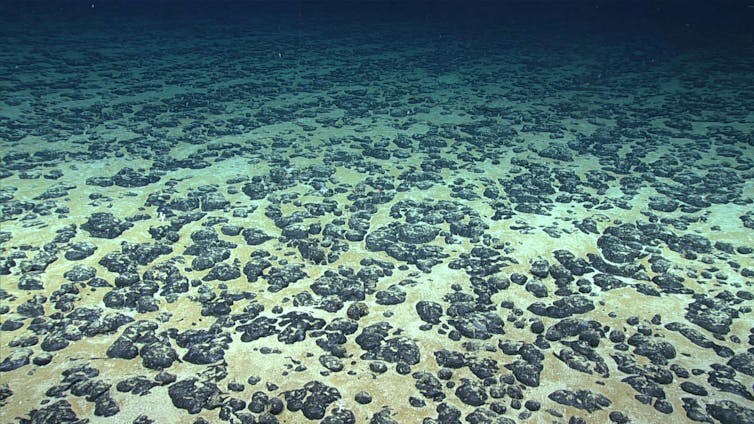
Deep seabed covered with manganese nodules. These lumps of minerals grow slowly over millions of years – and are targets for deepsea mining.
Science History Images / NOAA / Alamy
Deep-sea mining is already regulated by the International Seabed Authority, a separate specialised body established by a UN convention that has already granted many exploration contracts and is now drafting new rules for commercial extraction.
The two regimes – the high seas treaty and the seabed authority – compete and conflict with one another.