

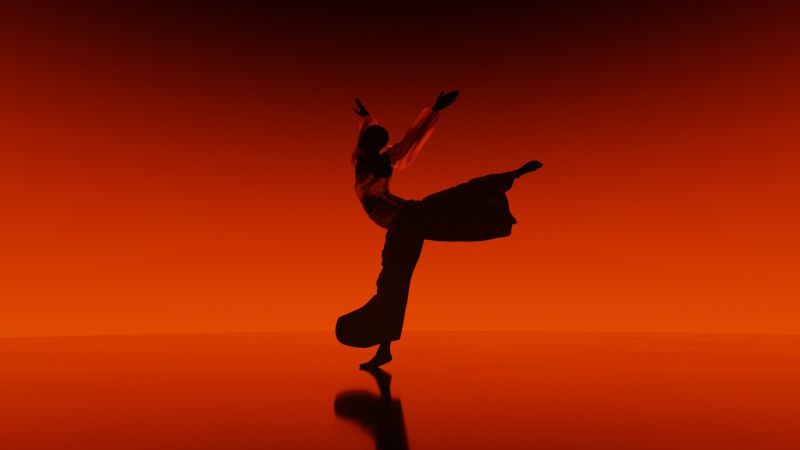

If you’re feeling a bit overwhelmed by the relentless march of AI into every corner of creative work, you’re not alone. It seems like every week brings another tool promising to revolutionise how we make art, design brands, or tell stories.
But what if the real revolution isn’t about embracing more technology—what if it’s about remembering what makes us fundamentally human?
That’s exactly the question Berlin’s Kenza is answering with their latest project. And honestly, it’s refreshing to see a company take such a bold stance. Their stunning film, Poetry of Mindful Motion, represents something we’re seeing far too little of these days: a celebration of pure human artistry, enhanced by technology rather than replaced by it.
Passion meets precision
Founded in 2018, Kenza has quietly been building something special. They’re not your typical design consultancy, though they’ve certainly mastered the technical side of things, with expertise in Web 4.0, metaverse environments, and advanced technology integration. But their latest venture reveals something deeper: a company that genuinely understands the soul of creativity.
The heart of their cultural project is a collaboration that sounds almost too good to be true. David Motta Soares, principal dancer at Staatsballett Berlin and formerly the youngest foreign principal dancer at Moscow’s legendary Bolshoi Theatre, has been transformed into a digital character with breathtaking fidelity. We’re talking about capturing every subtle finger movement, every powerful leap, the kind of artistry that takes decades to master.


Creative collaborators Nusi Borovac and Tim Jockel and team haven’t just created a technical showcase here. They’ve crafted something that feels deeply personal, even spiritual. And they’ve done it all without a single drop of AI assistance. In 2025, that’s not just a creative choice; it’s a manifesto.
The human touch
Let’s be honest; we’ve all felt that slight unease watching AI-generated art flood social media feeds. Something is missing, isn’t there? That indefinable quality that comes from human experience, years of training, and the vulnerability of putting yourself into your work. Kenza seems to understand this instinctively.
Their decision to avoid AI for this particular project feels both revolutionary and deeply necessary. “In a world marked by uncertainty and division,” they explain, their vision is “to create a transcendent artistic experience” that weaves together human elements—ballet, poetry, craftsmanship—using tech as a tool rather than a crutch.
And they’re not just talking about it; they’re living it. Every element of this project represents what they call “pure human artistic vision and technical expertise”. For those of us watching the creative landscape shift beneath our feet, this feels like someone throwing us a lifeline.
Finding meaning in movement
The artistic foundation draws from Garden of Soul, a collection of work by the 13th-century Persian poet Rumi. If you’re thinking that sounds a bit lofty, you’re not wrong. But skillfully, Kenza makes it work. Set against a mesmerising desert landscape, Soares’ performance follows Rumi’s invitation to “wash your wings from the earth’s clay and follow the trail of those before you.”

What could have been pretentious,