

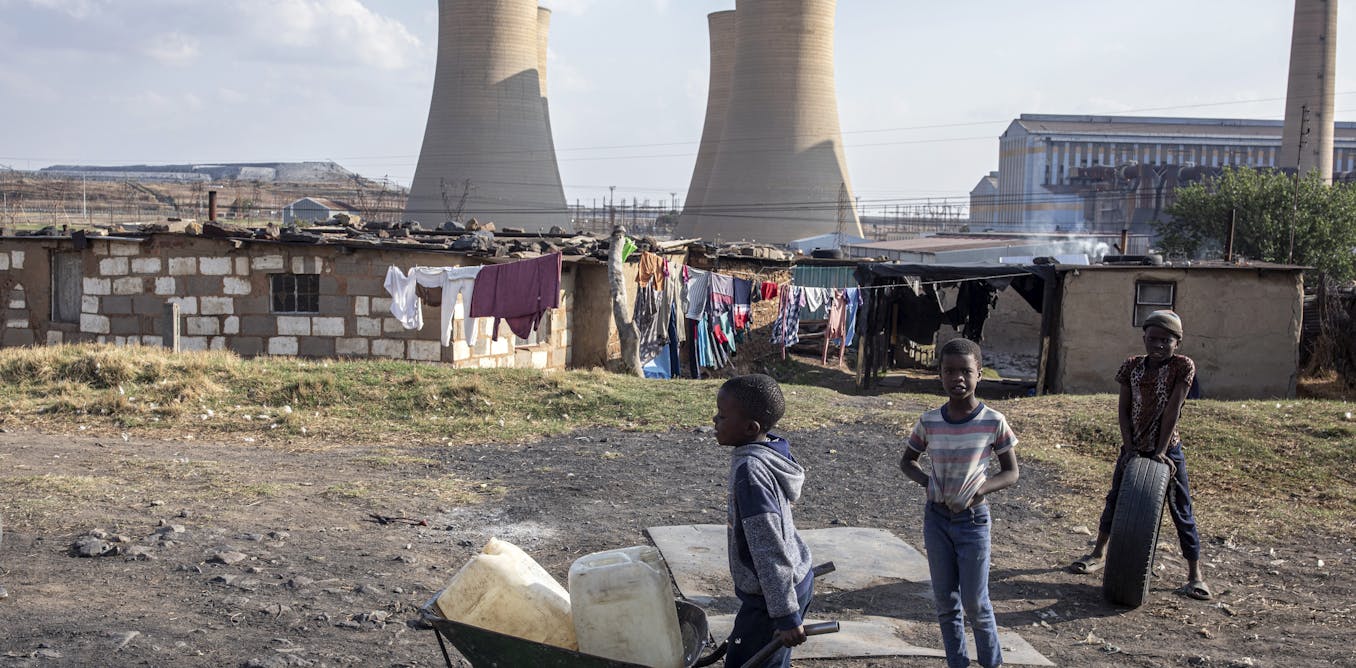

The world’s 20 most powerful economies, the G20 – currently led by South Africa – face mounting pressure to slash greenhouse gas emissions and help nations adapt to climate change. Economist and international affairs specialist Gaylor Montmasson-Clair co-heads the think-and-do tank Southern Transitions and also co-chairs the G20’s Think 20. This group advises on climate, energy and environmental transition policies. He points out that the G20 is not just another talk shop – it represents 85% of the global economy and three-quarters of world trade – and argues that if the G20 acts decisively, the ripple effects will be immediate and immense. Here, he lays out the four urgent steps the G20 must take to adapt the world to the new climate future.
1. Getting climate adaptation the funding it needs
Climate events are no longer sporadic or individual. Floods, fires, droughts and storms overlap, causing mass human migration and increasing geopolitical tensions. In 2024 alone, climate disasters caused over US$200 billion in direct losses globally. These losses rise to more than US$2.3 trillion when the cascading costs of damage to ecosystems are taken into account.
Developing countries are hardest hit, needing to find billions of dollars to repair the damage caused by climate disasters while receiving very little in the way of climate finance to do this or to adapt for the future.
The Think 20 group recommends that G20 nations pool their resources and make sure that funding reaches local communities. This should be in the form of grants and concessional resources (such as local currency loans with very low interest rates).
Read more:
G20 in a changing world: is it still useful? Four scholars weigh in
If the G20 did this, farmers could access affordable insurance against crop failure. Informal settlements in fast-growing cities could be protected by flood-resilient infrastructure. Women-led cooperatives in rural areas could invest in climate-smart agriculture, securing food systems for millions.
The climate crisis knows no borders. The global response needs to reflect this reality. By reforming multilateral climate finance and creating direct pipelines of funds to communities so that they can prepare for climate disasters, the G20 could transform the global response to looming climate events.
The financing mechanisms are available. South Africa’s G20 presidency offers a unique moment to champion this.
2. Sourcing, processing and trading minerals in ways that protect people and the planet
Minerals like manganese, nickel, cobalt, vanadium and lithium are essential for products like electric vehicles, solar panels and batteries. Demand for these will skyrocket in the coming years.
Low- and middle-income countries host the vast majority of these mineral resources. Yet, to date, most have only reaped minimal benefits from their mineral endowment. And countries like the Democratic Republic of the Congo (cobalt and copper mining) and Guinea (bauxite mining) have borne significant economic, social and environmental damage.
Read more:
DRC: history is repeating itself in Lubumbashi as the world scrambles for minerals to go green
The surge in demand for these minerals presents an opportunity for resource-rich nations to change the historically unequal exchange.