


Active Citizens, Asia-Pacific, Development & Aid, Editors’ Choice, Education, Featured, Gender, Gender Violence, Headlines, Health, Human Rights, Population, Sustainable Development Goals, TerraViva United Nations, Women’s Health, Youth
Population

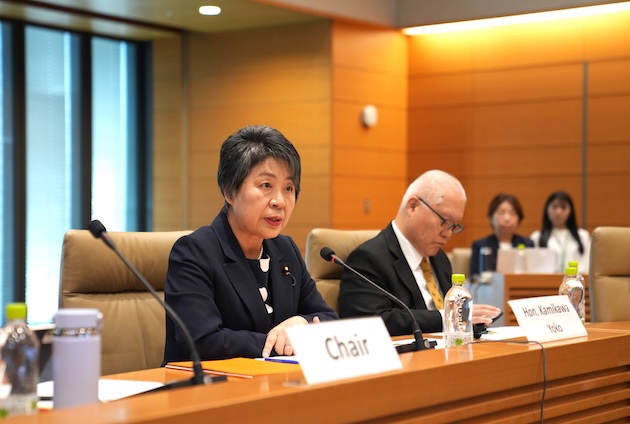
Kamikawa Yoko, Chair of JPFP and of AFPPD addresses the Asian Parliamentarians’ Conference on Education for Life, Safety, and Human Dignity. Credit: APDA
TOKYO & JOHANNESBURG, Oct 13 2025 (IPS) – Vulnerable children are being targeted online faster than parliamentarians and law enforcers can act, a conference convened by the Asian Population and Development Association (APDA) heard. Yet, with international cooperation and sharing of ideas, lawmakers believe the scourge of online abuse can be addressed.
The Asian Parliamentarians’ Conference on Education for Life, Safety, and Human Dignity in Tokyo, Japan, on 7 October 2025 brought parliamentarians from Asian countries, ministry officials, practitioners, partner organizations, experts and media together to find solutions for the elimination of sexual crimes and violence against children and youth. It ended with a clear call for deeper international collaboration to tackle the protection of children in the digital age.
In her keynote address, Kamikawa Yoko, Chair of JPFP and of AFPPD, said, “Traditionally, in Japan, sexuality education was considered taboo; even the word ‘sexuality’ made discussion untouchable,” so she had proposed the concept of ‘Life Safety Education (LSE)’ so that it could be more readily accepted.

Lawmakers and other delegates at the Asian Parliamentarians’ Conference on Education for Life, Safety, and Human Dignity. Credit: APDA
Setting the scene for the discussion, she said young people come to major cities like Tokyo and Osaka and are exposed to a vast amount of information through the internet and social media—with some lured by promises of an “easy income” only to be deceived and become victims before “they realize it, they may be coerced into the sex industry, human trafficking, drug trafficking, or other criminal activities.”
LSE was more than just teaching children age-appropriate knowledge about the bodies; it empowers children to recognize their rights, develop self-determination and protect themselves, she said, emphasizing that the lawmakers are often approached by public institutions and civil society groups for support.
“Protecting children is not optional. It is our shared responsibility,” she reminded the lawmakers.
Nakazono Kazutaka from Japan’s Ministry of Education, Culture, Sports, Science and Technology elaborated on the country’s Life Safety Education program, saying it aims to prevent children from becoming perpetrators, victims, or bystanders, using age-appropriate content and social media guidance. The education is integrated into health and PE classes, with digital materials and teacher training. The initiative is expanding to more schools and regions, emphasizing human rights and dignity.

Makishima Karen, MP Japan, addresses the Asian Parliamentarians’ Conference on Education for Life, Safety, and Human Dignity. Credit: APDA
Makishima Karen, MP Japan, said the levels of incidences were worryingly high, with 2,783 cases related to child pornography involving 1,024 individuals reported.