


The world’s largest art museum, the Louvre has approximately half a million objects in its collection, with about 30,000 on display, and sees on average 8 million visitors per year. That’s big on any scale, with a lot of people and objects to keep watch over. And Sundays are particularly busy.
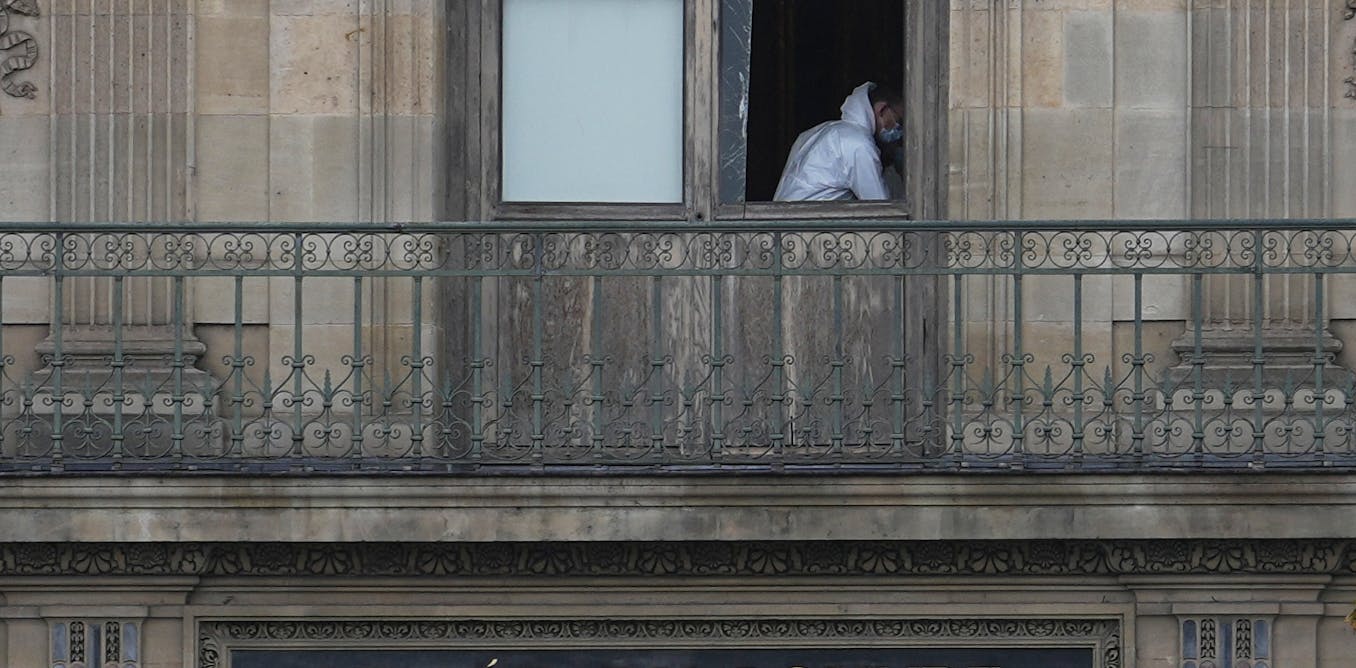
In a cleverly conceived operation, four men wearing fluorescent vests pulled up at the Louvre in a flat-decked truck at 9.30 Sunday morning. Quickly setting to work, they raised an extendable ladder to the second storey. Climbing it, they cut through a window, entered the Galerie d’Apollon and, brandishing power tools, helped themselves to nine exquisite objects.
The objects taken were France’s royal jewels, formerly belonging to the Empress Eugénie, Napoleon III’s wife and arts patron.
This is where it gets tricky for the thieves: what can you do with these priceless objects? They can’t wear them – too big and glitzy to go unnoticed – and they can’t sell them legitimately, as images are all over the internet.
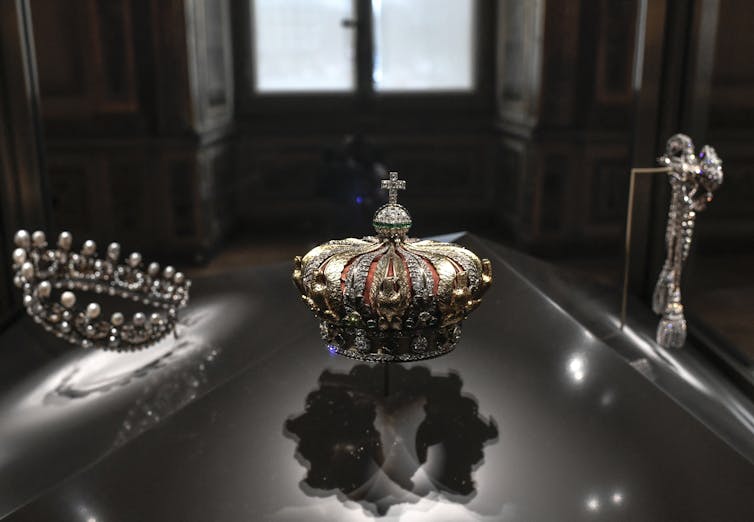
Jewels of Empress Eugénie photographed in 2020. The diadem, left, and diamond bow brooch, right, have been stolen. The crown, centre, was stolen but has been recovered.
Stephanie de Sakutin/AFP via Getty Images
The best-case scenario, from the thieves’ perspective, is to break them down, melt the precious metals and sell the gems separately.
Empress Eugenie’s crown, which the perpetrators took and subsequently dropped as they fled the scene on motor scooters, contains eight gold eagles, 1,354 brilliant-cut diamonds, 1,136 rose-cut diamonds and 56 emeralds. In short, this amounts to a sizeable stash of individual gems to try and sell.
Timing is everything
For the Louvre, any heist is a major blow. It calls into question their security, both electronic and human. Five security staff were nearby who acted to protect visitors and the alarms did ring, but the entire heist was completed within seven minutes.
Timing is crucial with heists.
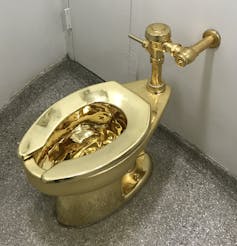
America, a fully functioning toilet made of 18-karat solid gold, on display here at the Guggenheim in 2017.
MossAlbatross/Wikimedia Commons, CC BY-SA
In 2019, an 18-karat gold toilet titled America (2016), from the artist Maurizio Cattelan, was stolen from Blenheim Palace, England. It was taken in five and a half minutes. It weighed 98 kilograms and was fully functioning. In other words, the two men who took it (and were later caught and served prison sentences for their crimes) worked quickly and efficiently. At the time of the theft, as gold bullion it was estimated to be valued at A$6 million.
Van Gogh’s painting The Parsonage Garden at Neunen in Spring (1884) was stolen from the Singer Laren Museum, in the Netherlands, during their 2020 COVID closure. It was recovered in late 2023 after an investigation by Dutch art detective Arthur Brand.
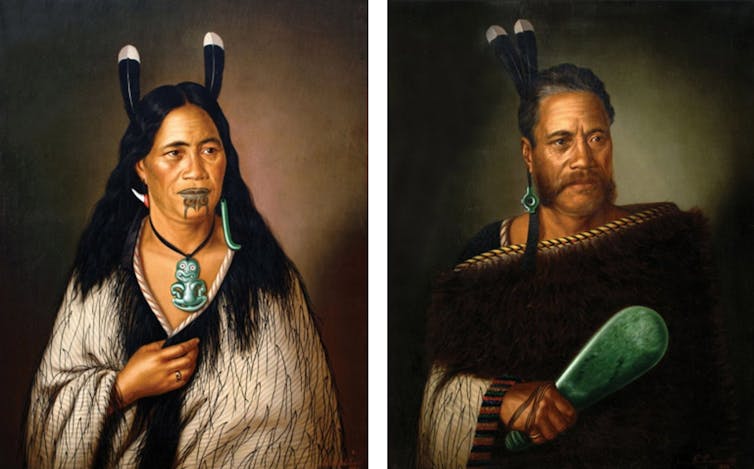
Chieftainess Ngatai–Raure and Chief Ngatai-Raure, painted by Gottfried Lindauer in 1884. » …