

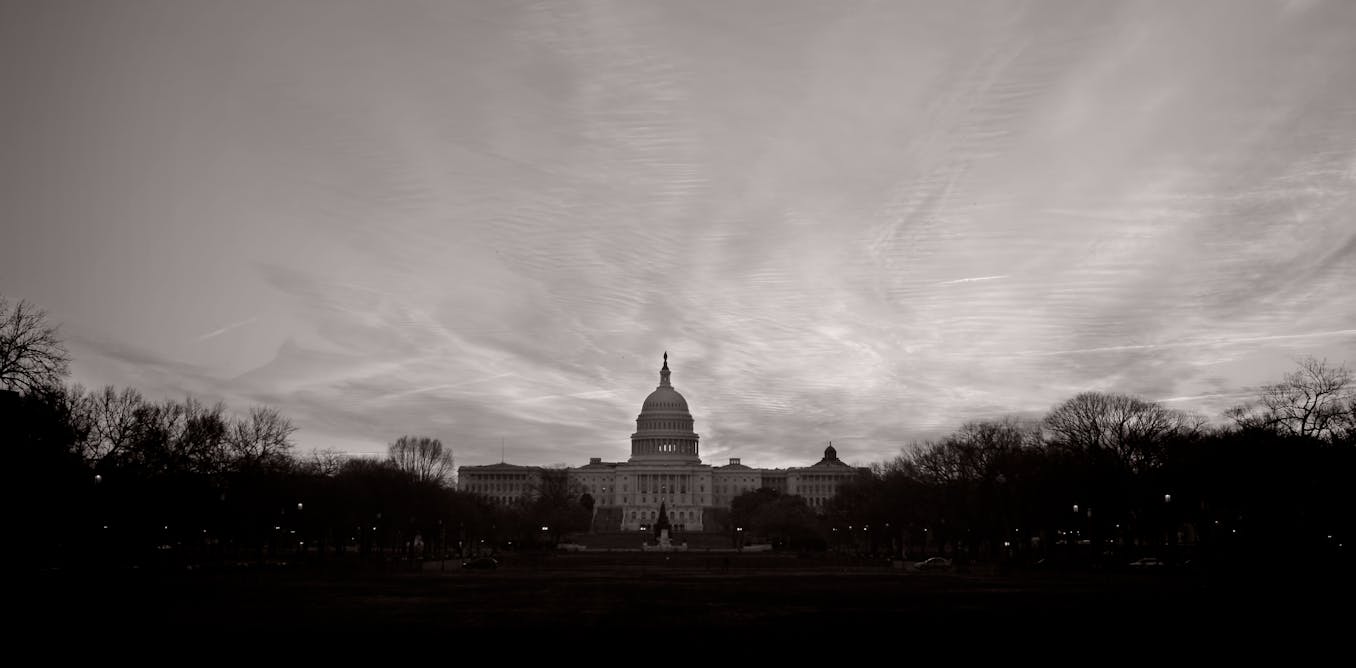

Many Americans will be voting on Election Day – or have already cast votes – in races for statewide office, local positions and on ballot initiatives with major implications for democracy.
Congress is not on the ballot this November, but it will be in the 2026 midterms. A year from now, Americans in every state and district will get to vote for whom they want representing their interests in Washington.
But right now, Congress isn’t giving the American people much to go on.
As the shutdown of the federal government passes the one-month mark, the U.S. House of Representatives has been in recess for over 40 days. That’s the longest it’s ever stayed out of town outside of its typical summer recesses or the weeks leading up to their own elections.
Notably, the shutdown does not mean that Congress can’t meet. In fact, it must meet to end the shutdown legislatively. The Senate, for example, has taken votes recently on judicial nominations, a major defense authorization bill and a resolution on tariff policy.
Senators have also continued to hold bipartisan behind-the-scenes negotiations to end the shutdown impasse.
But with dwindling SNAP benefits, skyrocketing health care premiums and other major shutdown impacts beginning to set in, the House has all but abdicated its position as “The People’s Chamber.”
Long ‘path to irrelevance’
In addition to not meeting for any votes, Speaker of the House Mike Johnson has refused to swear in Democratic U.S. Rep.-elect Adelita Grijalva of Arizona. Despite Johnson’s assurances, the shutdown does not prevent the House from meeting in a brief session to swear in Grijalva as a member for Arizona’s 7th District, which has been without representation since March.
Along with Casey Burgat and SoRelle Wyckoff Gaynor, I am co-author of a textbook, “Congress Explained: Representation and Lawmaking in the First Branch.” In that book, it was important to us to highlight Congress’ clear role as the preeminent lawmaking body in the federal government.
But throughout the shutdown battle, Congress – particularly the House of Representatives – has been unwilling to assert itself as an equal branch of government. Beyond policymaking, Congress has been content to hand over many of its core constitutional powers to the executive branch. As a Congress expert who loves the institution and profoundly respects its constitutionally mandated role, I have found this renunciation of responsibility difficult to watch.
And yet, Congress’ path to irrelevance as a body of government did not begin during the shutdown, or even in January 2025.
It is the result of decades of erosion that created a political culture in which Congress, the first branch of government listed in the Constitution, is relegated to second-class status.
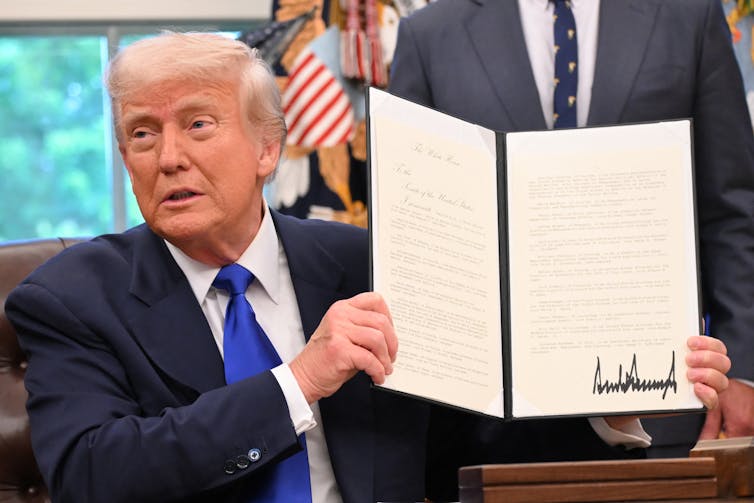
President Donald Trump holds one of the many executive orders he has signed during his second term.
Alex Wroblewski/AFP via Getty Images
The Constitution puts Congress first
The 18th-century framers of the Constitution viewed Congress as the foundation of republican governance,