


This is a rush transcript. Copy may not be in its final form.
AMY GOODMAN: This is Democracy Now!, democracynow.org, The War and Peace Report. I’m Amy Goodman. We’re broadcasting from Belém, Brazil, the gateway to the Amazon, where the U.N. climate summit is taking place.
“The answer is us.” That was the slogan as hundreds of Indigenous leaders from the Amazon and across the region gathered in the streets of Belém Monday outside the U.N. climate summit venue, where delegates from over 190 countries continue negotiations. These are some of the voices from the streets of Belém.
INDIGENOUS LEADER 1: [translated] We are here fighting for our land, for our wildlife, for our birds that are facing extinction. We are here at this COP for results. We ask that Brazilian President Lula come and demarcate the land, so that the illegal miners don’t enter our land and our river.
INDIGENOUS LEADER 2: [translated] We are here claiming our rights, defending our forests, defending our animals, where we have survived all these years. We need to be recognized by the world as great guardians of the forest.
AMY GOODMAN: As Indigenous protests continue here in Belém, the government of Brazil has announced the creation of 10 new Indigenous territories in response to demands from protesters. There are more than 900 Indigenous delegates accredited here at [COP30], the highest number at any U.N. climate summit.
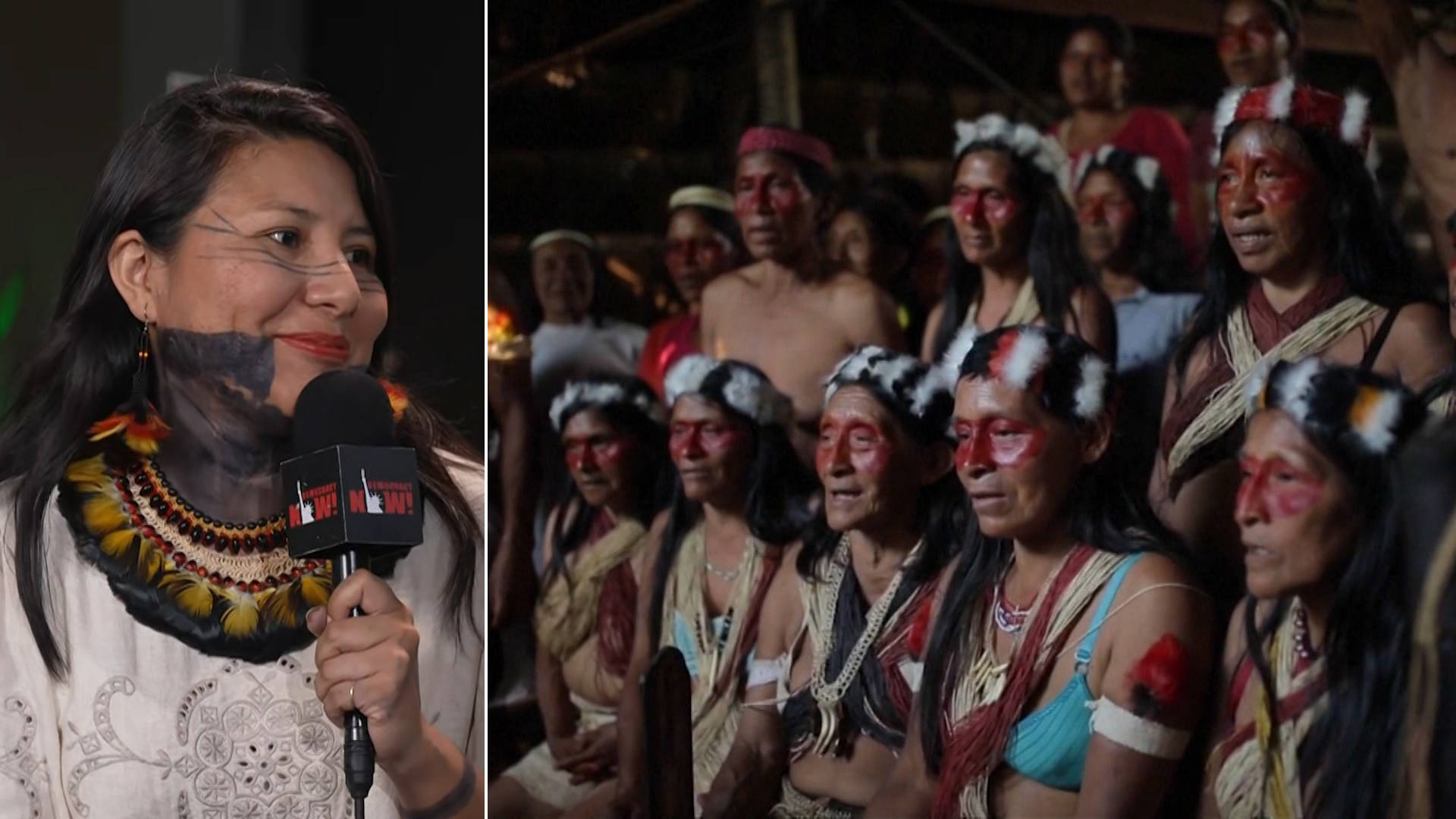
We’re joined now by Diana Chávez. She is a member of the Pastaza Kichwa Nation, head of international affairs and organizations for Pakkiru, which is based in Ecuador’s Amazon, arrived in Belém three weeks ago.
Can you talk about where you’re from in Ecuador? And despite the fact that there is a massive number of fossil fuel lobbyists, this is also the gathering of the largest number of Indigenous people since the COP began 30 years ago. Welcome, Diana.
DIANA CHÁVEZ: Thank you so much for having me. Thank you, everyone, for listening to us.
Yes, it has been — I have been here for three weeks. I’m from Ecuador, from the Amazon region in Ecuador, and specifically from the province of Pastaza, where there are seven Indigenous groups living there, that we already declared our land, our territories free from oil extraction, any extractive activities. So, it has been — we know that at least 500 Indigenous people from all over the world have accreditation to come here to the blue zone, because there is — it’s kind of hard to come in. And there is the green zone, where more Indigenous people are, for example.
AMY GOODMAN: You’re talking about areas of the U.N. summit where people have to have special passes to come in.
DIANA CHÁVEZ: Yes, yeah, we have special passes, and you can come in and at least listen to the negotiations, listen what the parties are talking about — just transition,