


Armed Conflicts, Asia-Pacific, Crime & Justice, Democracy, Editors’ Choice, Featured, Headlines, Human Rights, Humanitarian Emergencies, International Justice, TerraViva United Nations, Women in Politics
International Justice

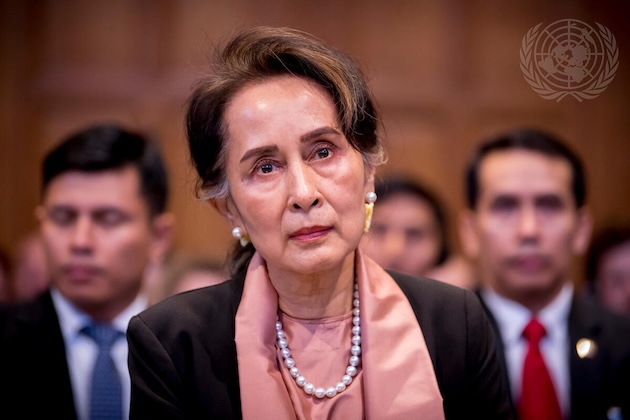
Aung San Suu Kyi, Union Minister for Foreign Affairs of the Republic of the Union of Myanmar, attends the opening of Myanmar’s first round of oral observations at the International Court of Justice in 2019. She has since been jailed by the generals she defended at the ICJ. UN Photo/ICJ-CIJ/Frank van Beek
YANGON, Myanmar, and CHIANGMAI, Thailand , Jan 16 2026 (IPS) – Held incommunicado in grim prison conditions for nearly five years, Aung San Suu Kyi quite possibly does not even know that this week the International Court of Justice (ICJ) opened a landmark case charging Myanmar with committing genocide against its Rohingya minority a decade ago.
If news did filter through from the world outside her cell, the Nobel Peace Prize winner and ousted leader of Myanmar’s elected government would surely be reflecting on how it was that the generals she steadfastly defended in The Hague in preliminary hearings in 2019 are now her jailers.
The case before the ICJ, brought by Gambia, levels charges of genocide against Myanmar dating to the offensive in 2016-17 by military forces and Buddhist militia against the mostly Moslem Rohingya minority. Thousands were killed, villages torched and women raped, culminating in over 700,000 refugees forced across the border into Bangladesh.
Aung San Suu Kyi’s reputation was already badly tarnished in the west even before she went to The Hague. In 2017 Oxford University’s St Hugh’s College, her alma mater, had removed her portrait from public view, and in 2018 Amnesty International joined numerous institutions and cities revoking awards they had bestowed, dismayed that she had not even used her moral authority as head of government to condemn the violence. Her 1991 Nobel prize remained intact—there were no rules to revoke it.
Separately, the prosecutor of the International Criminal Court last November requested an arrest warrant for Min Aung Hlaing for alleged crimes against humanity committed against the Rohingya.
To add salt to those wounds, her leading of Myanmar’s legal team to the ICJ may in fact have sealed her fate with the generals rather than preserve their difficult power-sharing arrangement.
“At that point her credibility was shattered and she lost the West,” commented a veteran analyst in Yangon. “It was at that point that the military decided to move against her and started plotting their coup,” he said, explaining how Senior General Min Aung Hlaing calculated that the international community would not rally behind her.
Aung San Suu Kyi turned 80 in prison last June and this week marks a total of some 20 years she has spent behind bars or under house arrest since her return to Myanmar from Britain in 1988. She has not seen her lawyers for two years and is serving sentences amounting to 27 years following an array of charges,