


WASHINGTON (AP) — The Trump administration said Friday that its use of emergency orders to keep aging coal-fired plants operating helped prevent a major blackout from power shortages during the brutally frigid weather that has gripped most of America for the past two weeks.
Scattered outages occurred because of ice accumulation that felled local power lines, leaving hundreds of thousands without power, at least briefly. But the nation’s regional power grids generally maintained reliable electricity service, with natural gas and coal leading the way, Energy Secretary Chris Wright and other officials said.
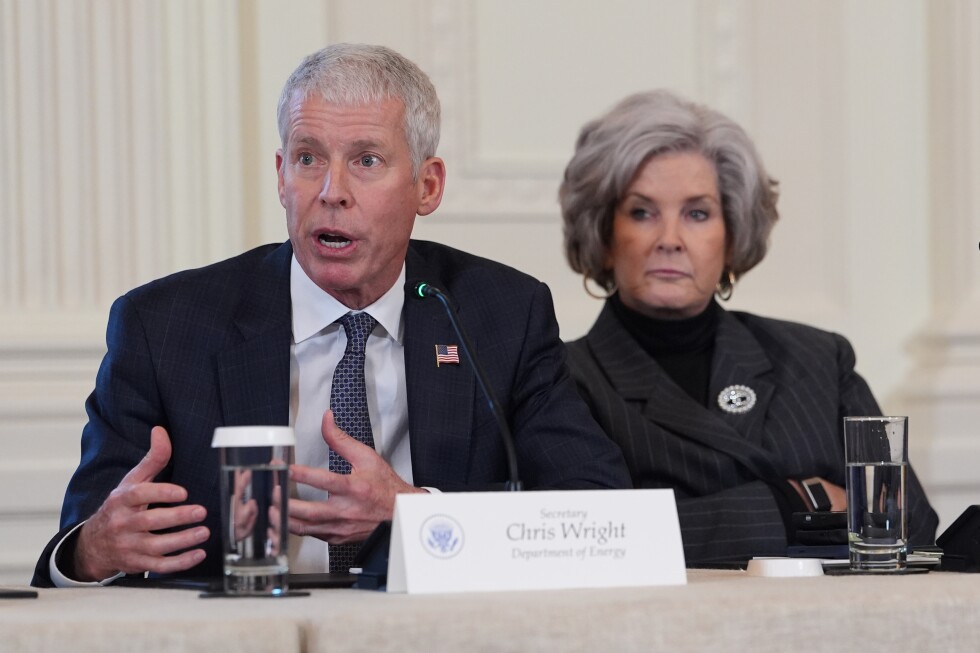
“The big picture story is where we actually got energy from during this storm,” Wright said at a news conference at the Energy Department. “In fact, we had times where our existing capacity couldn’t deliver anything and the lights would have gone out if not for emergency orders.’’
Critics said Wright’s comments understated the role that wind and solar power played during the storm, adding that the administration’s orders over the past nine months to keep some oil and coal-fired plants open past their planned retirement dates could cost U.S. utility customers billions of dollars over the next few years.
In the lead-up to the storm and cold temperatures, Wright also excused utilities from pollution limits on fossil fuel-fired plants and ordered that backup generators at data centers and other large facilities be available to grid operators and utilities to supply emergency power.
Trump administration’s ‘way of doing business’
Deputy Energy Secretary James Danly drew a contrast with the grid performance during a similar severe storm in 2021, calling the Trump administration’s approach a “new way of doing business” during power emergencies.
“The bottom line here is that we managed to ensure that there was sufficient capacity,” Danly said. “Not one area had a blackout or a forced outage due to loss of capacity.”
There were nearly 1 million outages during the storm’s peak, but most were not long-lasting, Danly said. Nearly 55,000 customers were without power as of Friday, including more than 17,000 in Mississippi and 7,000 in Texas, according to the outage tracking website poweroutage.us.
Wright cited statistics showing that natural gas — long the nation’s leading source of electricity — provided 43% of electric power at peak generation during the storm, followed by coal at 24% and nuclear at 15%. Renewables such as wind, solar and hydropower provided a combined 14%, Wright said.
Wright and President Donald Trump have frequently made the case for their fossil fuel-friendly orders, blaming the Biden administration and Democratic-leaning states for policies they say threaten the reliability of the nation’s electric grid and drive up electricity bills.
The proportion of coal and natural gas power rose substantially during the storm, while the proportion of wind power used during the storm dropped by 40%, Wright said. Solar stayed flat at a fraction of the amount of coal and natural gas power.