

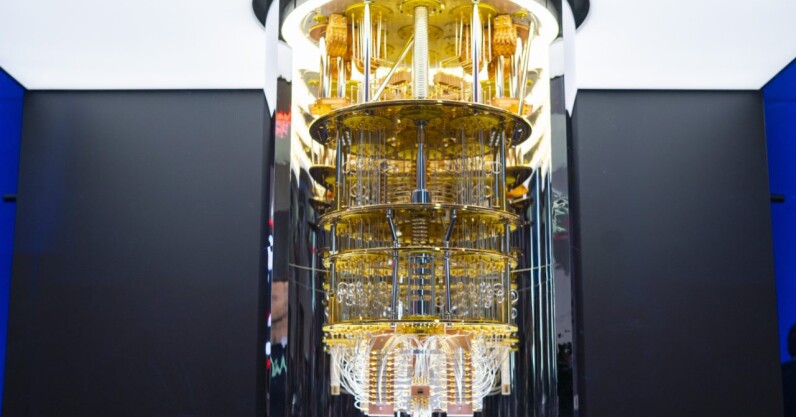

Get ready for Q-day (the day when quantum computers will actually break the internet), it may be closer than you think. Companies and states need to jump on the qubit bandwagon now to avoid being left behind in the race for a technology that could change everything.
This week, 11 EU member states signed the European Declaration on Quantum Technologies, driven by a discourse that increasingly revolves around the concept of “digital sovereignty.” The signatories have agreed to align, coordinate, and engage on various parts of the budding quantum technology ecosystem. But some quantum frontrunners, like the Netherlands, Ireland, and Germany, reportedly opted out due to the short time frame.
The declaration aims to create a globally competitive quantum ecosystem. It emphasizes the importance of building domestic R&D capacities for quantum technologies and investing in the whole quantum stack — from hardware to software and applications and standards — to safeguard “strategic assets, interests, autonomy, and security.”
Thierry Breton, whose time as Commissioner for the Internal Market has been marked by a big tech regulation crusade, has declared quantum one of his “favourite subjects.” With quantum engineering talent notoriously difficult to come by, greater collaboration across the bloc will be key to keeping Europe from getting left behind in yet another key technology race.