

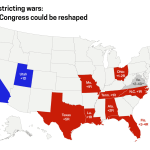

In Virginia, a majority of the House of Delegates voted to approve a new congressional district map that was designed to help Democrats add as many as four seats in the U.S. House. A majority of the state Senate agreed, as did the commonwealth’s popularly elected governor. The issue then went to the people of Virginia, and a majority of voters backed the redistricting initiative, too.
A majority of the Virginia Supreme Court, however, rejected the plan anyway. MS NOW reported:
The Virginia Supreme Court on Friday struck down a voter-approved congressional redistricting plan, ruling that Democrats violated constitutional procedures when placing the referendum on the ballot for last month’s special election. […]
In its 4-3 decision, the court on Friday found that the process used to place the amendment on the ballot did not comply with Virginia’s constitutional rules governing how such proposals must be approved by the legislature before being presented to voters. As a result, the justices upheld a lower court ruling that blocks the amendment from being certified and implemented.
For Democratic efforts on the national level, the ruling is an unexpected gut punch, especially given the fact that after Virginia voters approved the overhauled map last month, it appeared that Democrats would be able to keep pace with the GOP as part of the broader redistricting fight.
What’s more, the state Supreme Court ruling comes on the heels of a similarly brutal blow after Republican-appointed U.S. Supreme Court justices gutted the Voting Rights Act, which opened the door even further to an intensified Republican effort to erase majority-Black congressional districts in the South.
Given all of this, it’s easy to imagine many Americans responding to the head-spinning developments with a simple question: “So where do things stand now?”
Before we dig in on that, it’s worth pausing to acknowledge the absurdity of the circumstances. For generations, states redrew congressional district lines after the decennial census. There were limited exceptions, but in nearly all of those instances, mid-decade redistricting only happened when courts told states that their maps were unlawful and needed to be redone.
The idea that politicians would simply choose to start redrawing maps, in the middle of a decade, in pursuit of partisan advantages, was practically unheard of.
Last year, however, Donald Trump, fearing the results of the 2026 midterm elections and the possible accountability that would result from Democratic victories, decided that the American model needed to be discarded. It was time, the president said, to pursue what one White House official described as a campaign of “maximum warfare” in which Republican officials in key states would embrace gerrymandering without regard for fairness, norms, traditions or propriety.
The goal was simple: Deliver Republican victories in congressional races long before Americans had a chance to cast their ballots.
The result was an arms race that’s still going on — and here’s where things stand.