


Takimag
Mark Fuhrman, RIP.

TakiMag
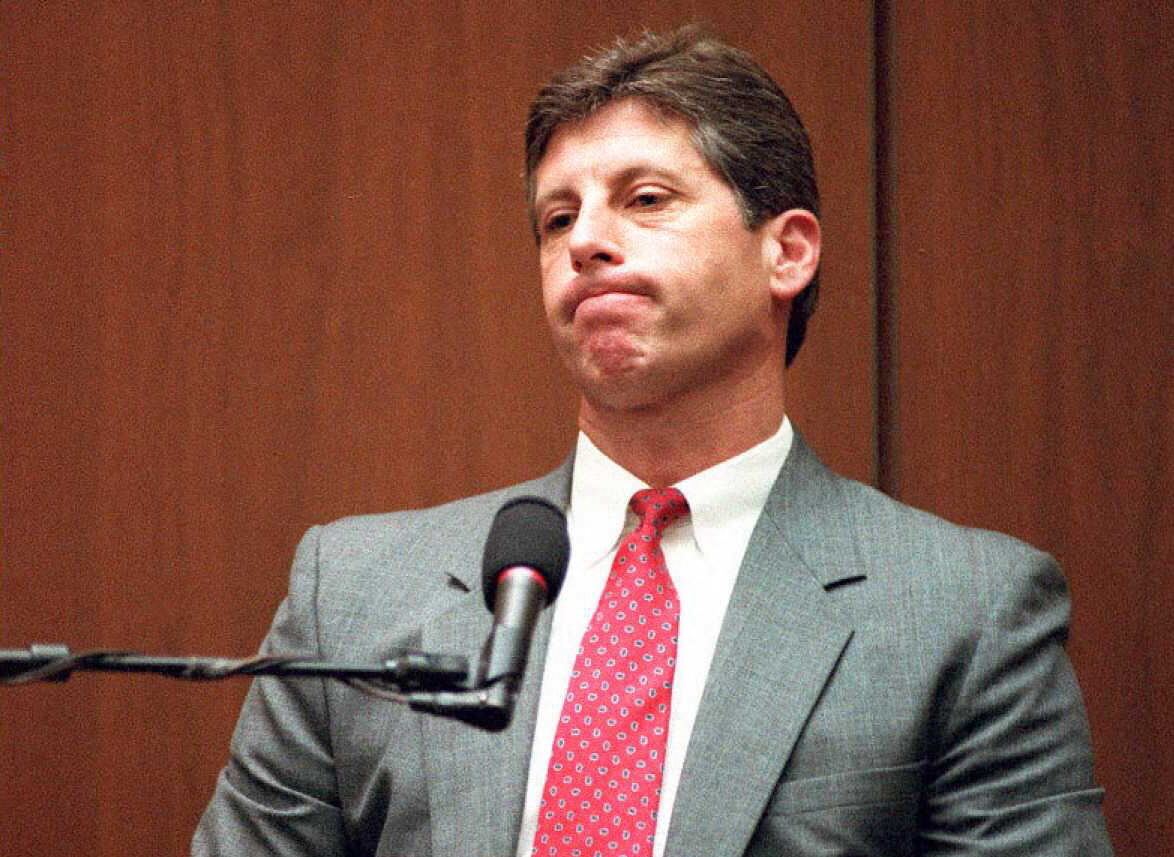
Mark Fuhrman, the only man convicted of a felony in the O.J. Simpson trial, died this week of throat cancer at age 74. He was also a crucial player in my book, Mugged: Racial Demagoguery From The Seventies to Obama, for his part in the case that inadvertently gave us a 15-year intermission from perpetual race-mongering. That Xanadu could last only as long as most Americans still had a piercing recollection of the nearly universal jubilation of black people when O.J. was acquitted.
From that point on, the race card simply stopped working, like a subway card that won’t open a turnstile anymore. Fuhrman’s obituaries didn’t explain his part in helping secure this brief respite, so I thought I’d write my own.
The evidence that O.J.—a star football player, actor, sportscaster, and product spokesman—had murdered his ex-wife Nicole and her friend Ron Goldman was overwhelming. O.J.’s blood was found on the ground next to the mutilated bodies, on a walkway from Nicole’s house, on her driveway and on her back gate. Blood from all three was inside O.J.’s white Bronco and on a pair of gloves, one at the murder scene and its match on O.J.’s property. Nicole’s blood was in O.J.’s foyer, master bedroom, driveway and on a pair of socks in his bedroom. All samples were collected before police had a sample of O.J.’s blood and showed no one else’s DNA.
For the icing on top, O.J. had a documented record of beating up Nicole, and, within hours of his arrest warrant being issued, attempted to flee in his white Ford Bronco with cash, a passport, a disguise and a gun.
But none of that mattered to the jury because Fuhrman, a Los Angeles police detective, had used the N-word nine and a half years earlier. He was the investigator who first spotted—but did not touch—the glove on O.J.’s property, a tiny pebble in a mountain of incriminating evidence. That was the fig leaf used to explain why a mostly black jury acquitted O.J. on all counts, for an attack so brutal he nearly decapitated Nicole.
Despite its monumental irrelevance to O.J.’s guilt or innocence, the judge allowed defense attorney F. Lee Bailey to ask Fuhrman if he had—I quote—“addressed any black person as a [the N-word] or spoken about black people as [N-words] in the past 10 years.” A normal person would understand that question to mean, “Do you call black people the N-word?” not, “Has the word ever passed your lips, including the way I—F. Lee Bailey—just used it?”
Fuhrman said he had not. A year later, his denial was pretty well corroborated in a New York Times article quoting his many black partners, colleagues, and friends. The Los Angeles public defender’s office investigated the detective “aggressively,” but found “virtually no complaints” against him, and not a single accusation of racial misconduct.