

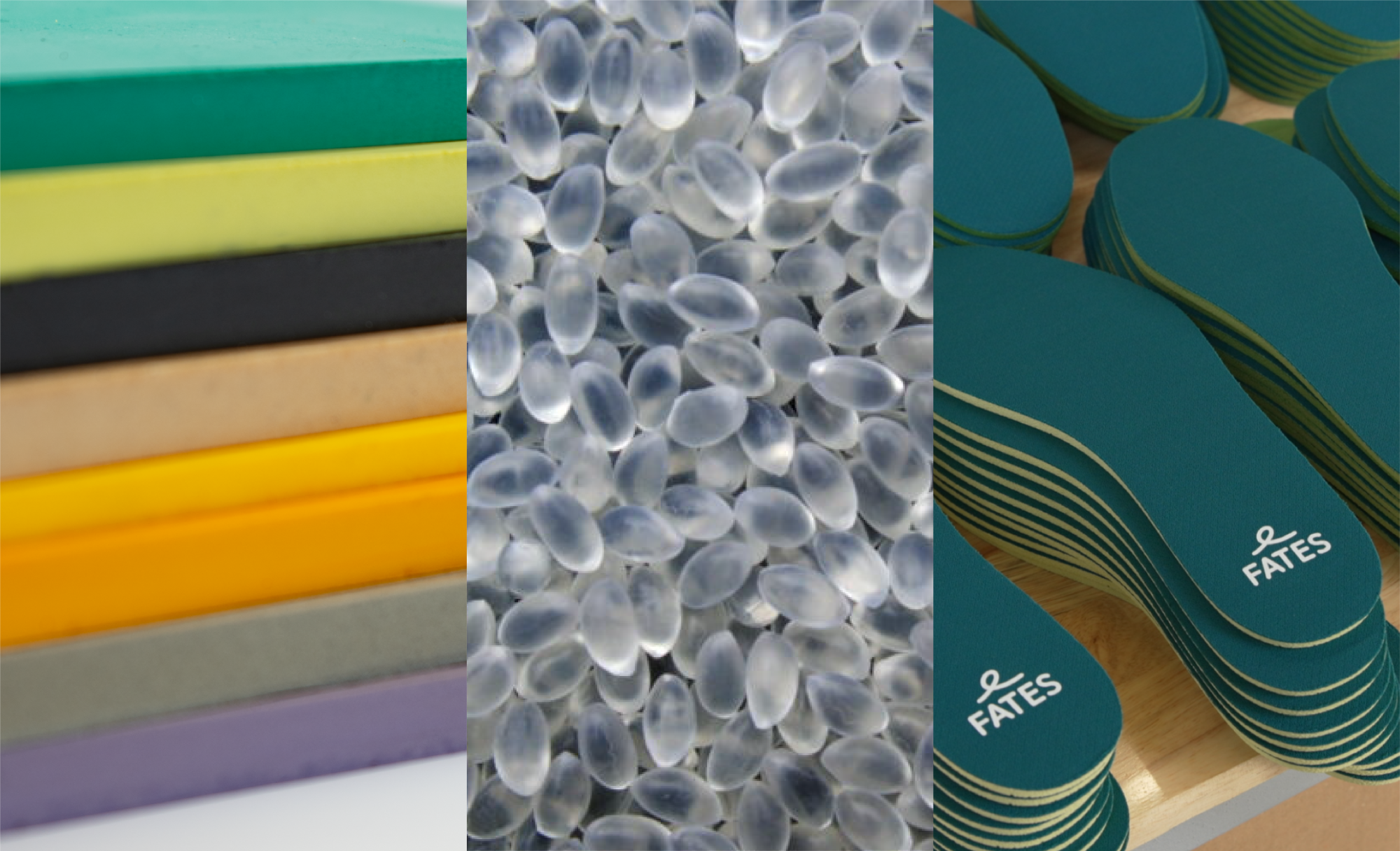

Hundreds of millions of shoes loaded with fossil-plastics reach waste bins every year in the United States. That’s why Adidas, Target and Zalando are teaming up with Fashion for Good on a collaboration to explore bioplastic alternatives for soles, which comprise 40 percent of a shoe’s mass.
The Next Stride collaboration, announced Sept. 18, will engage biomaterials startups to understand the possibilities for next-generation materials.
“The Next Stride is a critical, collaborative intervention to de-risk the widespread adoption of high-performance bio-based alternatives for footwear soles,” said Katrin Ley, managing director at Fashion for Good, in a press statement. “By transforming the very foundation of the shoe, we address the most impactful component in its lifecycle and open the door to systemic change in the footwear industry.”
In addition to rubber derived from Hevea brasiliensis tree sap, soles often feature polyurethane, thermoplastic polyurethane (TPU) or ethylene-vinyl acetate foam. Those fossil-based materials bring a high climate burden from the start, then pollute later in an incinerator or landfill. Plus, while people walk or run, the polymers in their sneakers or slip-ons slough off microplastics.
Adidas’ Director of Sustainability Direction Gudrun Messias stated that exploring how bio-based materials may lower the environmental impact of soles “while at the same time meeting or even enhancing the high-performance standards our athletes and consumers expect from Adidas products.”
Material imperatives
Material innovations are important to decarbonizing footwear supply chains. For Adidas, for one, 87 percent of climate emissions comes from upstream activities including raw materials production.
Regulations are forcing the issue as rules come into effect in the next few years, as well. The European Union’s Ecodesign for Sustainable Products Regulation encourages footwear makers to ensure durability, reparability, recycled content and freedom from toxic chemicals. In addition, extended producer responsibility laws in Europe and California will be forcing brands to take account of their footwear waste.
The Next Stride will tackle three goals over the next 12 months. First, it will conduct life cycle assessments to understand the impacts of biomaterials, including how carbon dioxide from plant-based materials flows within the natural carbon cycle. Next, it will compare the emerging materials against traditional ones. Finally, it will examine how to drive down costs for alternative materials.
Engineering plant- and waste-based materials that last long enough for the wearer, but not too long in nature, is one challenge for the startups involved in The Next Stride:
- Algenesis Labs of San Diego works on an algae-based, biodegradable polyurethane called Soleic.
- Balena of Tel Aviv makes BioCir compostable thermoplastic, which has featured in Vivobarefoot and Stella McCartney designs.
- Evoco of Toronto focuses on plant-based foams and bio-based TPU. Its material has appeared in Vans and Timberland styles.
- Swiss startup KUORI transforms olive pits, nutshells and peels into pellets that biodegrade.
- Yulex, which appears in Patagonia wetsuits, is also the name of the Arizona-California company working on natural rubber and foams.