


New FreeSync Standards for Monitors and Laptops

Image: Mattias Inghe/Foundry
When it comes to adaptive sync technology, AMD’s FreeSync is a more preferred option over Nvidia’s G-Sync due to its cost-effectiveness. However, AMD recently introduced new and improved standards for FreeSync-compatible displays.
Qualifications for FreeSync Certification
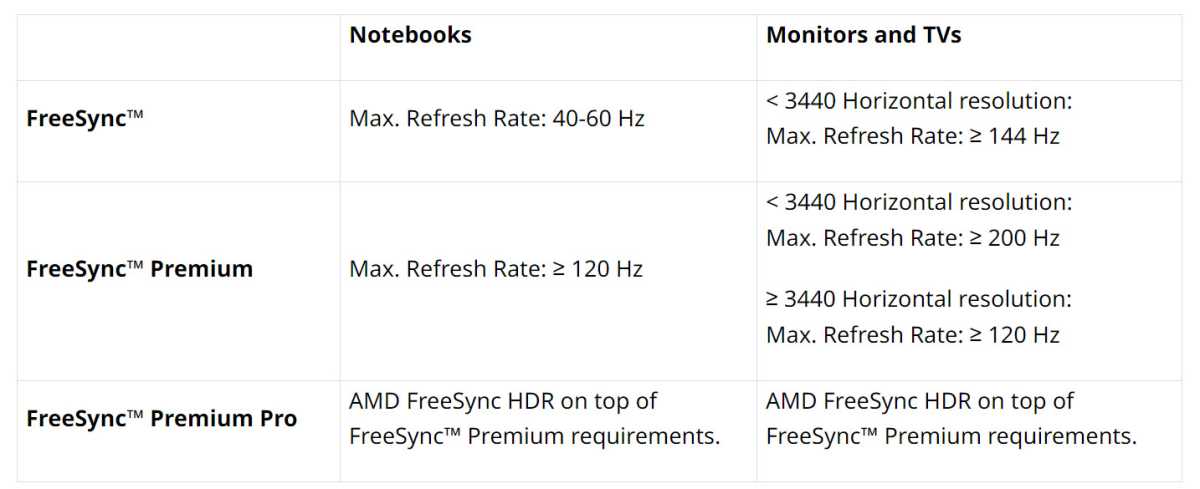
For standard FreeSync compatibility, smaller monitors must have a refresh rate of at least 144Hz. The term “smaller” refers to screens with a resolution of under 3440 horizontal lines, typically 34-inch ultrawide displays like those from Alienware.
For FreeSync Premium designation, smaller monitors need to have a refresh rate of 200Hz or higher, while larger screens should have a minimum of 120Hz. To qualify for FreeSync Premium Pro certification, monitors must meet the size and refresh rate requirements and support FreeSync HDR (High Dynamic Range).
Requirements for Laptops
Laptops with refresh rates as low as 40Hz can receive FreeSync certification. On the other hand, FreeSync Premium laptops need to have a refresh rate of 120Hz, regardless of screen size. FreeSync Premium Pro laptops should also support FreeSync HDR capabilities.
Overall, these updated standards aim to eliminate low-quality monitors misleadingly labeled as gaming monitors, offering a more accurate representation of their performance capabilities.
While AMD has not specified when these new standards will be implemented for marketing purposes, it’s expected to bring about positive changes in the industry over time.
 AMD
AMD
About the Author
 Michael Crider is a seasoned desktop computer enthusiast with a passion for various interests, including folk music, football, science fiction, and salsa verde.