

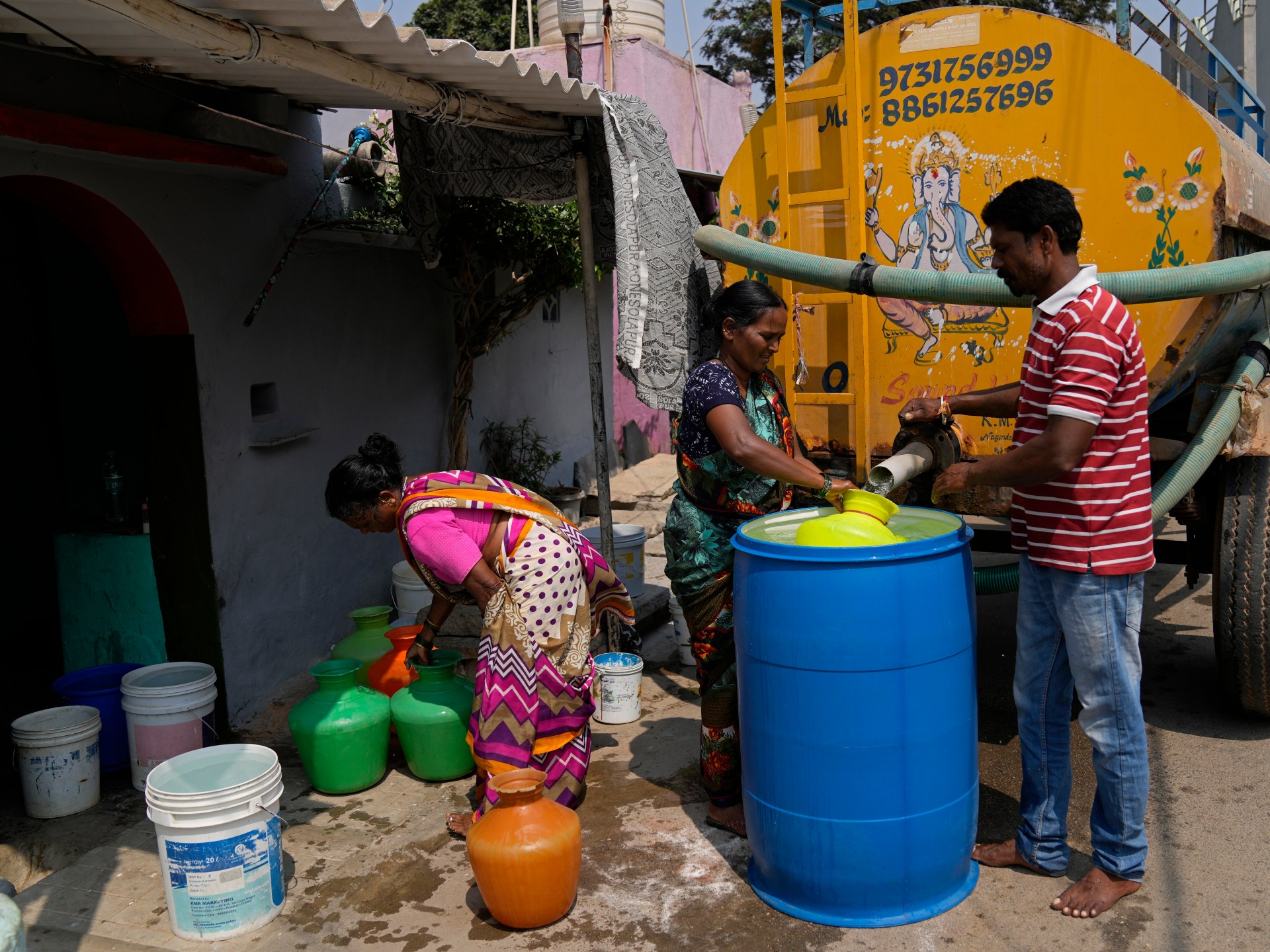

Water Crisis Worsens in Bengaluru as Summer Approaches
Bengaluru, a prominent city known for hosting the headquarters of numerous global software companies in southern India, is currently facing a severe water scarcity crisis. Residents are expressing concerns about experiencing one of the most severe water shortages in decades, exacerbated by an unusually hot period in February and March.
Water experts are anticipating a worsening situation in April and May, with the scorching summer sun reaching its peak intensity, intensifying the challenges for the city’s 13 million inhabitants. Over the past few years, Bengaluru has received minimal rainfall, partly attributed to human-induced climate change. As a result, water levels have drastically plummeted, especially in marginalized communities, leading to exorbitant water prices and a rapidly depleting water supply.
To address the escalating crisis, city and state government officials have implemented urgent measures, such as taking control of water tankers and imposing price limits on water. Despite these efforts, the situation remains dire, with reports indicating that 6,900 out of 13,900 borewells in the city have dried up, even after drilling to depths of up to 457 meters (1,500 feet). Consequently, residents who once relied on groundwater now rely on water tankers that source water from nearby villages.
Shashank Palur, a hydrologist from Bengaluru’s Water, Environment, Land and Livelihood Labs think tank, has attributed the groundwater depletion to a combination of El Nino activity and reduced rainfall in the region, hampering the expected groundwater replenishment. Additionally, delays in completing a new piped water supply system from the Cauvery River, located around 100km (60 miles) away from the city, have further exacerbated the crisis.
Another contributing factor to Bengaluru’s water scarcity crisis is the excessive coverage of paved surfaces, which hinder rainwater absorption and groundwater recharge. According to TV Ramachandra, a research scientist at the Centre for Ecological Sciences at the Indian Institute of Science in Bengaluru, nearly 90 percent of the city is covered with paved surfaces, limiting natural water storage mechanisms. Furthermore, he highlights a significant loss of green cover in the city over the past five decades, amounting to a staggering 70 percent.
The Indian government’s 2018 estimates suggest that over 40 percent of Bengaluru’s population may lack access to clean drinking water by the end of the decade, underscoring the urgency of addressing the water crisis. While some residents resort to drilling borewells in lake buffer zones in desperation, Ramachandra advocates for sustainable solutions such as lake rejuvenation, rainwater harvesting, and increasing green spaces to mitigate the water scarcity issue.
Palur emphasizes the importance of exploring alternative water sources, such as treated wastewater reuse, to reduce the dependence on fresh water resources. However, comprehensive and sustainable strategies are imperative to effectively combat the water crisis in Bengaluru.
In the meantime, residents like S Prasad have begun implementing water rationing measures, including restricting water supply to households for several hours each day. The collective effort to conserve and manage water resources is crucial to safeguarding Bengaluru’s water security and ensuring a sustainable future for its residents.