

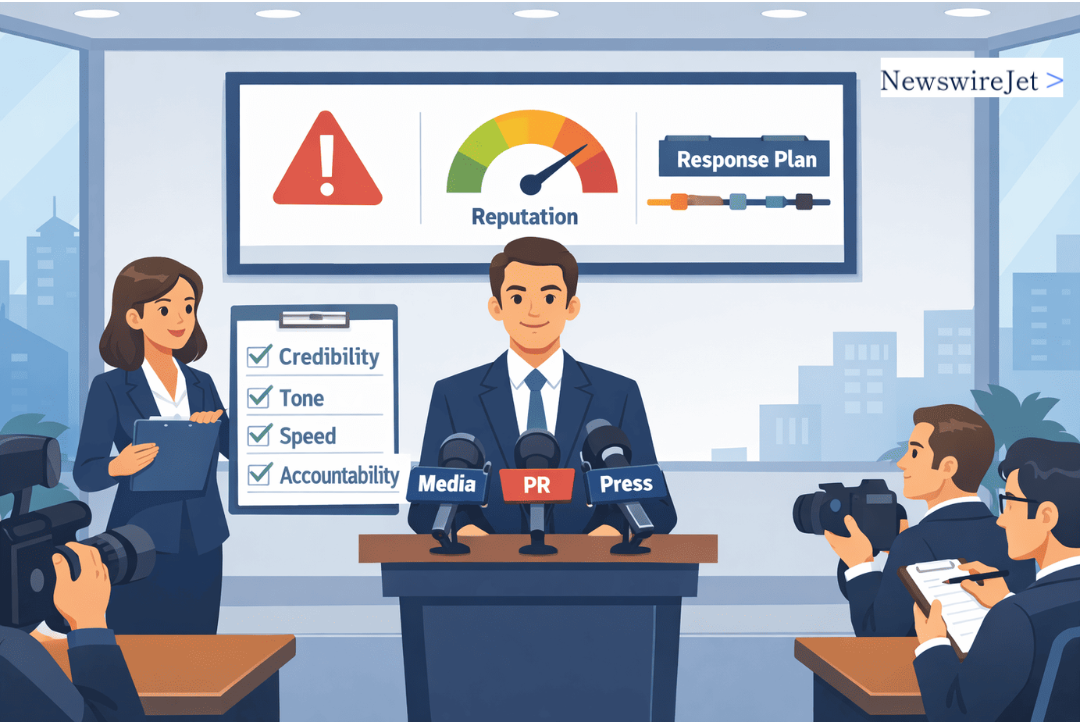

Putting your CEO in a crisis statement is a powerful move, but it’s not always the right one.
The decision hinges on key questions including: will their direct involvement, right now, improve public trust, demonstrate clear accountability, and provide essential clarity? If the answer isn’t a verified yes, using the CEO can increase legal exposure, trigger negative headlines, and reduce stakeholder trust.
In past crises, early CEO quotes often determine whether coverage frames the company as accountable or evasive. This isn’t about protocol; it’s about impact.
When does the top voice help, and when does it become a major risk? Let’s walk through the framework to decide.
Spokesperson Discipline Is a Trust Strategy
- Our CEO should only speak during a major trust crisis. Otherwise, it backfires.
- Bad CEO quotes hurt press coverage and increase legal exposure.
- Match the spokesperson to the crisis. This builds credibility, clarifies the message, and lets us move faster.
Should our CEO be the spokesperson during a crisis press release?
Should the CEO be the one to speak during a crisis? It’s not a simple yes or no. The real answer is: it depends entirely on what went wrong.
For crises involving injury, death, product safety, or regulatory violations, the CEO should be the primary spokesperson in the first official release.
In those first chaotic hours, the public and the press aren’t just looking for information. They’re looking for a leader.
If the CEO isn’t the one looking into the camera, expressing regret and taking ownership, it reads as indifference. That vacuum of leadership will be filled instantly by speculation, outrage, and damaging headlines.
However, the CEO isn’t always the right messenger. Consider a major software failure that takes an e-commerce platform offline for a day, or a sophisticated cyberattack where the full scope is still unknown.
If the crisis is technical (cyberattack, outage, data breach), avoid making the CEO the primary source of technical facts; use the CTO/CISO to prevent inaccuracies and misstatements.
It makes the company look disorganized and can permanently dent the CEO’s credibility.
For these operational or technical crises, the initial communication should come from the person who actually understands the problem,the Chief Technology Officer, the Head of Security, or the crisis communications lead.
They can provide clear, factual updates without implicating the CEO’s broader authority.
A better approach is to assign roles from the start, almost like a playbook.
- The CEO handles the emotional and moral weight: the apology, the acknowledgement of impact, the promise of accountability.
- The relevant experts handle the factual, ongoing investigation: what broke, how it’s being fixed, what customers need to do.
- Both sides must be tightly coordinated to tell one consistent story. Any contradiction between them becomes the next day’s scandal.
This isn’t about corporate hierarchy.