

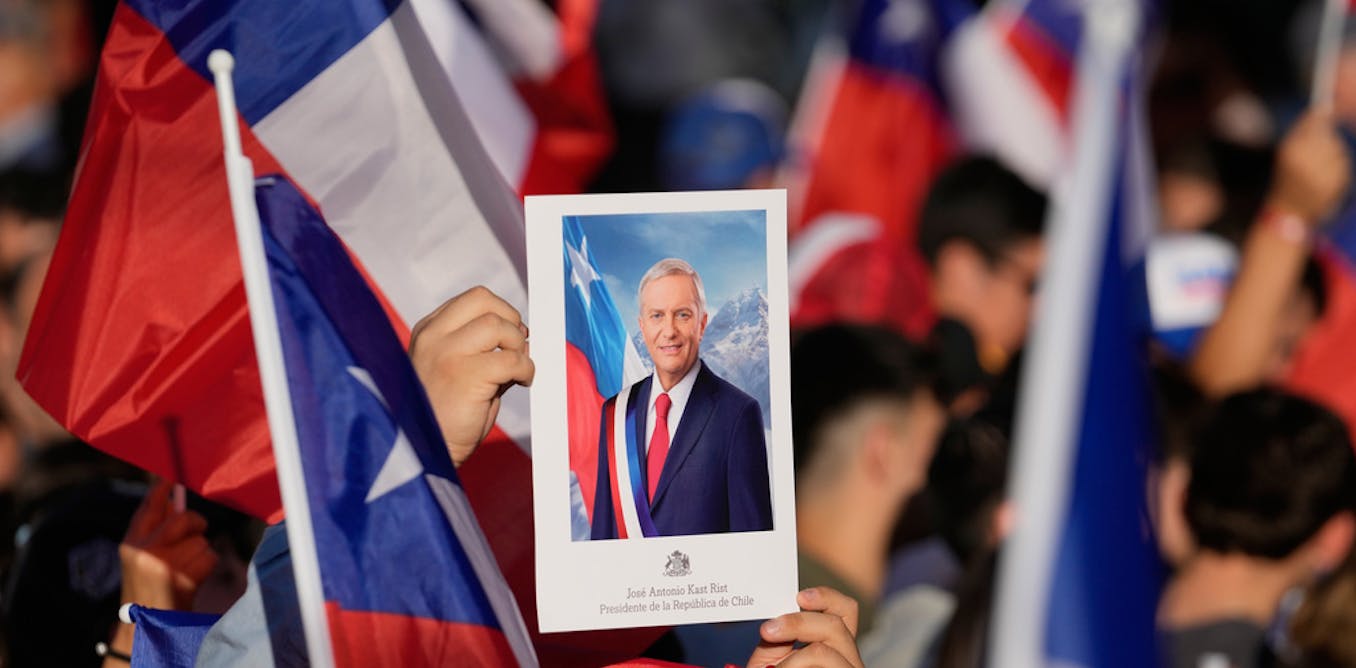

Chileans have elected the most right-wing presidential candidate since the end of the Augusto Pinochet dictatorship over three and a half decades ago.
In a runoff held on Dec. 14, 2025, José Antonio Kast, a Republican Party ex-congressman and two-time former presidential candidate, won just over 58% of the vote, while his opponent, Jeannette Jara, the left-wing labor minister of current President Gabriel Boric, won nearly 42%.
Approximately 15.6 million Chileans were eligible to vote in the first presidential election to take place with mandatory voting and automatic voter registration.
As a result of those new election rules, which went into place in 2022, an estimated 5 million to 6 million new voters went to the polls. These voters – found to be largely younger, male and lower-middle class – are seen as lacking a strong ideological identity and rejecting politics altogether.
The verdict delivered by Chile’s voters puts it in line with a broader right-wing regional shift – most recently in Bolivia – that has reversed the “pink tide” of left-leaning governments in the past two decades. But as a historian of modern Latin America and Chile, I believe Chile’s election also reflects the important local context of years of increasing disenchantment with the political system.
Amid Chile’s expanded electorate, the primary issues of voter concern during this campaign were crime and immigration. An October 2025 poll specifically found delinquency to be the top issue, with immigration, unemployment and health care also marking high.
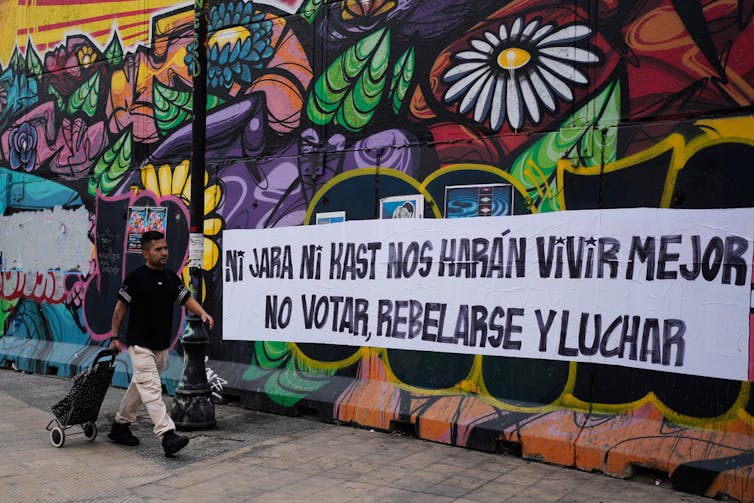
A campaign banner reads in Spanish: Neither Jara nor Kast will make our lives better, don’t vote, rebel and fight.
AP Photo / Natacha Pisarenko
Though Chile has one of the lowest crime rates in Latin America, high-profile cases of organized crime have shaken the nation in recent years. Homicides increased between 2018 and 2022 and have decreased slightly since then. Immigration has also risen significantly, with a large number of immigrants coming to Chile having fled economic and political crises in Venezuela, as well as in Peru, Haiti, Colombia and Bolivia. The foreign-born population in Chile rose from 4.4% in 2017 to 8.8% in 2024.
The key constitutional context
Many commentators have highlighted the stark polarization of this election, with a Communist Party labor minister campaigning against the arch-conservative Kast, who has lauded the Pinochet dictatorship under which his deceased older brother once served. But there is more to the story.
Some observers have drawn comparisons between Kast and other far-right Latin American leaders like Nayib Bukele in El Salvador, Javier Milei in Argentina and Jair Bolsonaro in Brazil. But Chile is not merely following the same far-right playbook of its neighbors.
In the weeks leading up to the runoff in Chile, both candidates moved toward the center. Jara vowed to expand the prison system to combat rising crime, while Kast – who had previously threatened expulsion of undocumented migrants – softened his tone to say they would be “invited” to leave.