

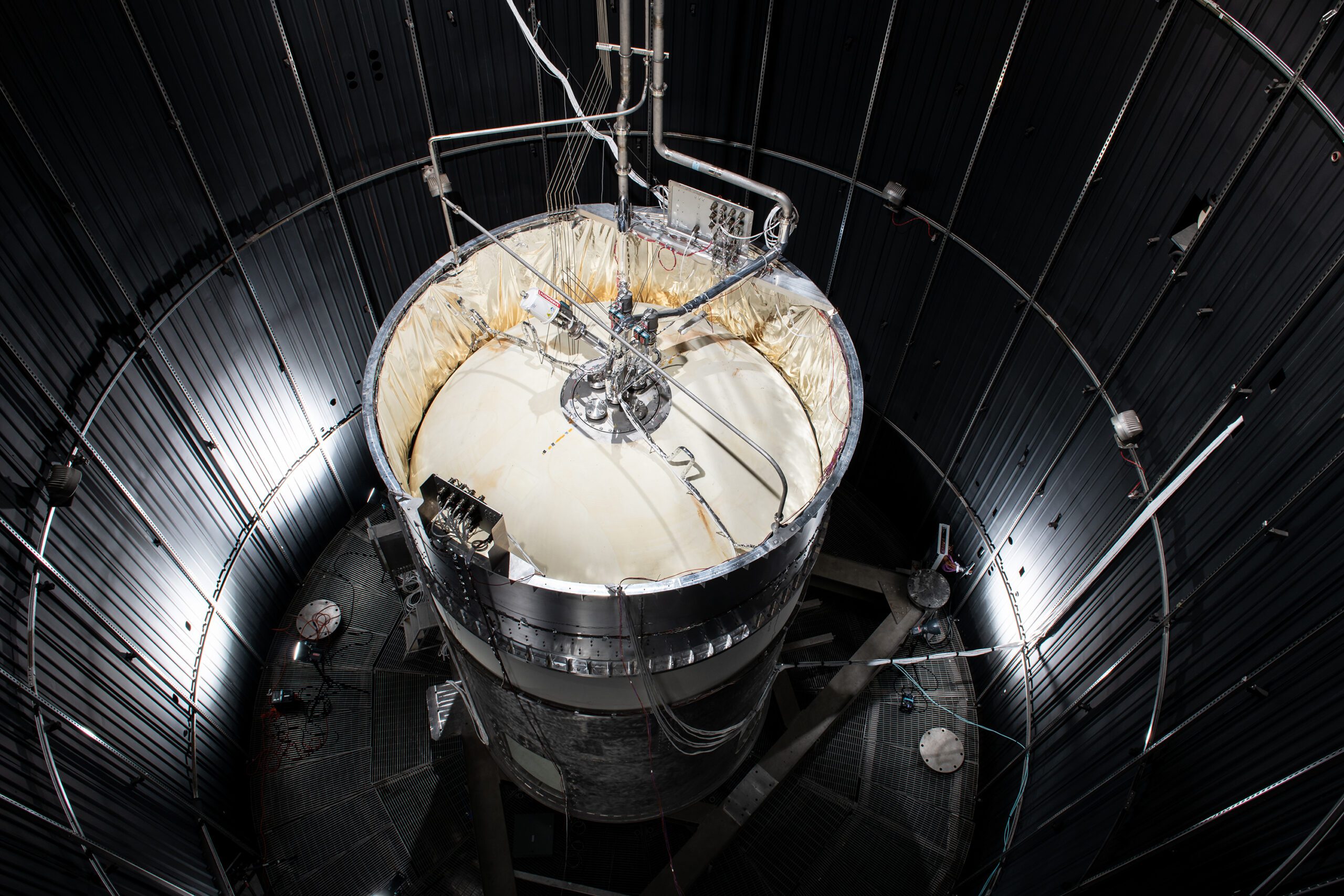

Get ready for an out-of-this-world adventure! Establishing sustained operations at the Moon and Mars is no easy task, and NASA is up for the challenge. From new technologies to working with cryogenic fluids, the agency is gearing up for its ambitious Artemis missions and beyond.
Working with cryogenic fluids, such as liquid hydrogen, methane, and oxygen, presents a unique set of challenges due to their extremely low temperatures. These fluids are essential for spacecraft propulsion and life support systems, and may even be produced on the lunar and Martian surfaces in the future.
Storing and transferring large amounts of cryogenic fluids in deep space is no small feat. This is where engineers at NASA’s Cryogenic Fluid Management (CFM) portfolio come in. They are tackling these challenges head-on, creating new technologies and processes that are essential for future missions.
“This is a task neither NASA, nor our partners, have ever done before,” said Lauren Ameen, deputy CFM Portfolio manager. “Our future mission concepts rely on massive amounts of cryogenic fluids, and we have to figure out how to efficiently use them over long durations, which requires a series of new technologies far exceeding today’s capabilities.”
But the challenges don’t stop there. Keeping cryogenic fluids in a liquid state in the unforgiving environment of space is no easy feat. Heat sources and low gravity make it difficult to prevent evaporation and accurately gauge the amount of liquid in the tanks.
Previous missions using cryogenic propellants were in space for only a few days due to boiloff or venting losses,” Ameen noted. “Those spacecraft used thrust and other maneuvers to apply force to settle propellant tanks and enable fuel transfers. During Artemis, spacecraft will dwell in low gravity for much longer and need to transfer liquid hydrogen in space for the first time,