

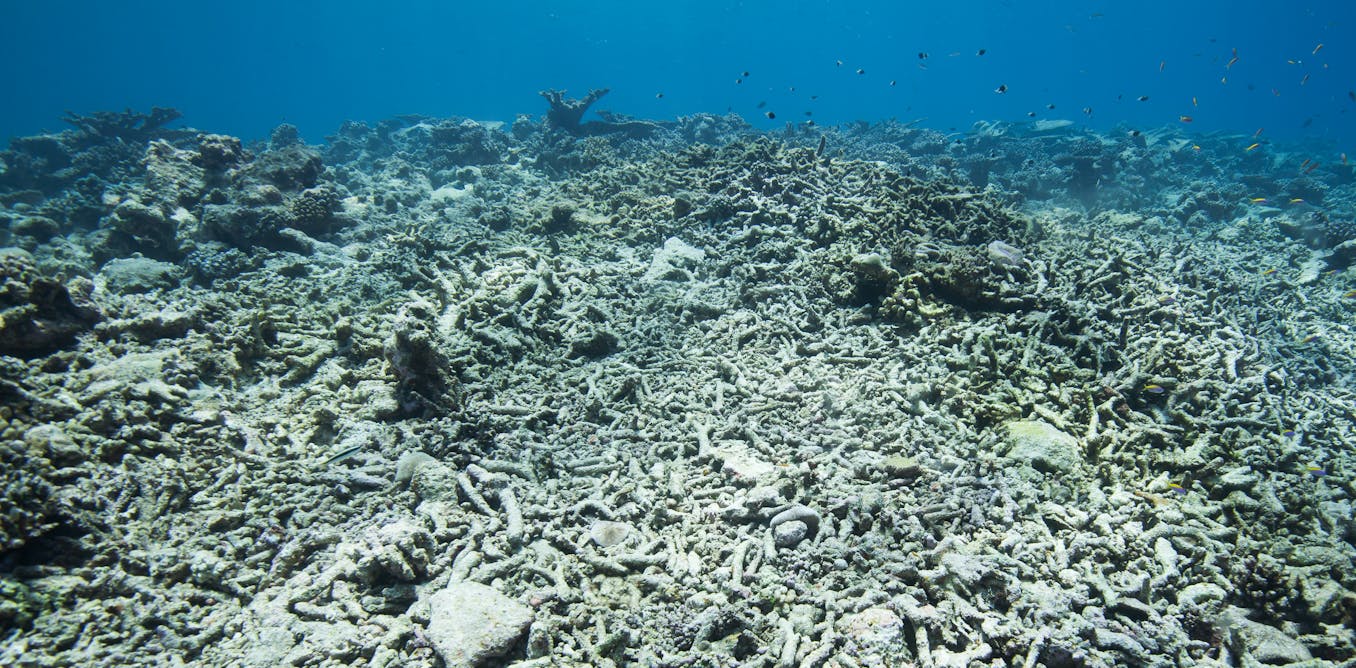

New research has found that the world has reached the first of many Earth system tipping points. These will cause catastrophic harm unless humanity takes urgent action.
A tipping point is a moment in the Earth’s climate system where even small changes can lead to significant, often irreversible consequences. Some of the most well known global tipping points are melting ice sheets at the north and south poles, the dieback of the Amazon rainforest and the collapse of vital ocean currents. If these happen, food systems could break down and sea levels would rise rapidly.
Tipping points also speed up global warming, making more climate disasters likely.
I’m a sustainability scientist, and I was part of a large, global team who recently updated the 2023 Global Tipping Points report. This report identifies “negative” tipping points that will likely trigger devastation in the world, and the potential for “positive” tipping points – where a desirable change becomes widespread (such as finance flowing towards nature-supporting activities).
Read more:
What are climate tipping points? They sound scary, especially for ice sheets and oceans, but there’s still room for optimism
In our second Global Tipping Points Report, we explain that some damaging Earth system tipping points are already being crossed. Others could soon follow, with potentially catastrophic impacts on societies and nature globally.
It’s important to note that negative climate tipping points cannot be reversed.
This means that if the world underestimates how certain events could trigger a climate tipping point, we might run out of time to act before the damage becomes irreversible or too severe to adapt to.
Read more:
Coral reefs off Tanzania’s coast are being destroyed, most beyond repair
Governance has to change to address this new reality. Small, step-by-step changes are not going to be enough for the world to avoid the worst impacts of global warming. Climate action must accelerate radically to eliminate greenhouse gas emissions that stress ecosystems, and to regenerate nature before it is too late.
One tipping point triggers another
Climate tipping point risks are interconnected. Most of the interactions between them are destabilising. This means that tipping one system over into disaster makes tipping another more likely. The negative impacts would cascade through the ecological and social systems we depend upon, creating damage that keeps mounting up.
Global temperatures in both the atmosphere and oceans have recently spiked. Oceans are absorbing 90% of extra heat from the earth that isn’t absorbed by plants. This is a sign that Earth’s climate is becoming increasingly unstable. While these spikes are not tipping points themselves, they can trigger them.
Read more:
El Niño is over, but has left its mark across the world
For example, if the Atlantic Meridional Overturning Circulation (AMOC) (system of ocean currents) collapses, then west Africa will likely experience more frequent and severe droughts.