

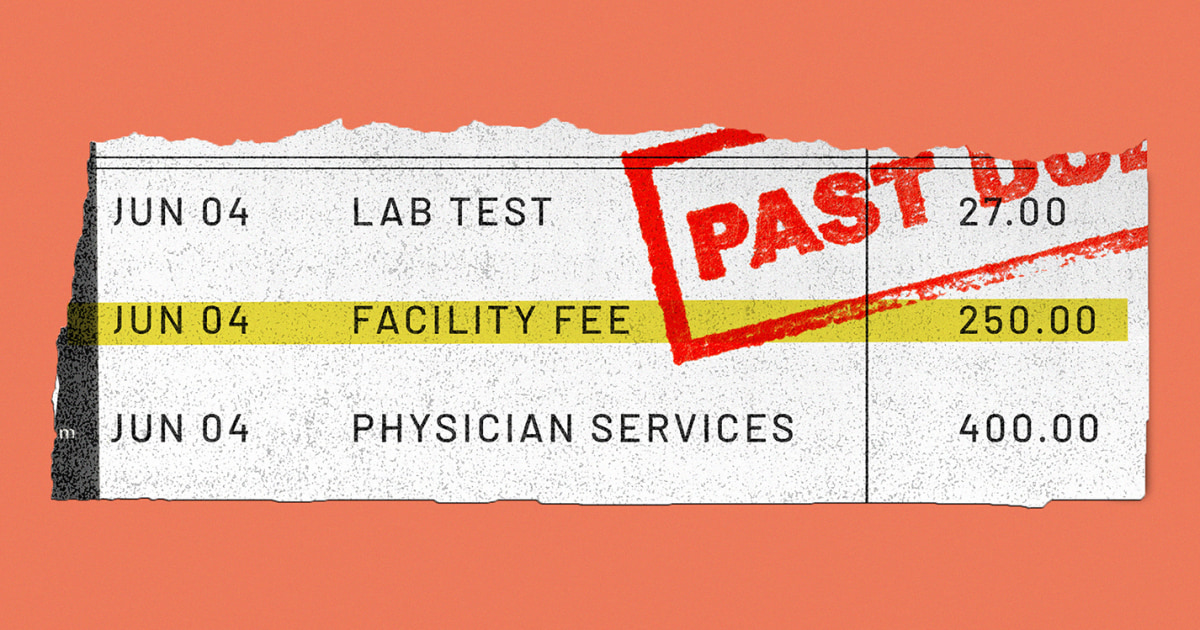

In Minnesota, a family received an unexpected charge of over $400 after they took their daughter to the doctor for stomach pain. In Ohio, a man was billed $645 extra for an ear, nose and throat specialist. In New Hampshire, a resident was charged an additional $1,000 fee for an appointment with a urologist.
Across the country, patients are expressing frustration about “facility fees” — charges that a wide range of hospital systems add to bills for appointments at facilities they own, including doctors’ offices offering routine care.
Hospitals can charge facility fees even when a patient hasn’t set foot in a hospital. More than a dozen patients who expected their insurance to cover most of the cost of their appointments at outpatient doctors’ offices told NBC News they were blindsided by the fees, which are billed on top of the cost of seeing medical providers and can easily run into the hundreds of dollars.
For more on this story, watch NBC’s “Nightly News with Tom Llamas” at 6:30 p.m. ET/5:30 p.m. CT and “Top Story” on NBC News NOW at 7 p.m. ET.
The charges have become more prevalent in recent years as more physicians are employed by hospitals and as insurance plans leave patients paying more for care before their coverage kicks in. In some communities, there is so much health care consolidation that it’s hard to find practices that don’t charge facility fees.
Researchers say patchwork laws to regulate the fees haven’t kept up.
“In most states and situations, there aren’t really limits on how high they can go,” said Christine Monahan, an assistant research professor at the Center on Health Insurance Reforms at Georgetown University, who has studied facility fees.
Hospitals argue facility fees are necessary to fund the higher level of care they say they provide at their outpatient doctors’ offices, as well as to help maintain 24/7 services such as emergency rooms. The American Hospital Association says facility fees should be covered by insurance companies, while insurers say the fees unnecessarily inflate the cost of care without improving its quality.
Here’s what consumer advocates and health policy experts say patients should know about facility fees.
Before your appointment: What to ask
Experts recommend you ask every time you book an appointment whether there is a facility fee — even for physicians you have seen before. A doctor’s office ownership, hospital affiliation or policies may have changed since your last visit.
If you are told there will be a facility fee, ask for a good-faith estimate of what the anticipated charge will be, said Patricia Kelmar, senior director of health care campaigns at the U.S. Public Interest Research Group, a consumer advocacy organization.
And don’t assume your insurance will cover the bill.
Last year, Melissa Finnegan, of St. Paul, Minnesota, was charged a facility fee of $423.15 for an appointment with a pediatric gastroenterologist for her 3-year-old.