

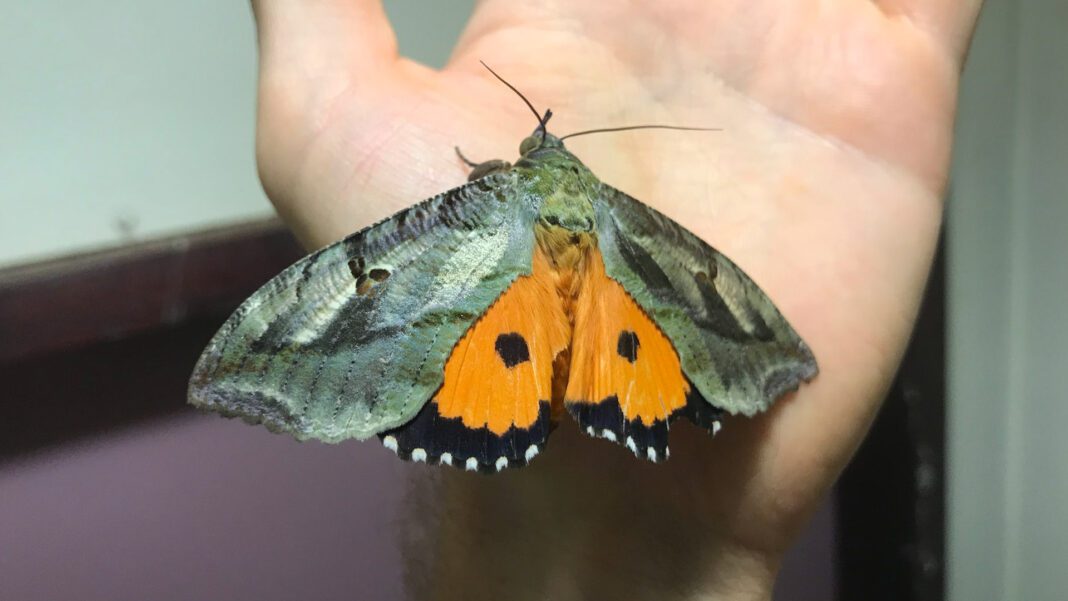
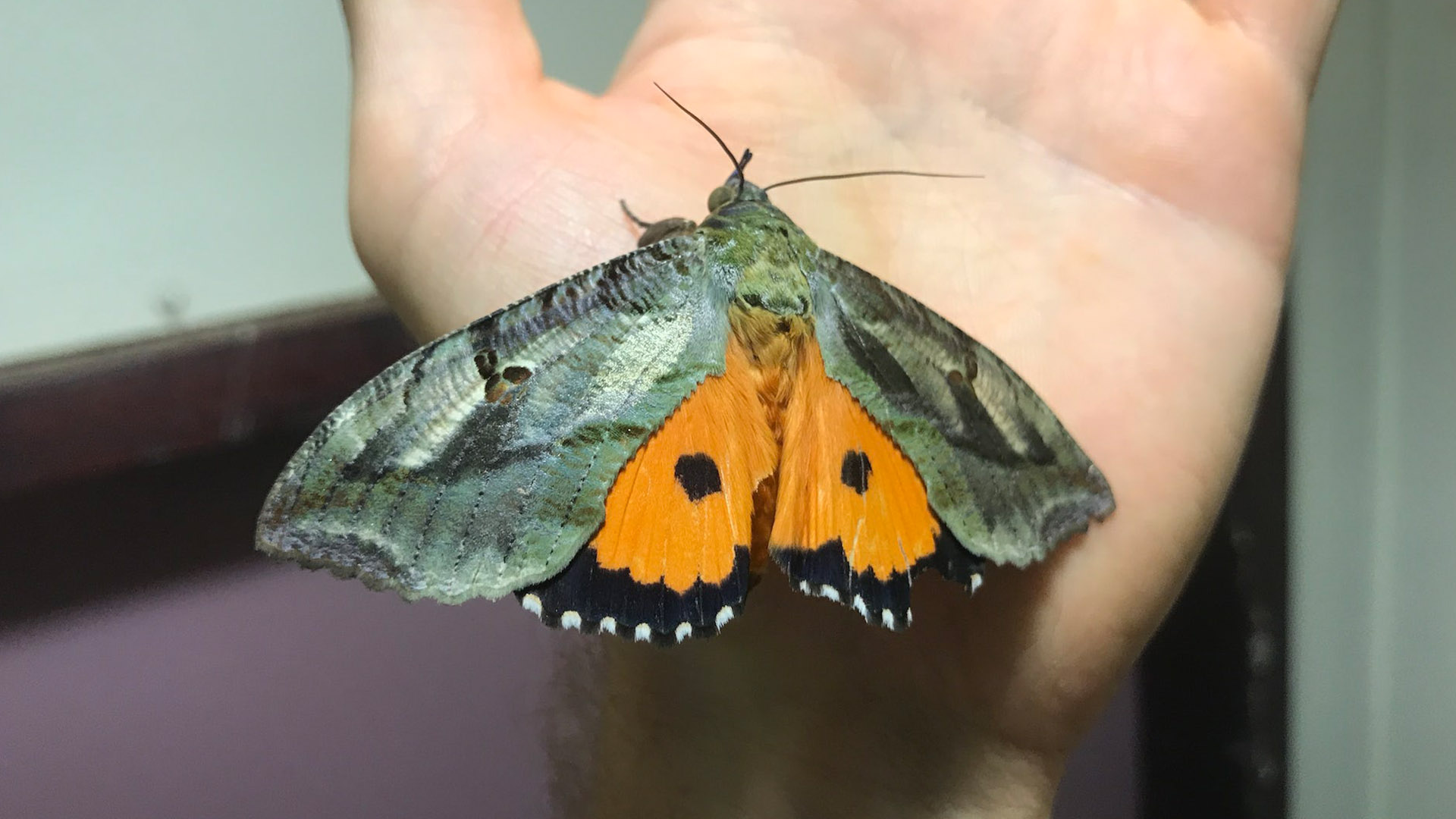
Dot-underwing moth (Eudocima materna) found in the researchers’ yard. (Image credit: Matthew Holden, (CC-BY))
We are biodiversity researchers — an ecologist, a mathematician and a taxonomist — who were locked down together during the COVID pandemic. Being restricted to the house, it didn’t take long before we began to wonder how many species of plants and animals we were sharing the space with. So we set to work counting them all.
We guessed we would find around 200 to 300, and many of our colleagues guessed the same.
There was nothing extraordinary about our 400 square meter [4,300 square feet] block of land in Annerley, a suburb of Brisbane in Queensland, Australia. Roughly half the block was occupied by a three-bedroom house.
What was extraordinary was the number of species we discovered there. As revealed in our just-published study, starting on the first day of lockdown and continuing over the course of a year, we catalogued 1,150 species on our inner-city property.
Familiar faces and rare recluses
Many of the species were what any east coast suburban Australian would expect: ibises, brush turkeys, kookaburras, possums and flying foxes. But, surprisingly, others had rarely been recorded.
In fact, three of the 1,150 species had never been documented in Australia’s leading biodiversity database at that point. This included a rare mosquito, a sandfly and an invasive flatworm that can cause populations of native snails to decline.
We found common foes, but also many friends. That rare mosquito was just one of 13 mosquito species we found. The cupboards accommodated pantry moths and grain weevils, but also spiders to prey on them (we recorded 56 species).
Our lack of assiduous garden-tending meant weeds were prolific; of the 103 plant species we documented on the property, 100 were non-native.
Apart from weeds, however, the vast majority of species were actually native. Our two massive lilly-pilly trees provided shade, shelter and food, magnets for numerous pollinators and other species.
Bees and butterflies
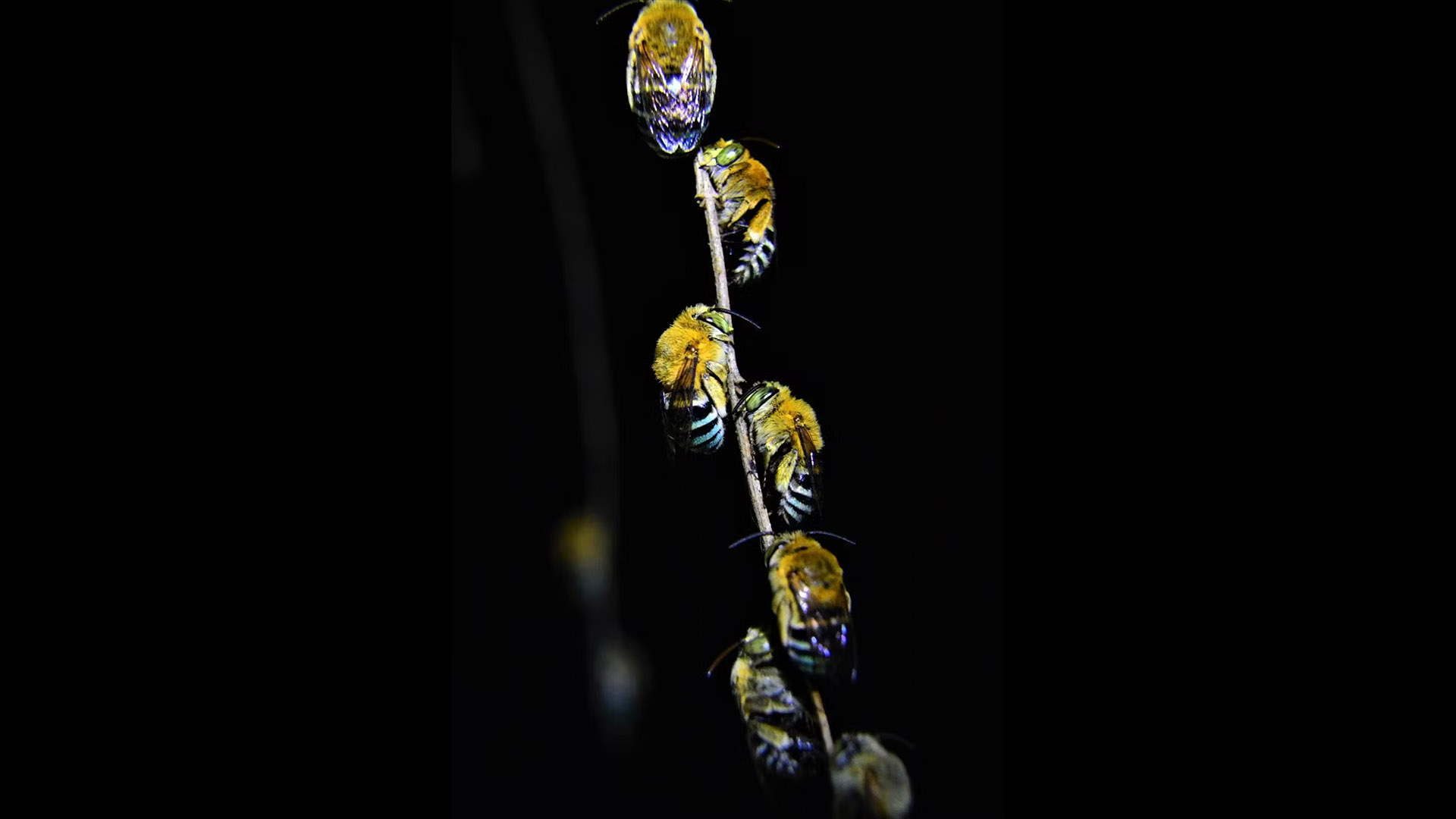
Blue-banded bees sleep grasping plant stems with their mandibles. (Image credit: Andrew Rogers)
The yard was filled with pollinators. For example, there were hoverflies which, at a quick glance, you’d think were wasps. We had 10 species of those, a fraction of the more than 109 species of flies we found.
Native blue-banded bees and fluffy teddy bear bees roosted in the hedges under our windows at night. They were just two of more than 70 bee and wasp species we observed.
We also counted a mindblowing 436 species of butterflies and moths. A few were as large as a human hand, but most were tiny and barely noticeable. Some were brightly coloured, while others — like the vampire moth Calyptra minuticornis — seemed boring until we began to study their behavior.